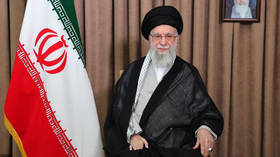
The ‘decapitating’ strike against Tehran has triggered a succession process, but perhaps not the succession crisis it aimed for
The past 24 hours have given Iran’s leadership transition a tangible shape, while also revealing how dangerously the very idea of “normal” is shifting in international politics. The death of Ayatollah Ali Khamenei in a joint US-Israeli operation against Iran is a demonstrative precedent, read across the Middle East as the legalization of a blunt principle – when power is sufficient, sovereignty can be suspended at will.
As a researcher of Middle Eastern politics, I cannot treat such actions as a “surgical strike.” They amount to the demolition of constraints that once, however imperfectly, made the international arena at least somewhat predictable. If the world’s leading military power and its closest regional ally signal that the physical elimination of a state’s top leader is an acceptable policy tool, then law becomes stage scenery rather than an organizing principle. The message is simple: rules apply when they serve the strong, and they can be set aside when they do not.
Against that backdrop, reports of a strike on a girls’ primary school in Minab, in southern Iran, have been absorbed with particular bitterness. For many across the Middle East, and for much of the Global South, the decisive issue is not the elegance of Western statements. It is whether there will be any clear moral judgment at all, or whether the tragedy will dissolve into cautious phrasing and familiar rituals of justification whenever responsibility falls on US allies. In a region saturated with grief and memory, silence is rarely interpreted as neutrality. It is read as hierarchy – as an unspoken ranking of whose suffering counts.
Ayatollah Khamenei was a man of a distinct era, defined by a long confrontation that Tehran consistently framed as resistance to Western expansion – efforts to shape the region from the outside and to impose an external architecture of security, politics, and values. For his supporters, he embodied the idea of an independent civilizational course, along with the conviction that Iran, and the Middle East more broadly, must retain the right to speak in its own voice even when that voice irritates Western capitals and clashes with their preferred definitions of what is “acceptable.” In this worldview, autonomy is not a slogan. It is a shield against absorption, a refusal to become merely a theater in someone else’s global story.
Disclaimer : This story is auto aggregated by a computer programme and has not been created or edited by DOWNTHENEWS. Publisher: rt.com