
Eliminating Supreme Leader doesn’t end the conflict. It transforms it into a matter of principle and raises the odds of a wider Middle East war
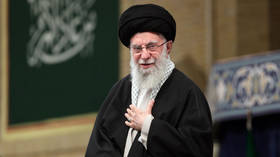
Overnight, Tehran confirmed the death of the Supreme Leader of the Islamic Republic, Ayatollah Ali Khamenei, following US and Israeli strikes on his residence early on February 28. In strategic terms, this marks a watershed moment in the architecture of the Middle East conflict. This was not a tactical raid or a calibrated show of force, but a decapitation strike at the very apex of Iran’s state system.
The confrontation between Iran on one side and the United States and Israel on the other has now entered a qualitatively new phase. The elimination of a state’s highest political and religious authority during an ongoing military operation is, from Tehran’s perspective, a textbook casus belli. This is no longer a limited exchange of blows. It is a shift toward a far broader and potentially systemic confrontation.
From ‘decapitation strike’ to regional firestorm
Throughout February 28, reports poured in of strikes and heightened military activity across the Persian Gulf – from the UAE to Qatar, Bahrain, and Saudi Arabia. Even isolated incidents in neighboring airspace underscored a hard truth: the conflict is no longer geographically contained. The regional security order is under acute strain. An already volatile Middle East is now teetering on the brink of a full-scale war.
Politically, the move looks like an all-in bet by the administration of President Donald Trump – a calculated attempt to deliver a strategic knockout by targeting Iran’s decision-making core. But such a step dramatically raises the stakes and all but eliminates the room for diplomatic maneuver. Removing the leader does not freeze the conflict; it accelerates escalation. It sets in motion a retaliatory spiral.
Disclaimer : This story is auto aggregated by a computer programme and has not been created or edited by DOWNTHENEWS. Publisher: rt.com



