Students will be taught consumer and financial literacy earlier in primary school under a plan to bolster declining maths skills across the country.
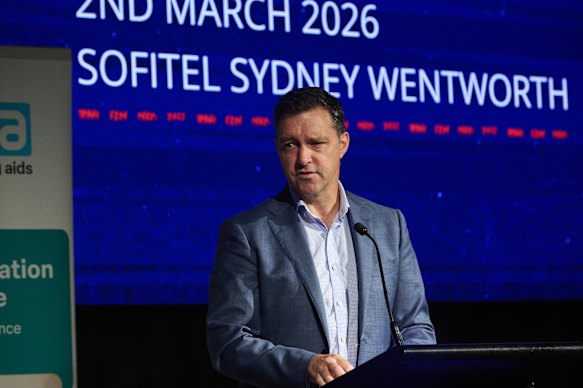
Australian Curriculum and Reporting Authority chief executive Stephen Gniel told The Sydney Morning Herald School Summit a third of Australian students in year 3 had failed to reach numeracy standards.
“These are not statistics to gloss over when we think about the individual child that that relates to and the families that they’re growing up in,” he said.
“Early numeracy is foundational to long-term learning success. We know from national data that improvement in numeracy is stalled … around one in three Australian students are not reaching challenging but achievable numeracy standards, and around one in 10 requires additional support.
“[Financial literacy] is another one that comes up all the time. We must prepare our children for their responsibilities and also the tricks of the trade around financial and consumer and financial literacy.”
In addition to financial literacy, the review would focus on three other areas: clear advice on the prioritisation of mathematical content; more clarity for teachers about what students will learn at and within each year level; and specific content sequencing, highlighting related concepts.
NSW has its own curriculum and takes an “adopt and adapt” approach to Australia’s national curriculum.
In a new measure, NSW last year trialled a mathematics screening tool in year 1. This year it will roll out statewide in a bid to identify students who had failed to master very basic concepts earlier in primary school.
Kelly Norris, senior research associate at the Centre for Independent Studies, said when she lectured in initial teacher education degrees, some students were traumatised by mathematics.
“I had students break down in my class because they were so incredibly anxious about maths,” she said
“There’s a huge opportunity we’re missing in the early years to identify who is struggling and intervene. Without that, students fall into a terrible cycle – low self-esteem, low motivation, anxiety. They avoid maths lessons, avoid homework, avoid choosing it as a subject. With less practice, they get worse. And that reinforces the belief they ‘can’t do maths’.”
At Windsor Public School, principal Ken Berghofer said staff have restructured lessons to focus on core mathematic skills after being part of the trial.
“When students feel capable, disengagement drops,” she said.
NSW Education Standards chief executive Paul Martin acknowledged HSC mathematics was perceived as difficult.
“Maths has a bit of an image problem – so making sure kids feel they’re rewarded is absolutely important,” he said.
“Some of the maths content is absolutely essential if we want to have bridges that we can drive over and buildings that are not going to fall down, and physicists, chemists, doctors and oncologists who we all rely on.
“But by the same token, we should also have maths examinations that suit a range of students who are doing the test.”
NSW Education Department deputy secretary Murat Dizdar told the conference that artificial intelligence was upending teaching.
“Never can it substitute for learning. It’ll never replace the judgment of a teacher, the relationships that underpin learning, the daily observations, and the deep human nature of education itself,” he said.
Catholic Schools NSW chief executive Dallas McInerney said schools needed to “avoid the mistakes” of universities where students were cheating their way through entire degrees.
Start the day with a summary of the day’s most important and interesting stories, analysis and insights. Sign up for our Morning Edition newsletter.
 Emily Kowal is an education reporter for The Sydney Morning Herald.Connect via email.
From our partners
Disclaimer : This story is auto aggregated by a computer programme and has not been created or edited by DOWNTHENEWS. Publisher: www.smh.com.au