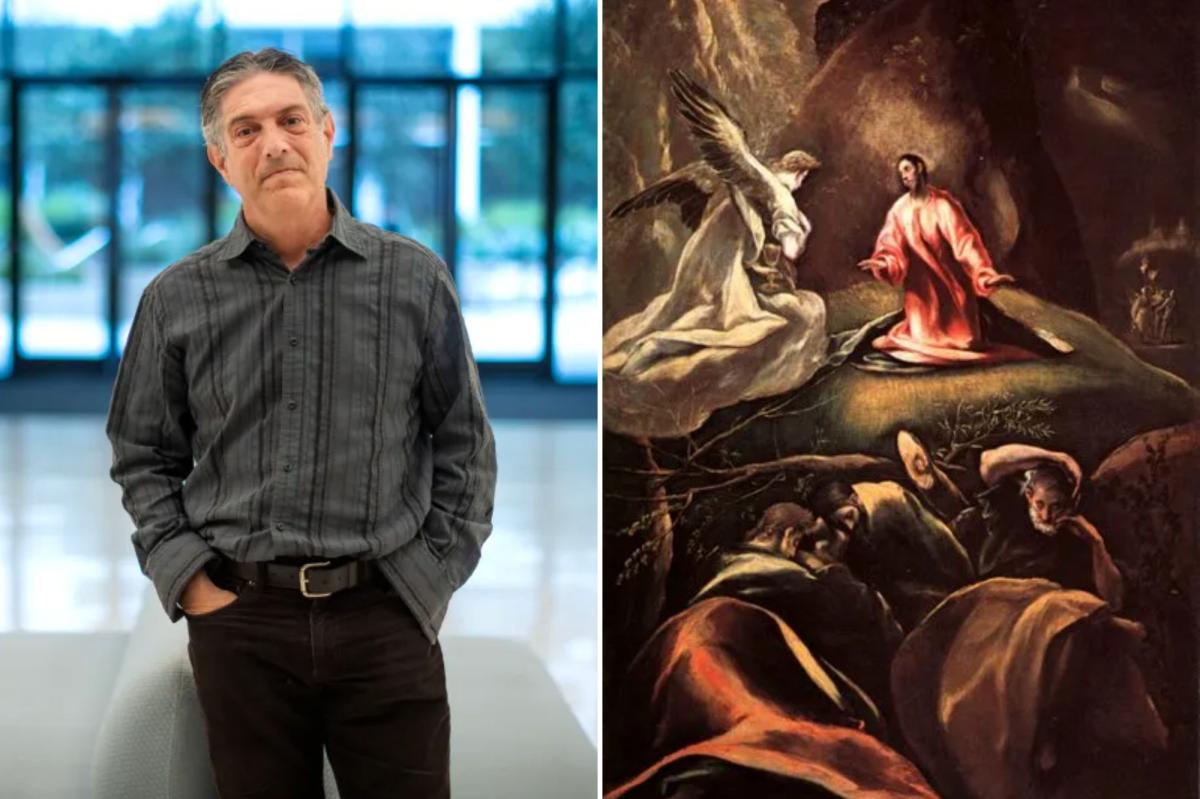
As soon as the Second World War ended in Europe in 1945, David de Csepel’s family began another battle — to return their storied art collection which was looted by the Nazis.
The family has mounted dozens of legal challenges over the last 80 years, in courts around the world for the return of their paintings, tapestries and Renaissance furniture that made up the collection of De Csepel’s great-grandfather, Baron Mór Lipót Herzog.
In recent years they have focused their efforts on the return of 28 paintings, including three El Grecos, which they value at $100 million. They are housed in public institutions in Hungary — three museums and a university in Budapest.
The family has been suing Hungary in US courts for more than 15 years, and are now hoping tough new provisions of landmark legislation before Congress could finally help them and other American victims of Nazi looting reclaim their family legacies.
Legal experts say amendments to the 2016 Holocaust Expropriated Art Recovery (HEAR) Act could clear the way for foreign expropriation cases to be heard by US courts.
The bipartisan bill received unanimous consent in the Senate in December. It removes obstacles, such as time constraints, for victims of Nazi theft to litigate for restitution.
“I’m very frustrated,” said De Csepel, 60, the Altadena-based executive director of the Alliance for SoCal Innovation, a nonprofit that supports start-ups.”I grew up with my grandmother telling me stories about how Nazis came into their home in Budapest and just took paintings off the wall. And we are still fighting to get them back.”
Last month, the DC Circuit Court, which denied the family’s most recent appeal, signaled the need for Congress to pass the HEAR Act legislation in order to allow heirs to use US courts to litigate for the return of their art.
‘”The Herzogs were innocent victims of war and genocide, some of the millions of people for whom no measure of justice has ever been granted,” the court said in its decision.
“Their family heirlooms now hang on the walls of public institutions in Hungary that, to date, have shown no real interest in atoning for the depredations of that country’s World War II−era government.
“The only question we face today, however, is not whether these plaintiffs deserve justice — they surely do — but whether Congress has granted US courts the jurisdiction to provide it. “
Alycia Benenati, the lawyer for the family, agrees: “The pending HEAR Act amendments are critical for the Herzog family and other victims of Nazi persecution,” she told The Post.
De Csepel is the great grandson of Herzog, a prominent banker who died in 1934, upon which point his art collection was passed to his family.
He had assembled Hungary’s largest private art collection, with more than 2,500 works by artists including Doménikos Theotokópoulos — better known as El Greco — Claude Monet, Paul Gauguin and Pierre-Auguste Renoir.
Much of that art is scattered among museums and private collections around the world, including in Russia’s Hermitage museum, the family says.
During the Hungarian Holocaust, which began in 1944, more than 500,000 Jews were killed. Some members of the Herzog family were able to escape to other countries and, at first, hide a large part of their collection in the basement of a family factory. However, those artworks were discovered and seized by Adolf Eichmann, who headed up the special Nazi task force that deported and executed Jews in Hungary.
After the war, the Soviet communist regime which took over the country took possession of the art that the Nazis left behind and spread it across their realm.
“Right when the Berlin Wall fell we took up this cause with members of Congress trying to get Hungary to do the right thing,” De Csepel told The Post.
But Hungary has long maintained that the Herzog heirs no longer own the art and that compensation was paid in 1973 that resolved outstanding claims — a situation disputed by the heirs and their attorneys.
Now, the family and other victims of Nazi theft are putting their hopes on the extension of the HEAR Act, which was first unanimously passed by the House and the Senate in 2016.
US Rep. Laurel Lee (R. Fla.) sponsored the current legislation. “Recent court interpretations have prevented families like this one from even having their day in court,” Lee told The Post. “That was never the intent of the law. My legislation restores that intent.”
Today, there are currently more than 100,000 works of art looted by the Nazis that have not been recovered, according to reports.
“We must confront this unacceptable and repugnant reality, which continues to allow entities and individuals to profit off the Jewish people’s pain,” said Rep. Jerry Nadler (D. NY), who was one of the original sponsors of the law. “Justice must not be denied due to procedural technicalities and legislative sunset provisions.”
Holocaust survivor Louise Lawrence-Israels, President of the Miami-based Holocaust Survivors’ Foundation USA, urged the House to pass the legislation.
“Congress must fix this law,” she said. “Nazi Germany perpetrated murder and theft on an incomprehensible scale, both directly and through Allied, occupied, and collaborating governments. Protecting Germany and other governments holding looted art today, based on abstract academic theories, is an insult to history and morality.”
Disclaimer : This story is auto aggregated by a computer programme and has not been created or edited by DOWNTHENEWS. Publisher: nypost.com