
From an increasing preference for having daughters over sons to the influence of the manosphere’s toxic algorithms, you could be excused for thinking parenting boys has never been more fraught.
But experts say that if we can prioritise open communication and quality time, we can continue to delight in our sons’ company as they grow up.
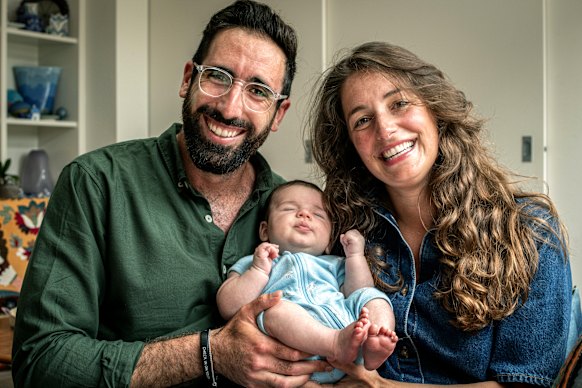
When Dr Zac Seidler recently welcomed his firstborn, Artemis, into the world, he was keenly aware of the challenges of raising a boy today.
“[A lot of] young boys are lost; they do not see their value, what is possible for them, what their place can be or how they can show up,” says Seidler, who is Movember’s global director of research, a clinical psychologist and men’s mental health researcher who has dedicated years to reducing the staggering rates of male suicide and domestic violence.
“There is this floundering and disengagement. Boys are really doing very poorly in school, they’re doing very poorly on going to university, they are doing far worse than women in the workforce.”
The unique challenges that come with boys
Parenting educator Tim French, founder of Coaching With Tim, says raising boys in 2026 is a unique experience.
“Boys today are growing up in a world of constant digital exposure, rapid cultural shifts and far less unstructured freedom than previous generations. They’re not just shaped by families and schools – they’re shaped by algorithms,” he says.
“Adolescence has always been about answering the question, ‘Who am I?’ but now boys are doing that publicly and online while being exposed to highly polarised ideas.”
Finding the beauty in boys
While Sydney-based Seidler currently delights in Artemis’ baby giggles, he knows that as his son grows up he’ll get a chance to apply a lot of the theories he’s long espoused – in particular the importance of celebrating the good in boys.
“I’m a perennial optimist, so I’m trying to see the potential, the flourishing, the love, the connection and the expansion that is possible.”
When Seidler takes to the Sydney Opera House stage on Sunday to discuss raising boys at the talk festival All About Women, there’s one prevailing message he hopes to get across: that boys are inherently good.
“There is so much beauty in modern-day manhood that goes unseen and unspoken about.”
French agrees that if we want to help boys grow into strong, kind men, an attitude of optimism is the necessary first step. “When boys are seen, challenged and coached well, they rise.”
The new parenting best practice
While many adults grew up being reprimanded for acting up, if you send a boy to his room in 2026, there’s a risk he’ll go online and find a community that undermines the values he’s been raised with.
“Boys are getting a lot of ‘Don’t be this, don’t do that’. Then they go and watch the Andrew Tates of the world, who tell them, ‘I’ve got you. Do this course, buy these supplements, take back power and control, be dominant, and you don’t have to put up with any of the other shit,’” Seidler says.
“That’s a far more gratifying and clear-eyed argument for a 14 or 16-year-old boy.”
Instead of punishments, Seidler says it’s time for open-minded listening, ideally while doing shoulder-to-shoulder activities like driving, because boys tend to open up more without eye contact.
“What we need to do is get into the rabbit hole alongside him and go, ‘What’s this doing for you? Why do you feel like this? What does that make you think about girls and women?’”
Seidler says he often lets concerning comments and behaviour slide when he’s first working with teen boys, to build trust.
“If I have a new client come in, and he says a misogynistic joke, or he tells me he’s watched this thing and thought it was funny … if I police him and say, ‘Mate, not on!’ I’ll never see him again, and that’s the worst outcome,” he says.
Showing up for teens
When Andrea Cosentino’s children Ella, 12, and Ben, 16, tumble in the door after school, she logs off from work, making herself available for any spontaneous defragging.
While her teenagers don’t need their mum to dish up afternoon tea, the podcast host and speaker believes that making herself available today is as important as it was when they needed help tying their shoelaces.
“I remember being a teenager with bad depression and I would sit in my room for hours – and that was not a good place. I don’t want my kids to feel like that, so I’ll pop my head into their room and ask if they need anything.”
Cosentino, who is based in Victoria, says Ben is a remarkable young man. She credits the fact he’s always been encouraged to ask questions and knows he is loved unconditionally.
“He gives me hugs and tells me he loves me – he is honestly a great kid, and I don’t believe this is by accident,” she says. “To me, you can’t expect a teenager to suddenly start sharing things with you when you haven’t given them the time in previous years.”
Though a lot of parenting literature focuses on building secure attachment with young children, Seidler says the teenage years are just as important, which can be challenging for time-poor parents who are often at the peak of their careers.
“There is so much adaptation that takes place in their identity at that time – they are so flexible and malleable and afraid, and parents often shy away at that time.”
Seidler wants parents to remember to focus on their sons when things are going well, not only when things start to go wrong.
“We need to be looking out for the connections that matter to him, the friends that are really healthy and give him a sense of agency and autonomy to make him feel like he’s ‘got’ this and that you are a support person pushing him forward.”
Make the most of your health, relationships, fitness and nutrition with our Live Well newsletter. Get it in your inbox every Monday.
 Kimberly Gillan is a Melbourne journalist who covers wellbeing, social trends, parenting and travel.
From our partners
Disclaimer : This story is auto aggregated by a computer programme and has not been created or edited by DOWNTHENEWS. Publisher: www.smh.com.au