Patrick Sawer and Alice Lilley
Social media influencers in Dubai have been warned they face prison for posting material about the US-Israel conflict with Iran.
The United Arab Emirates (UAE) has told Dubai’s community of influencers that any material considered to be harmful to “public order”, “national unity”, and the reputation of the state could lead to fines of up to $US77,000 ($108,000) or imprisonment.
One influencer told the London Telegraph she deleted a video showing debris burning outside her apartment because social media users “have to be very careful about what they say”.
The Detained in Dubai campaign group says it has previously represented several foreign nationals in the Gulf state who have been detained or fined over tweets, Facebook posts, Instagram stories and WhatsApp messages.
Its campaigners have said many would be unaware if they have crossed a legal line by posting about the UAE’s defence systems intercepting missile strikes from Iran.
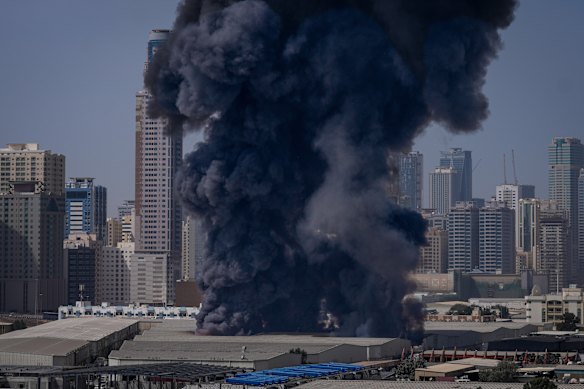
Dubai and the wider UAE have been directly affected by the war in Iran, as missile debris fell across the popular tourist destination over the weekend.
On Saturday evening, debris from an intercepted Iranian missile struck the Fairmont, a tourist hotel on the city’s Palm Jumeirah, with footage showing flames rising from the hotel’s atrium.
On Sunday morning, Dubai International Airport was also struck by debris from an Iranian missile.
There have also been reports of shrapnel damage at the Burj Al Arab hotel and the port of Jebel Ali, along with other civilian sites in the city.
The UAE’s cybercrime laws are among the strictest in the world, and any commentary about regional conflict, government policy or security matters can be interpreted as a criminal offence.
The lifestyle influencer, who deleted the video of burning debris, told the Telegraph on condition of anonymity: “The Dubai authorities want to control the narrative, that’s for sure. There are strict rules about what you can say here.
“The authorities in Dubai don’t want panic to spread from people posting misinformation. It’s in their interests to keep people calm, and I can understand that.”
The influencer, who has millions of followers on her Instagram account, said she shot the film outside her apartment after an Iranian missile was intercepted in the sky on Saturday.
However, she decided to remove the footage from her social media post and not upload any more “out of respect for the UAE’s rules”.
She added: “I was numb when I saw the flames. I didn’t know how to feel because at first, I didn’t know what I was looking at. But things have calmed down now, after a few days. People are even back on the beach. I feel quite safe.”
The influencer, who was set to fly to London when her flight was grounded due to the conflict, added that, while maintaining strict control of social media, the authorities did provide rapid and clear information on how to respond to attacks.
“If there’s a reason to worry, they will tell you to go to a shelter or whatever. They know panicking doesn’t help,” she said.
Cruise passengers ‘told not to discuss situation’
Passengers stranded on cruise ships off the coast of Dubai have also been told not to talk openly about the ongoing conflict.
Jan Arnott, a 71-year-old cruise ship passenger, told the Telegraph her cruise operator Celestyal Cruises had told passengers not to talk about it.
She said: “We were told not to discuss the situation on board. We saw defence planes and smoke from the attack on the airport but have felt safe throughout. Nobody at home can believe what we are saying.”
Detained in Dubai said some individuals had been charged previously for posing in front of restricted locations.
The authorities are known to be particularly sensitive to content that they deem to spread “false information”, damage diplomatic relations or undermine national security.
Posts by stranded nationals expressing fear or frustration about delays to being evacuated may also fall foul of the rules, the group warned.
In an announcement issued on Saturday, within hours of the start of the American and Israeli attacks on Iran, the UAE’s public prosecution office warned “against publishing or circulating rumours and information from unknown sources through social media platforms or any other technological means”.
The announcement added that the warning against posting misinformation was “due to the consequences thereof, including the spread of confusion and harm to the security and stability of society”.
It stated: “Any person who shares or reposts content from unknown sources shall be subject to legal accountability in accordance with the applicable legislation, even if they are not the original creator of such content.”
‘The UAE’s cybercrime laws are some of the harshest in the world when it comes to social media. The wording of the law is deliberately broad, which means almost anything critical of government policy or regional conflict can be interpreted as a crime.’
Radha Stirling, Detained in Dubai
The statement continued: “Be aware and informed … Information is a responsibility, and spreading rumours is a crime.”
The strict rules are thought to have led to self-censorship among some influencers who have benefited from Dubai’s “Creators HQ” visa system, which offers free permits for those working in content creation to stay in the city without a sponsor.
The influencer told the Telegraph: “If you live here, rather than as a tourist, you need a licence to post content. The authorities here are tolerant in many ways, but strict in others.”
Radha Stirling, the chief executive of Detained In Dubai, said: “The UAE’s cybercrime laws are some of the harshest in the world when it comes to social media. The wording of the law is deliberately broad, which means almost anything critical of government policy or regional conflict can be interpreted as a crime.”
She added: “In times of war, these laws become even more dangerous. Residents are effectively being warned to stay silent online. Visitors are particularly vulnerable because they often assume they are protected by their home country’s standards of free speech. They are not.
“Many people are now too frightened to speak publicly, even if they disagree with what is happening. It is illegal to take photos of government buildings, and people have been charged for posing in front of forbidden sites. There is a real risk that well-meaning visitors stranded in the UAE will be inadvertently breaking the law.”
The Telegraph, London
Read more on the US-Israel-Iran war:
From our partners
Disclaimer : This story is auto aggregated by a computer programme and has not been created or edited by DOWNTHENEWS. Publisher: www.smh.com.au