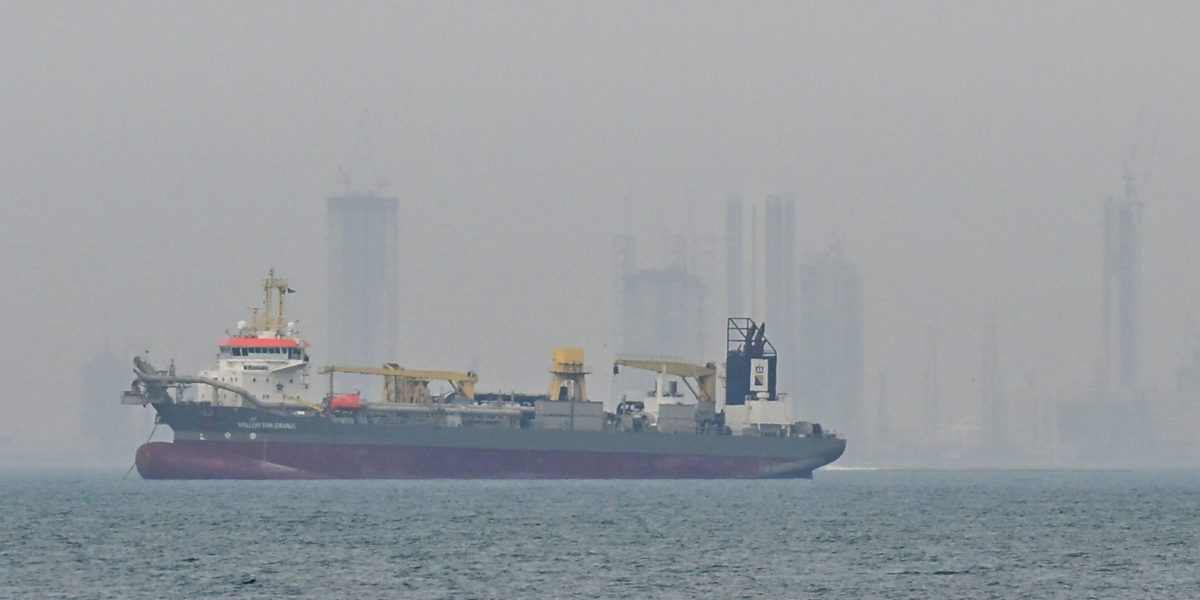
Good morning. President Donald Trump’s pledge to offer insurance backstops and naval escorts for vessels transiting the Strait of Hormuz highlights the critical role it plays in global energy markets, while the continued elevation in oil prices suggests energy traders are worried that such moves may not reduce the risk of attack.
The reaction of global markets also underscores how the world of trade has fundamentally changed. Only 7% of U.S. crude imports travel through the Strait of Hormuz. Europe, which shifted its energy supply after Russia invaded Ukraine, gets a little less than 10% of its gas through the passage. Almost half of China’s imports come through there, which explains why Beijing is worried though unlikely to get involved.
Most leaders came of age in a world of globalization and free trade. What we’re witnessing now is the reemergence of a term I associate with 19th-century Britain: mercantilism, a state‑driven protectionist economic system built around maximizing exports, penalizing imports, and accumulating national wealth and power.
That’s the term used by Angeliki Frangou, a fourth-generation Greek shipowner and CEO of NYSE-listed Navios Maritime Partners. Having navigated through COVID shutdowns, tariff wars, actual wars, geopolitical tension, climate change, and piracy on the high seas, she sees how trade has shifted. (Nearly 90% of international trade in goods moves by boat.)
“Everything is about national security. It is about mercantilism. It is about friend‑shoring,” she says. “We went from just-in-time to just-in-case, getting resources from where we think is most secure. The efficiency of trade and globalization, low tariffs and efficiency, is not part of the equation.”
Those trends are not going away, regardless of the outcome in Iran. With a global fleet that includes 171 dry cargo and tanker vessels, Frangou sees the trends play out in real time. On average, she has about one ship pass through the Hormuz every day, noting that shipping rates for transporting crude from the region have risen 4X since last week, where alternate workarounds exist.
Her message to CEOs: “We are watching history in a lot of ways. The WTO (World Trade Organization) world we built our companies in basically doesn’t exist today. We are living in a different world.”
Contact CEO Daily via Diane Brady at diane.brady@fortune.com
Top leadership news
Minimum wage increases could spur companies to look towards robots
A new study led by Stanford economist Erik Brynjolfsson finds that higher minimum wages make manufacturing firms more likely to adopt industrial robots. The finding builds on Brynjolfsson’s earlier research, which showed that widespread AI adoption has reduced job opportunities for early-career workers in roles most exposed to automation.
Why energy prices could spike again
President Donald Trump’s pledge to insure and escort oil and gas tankers through the Middle East has temporarily steadied energy markets, but analysts warn prices could spike again if the plan doesn’t materialize within days. Even with an insurance system, experts say there’s no certainty that tankers will be protected from missiles and drone strikes.
SpaceX’s IPO will be massive
Elon Musk’s proposal for a SpaceX IPO would give the company a market cap of $1.5 trillion, per reports, making it the second-most-valuable IPO in history. The listing’s underwriters could see a huge payday.
The markets
S&P 500 futures are flat this morning. The last session closed up 0.78%. The STOXX Europe 600 was down 0.29% in early trading. The U.K.’s FTSE 100 was up 0.50% in early trading. Japan’s Nikkei 225 was up 1.90%. China’s CSI 300 was up 0.98%. Hong Kong’s Hang Seng was up 0.28%. South Korea’s KOSPI was up 9.63%. India’s NIFTY 50 was up 1.05%. Bitcoin was up to $73K.
Around the watercooler
Exclusive: Venture giant a16z crypto targeting around $2 billion for its fifth fund amid blockchain market downturn, sources say by Ben Weiss and Leo Schwartz
Viral deepfake ad casts Musk, Bezos, and Altman as corpulent overlords powering AI on human sweat. Its creator says the best jokes tell the truth by Marco Quiroz-Gutierrez
Goldman’s top strategist warns stocks are flashing the same warning signs as before the 2008 financial crisis by Nick Lichtenberg
CEO Daily is compiled and edited by Joey Abrams, Claire Zillman and Lee Clifford.
Disclaimer : This story is auto aggregated by a computer programme and has not been created or edited by DOWNTHENEWS. Publisher: fortune.com