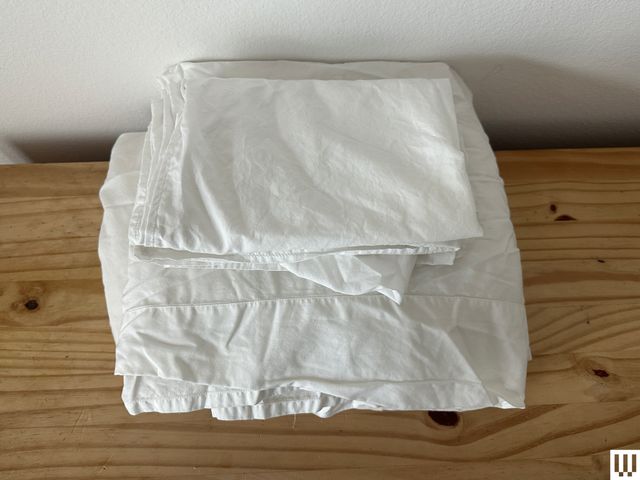
Sweet dreams start with the best sheets. After living with cheap sheet sets for years and only having a grand maximum of three sets of sheets to my name, discovering the comfort of actually good sheets has been a game changer for my sleep. If you haven’t upgraded your sheets before, it can change your sleep experience like you wouldn’t believe.
There’s a lot to navigate when buying sheets for your bed, and a lot of sheets are surprisingly expensive. But you don’t need to spend hundreds for a great set of sheets. I’ve slept on dozens upon dozens of sheet sets—at least 70 different sets, and I’m sure I’ve missed a few—and found the best ones to sleep on from crisp percale to silky bamboo and sateen. Here are the sets I can’t stop reaching for, with every sheet set retailing for $200 or less in a queen size.
Updated March 2026: We’ve reorganized this story based on price and ensured up-to-date links and prices.
Best Sheets for Under $200

Great cotton sheets should be soft and breathable, and I have a handful of favorites. But the cheapest of those is usually Buffy’s Supima Cotton Sheet Set, which uses long-staple Supima cotton (not a type of cotton, but a certification) to make the fabric extra soft without needing a heavy weave to achieve that softness. It’s breathable and crisp with a one-over-one thread percale weave without feeling scratchy or paper-y. It’s often on sale at both Buffy and Amazon, with the best sale price usually on Buffy’s site.


Bamboo sheets are one of my favorite types of sheets to sleep on. Aeptom’s bamboo sheets have become a new favorite of mine, with an impressive slew of features for an affordable price point. They’re lightweight and silky soft, and weren’t too hot to sleep on during warm summer nights. These sheets feel just as high-quality as much more expensive sets of bamboo sheets. Aeptom says these sheets use ultra-fine fibers, which makes sense given how light they feel, even with a sateen weave. This set also packs both an Oeko-Tex certification and a Forest Stewardship Council (FSC) certification, certifying that the bamboo is responsibly sourced.
-Reviewer-Photo-SOURCE-Nena-Farrell.jpg)

Flannel is another type of cotton, but with a completely different feel than the percale and sateen sheets you usually find when they’re labeled “cotton sheets.” Flannel has brushed-out fibers designed to trap heat, making it popular for wintertime and chilly climates, and the brushed-out feel makes it super soft. This set from Lands’ End really is comfy and super soft and was the perfect combination of cozy without being too heavy. I love that these are so soft and warm without making me sweaty—a tall task for a hot sleeper in San Diego, though I did test them during the coldest time of year. I also like that it’s easy to buy Lands’ End as a set or purchase just a top sheet or pillowcases individually if something needs to be replaced.


Organic sheets will usually cost you more since it’s more expensive to source organic fibers and use nontoxic chemicals, but this organic percale set from the Citizenry is similarly soft to the Buffy percale set above and happens to be organic to boot. While the fibers aren’t Supima-certified, the Citizenry says it uses long-staple cotton to make this lightweight, durable sheet. It does feel similarly soft yet crisp, and is another good one to reach for as a hot sleeper or as someone using an organic mattress.
Best Sheets for Under $100

Looking for something cheaper? I recently switched to a king-size bed and was on the hunt for a set of king-sized sheets that weren’t microfiber and cost less than $100. The answer was this set of Target Threshold sheets, which are a 100 percent cotton sateen weave. The weave is three over one, so less breathable than percale, but they still feel lightweight and smooth. There are a ton of colors and prints, and this set will be my new base sheets to grab between testing.


Bedsure’s GentleSoft Cooling Bamboo Sheets are also among some of the best inexpensive sheets our team has tried. While I haven’t slept on these, WIRED reviewer Julia Forbes has, and she’s always shocked the price tag isn’t higher. She reaches for these more than any other set she owns, and says the bamboo has a silklike feel without making her feel like she’s being smothered in heat. This sheet set is cheaper since it uses bamboo rayon rather than more expensive viscose or lyocell; learn more in our guide to bamboo sheets.

If you want the softness of flannel that is even lighter and super affordable, Laura Ashley’s Cotton Flannel Sheets are the way to go. This is a super-lightweight flannel set that was solidly soft for such an affordable price point. I actually prefer them to the popular L.L.Bean flannel, and these are light enough that you could use them throughout the year without melting (depending on your climate and how hot of a sleeper you are).
A Great Duvet Cover Under $200

The star of my bed right now is this duvet cover. Homme has a really fun range of colors and reversible designs, letting you inject extra personality into your bed without needing a whole new comforter. It’s entirely cotton with a lightweight feel that doesn’t make me sweat, and it’s a nice option as someone who’s notorious for kicking the top sheet into the corner of my bed. I also like that even though it’s fun and unique, it’s a good price. Plus, my comforter never gets bunched up weird inside this duvet cover. Matching pillowcases are sold separately.
What Will Cost You More


Some types of sheets just aren’t going to be as cheap. Linen is a prime example, but a good linen sheet should last you for years, so spending a little more should go a long way. I really like Pottery Barn’s Flax Linen Sheet Set, which isn’t too much more expensive than the $200 limit I looked for and yet is impressively breathable. It’s a lighter linen sheet, so it might not last as long as a heavier linen, but I haven’t had any issues in the two years I’ve been using these sheets. Don’t miss my entire guide to linen sheets if you want to dive into more linen options.


Another category that usually costs more is good cooling sheets. This isn’t a requirement to stay cool; I’d say the Buffy percale sheets in the cotton section of this story are an excellent cooling sheet since percale is such a breathable weave. But if you’re looking for something with cooling technology—better known as PCM, or phase change material that promises to change heat into cool—then there’s nothing better than SlumberCloud’s Performance Tencel Sheet Set. It uses Tencel, a brand of lyocell fabric, plus Slumber Cloud’s patented Outlast fiber, which uses phase change material gel to absorb heat. It’s both soft and lightweight, and I found myself downright chilly when sleeping on these, which is an impressive feat for hot sleepers like myself.
Honorable Mentions
Here are more sets I loved that cost a little more. If budget isn’t an issue for you, these are worth exploring.
I loved Coyuchi’s Cloud Soft Sateen Sheet Set ($278) not just because it lives up to the soft name (which it does!), but also because it’s still breathable for summertime sleeping. Not only that, but these sheets are organic, too, with a GOTS certification. Coyuchi also uses a USDA-certified bio-based softener on these sheets, and it gives them a cozy, lived-in softness compared to the silky softness I find on other sateen sheets. I also like that there are undyed options if you’re looking to avoid fabric dye—I tested the undyed set, and found it a lovely neutral color.
Ettitude’s Signature Sateen Sheet Set ($359) feels super lightweight to the touch and doesn’t warm up as much as heavier bamboo I’ve tried. The sheets are still soft, too, retaining that silky, cool feel bamboo is known for. This set is worth the splurge if you want something that’s super soft and breathable, and won’t leave you sweating at 3 in the morning. Not only that, but it’s the most lauded set of sheets I’ve tried, with certifications for Oeko-Tex, FSC, Bcorp, Eco-Cert, and Change Climate.
The Citizenry’s Stonewashed Linen Sheet Set ($359) is my Goldilocks of linen bedding. These sheets are lightweight and breathable but still have a nice drape and softness you don’t often find in brand-new linen. It usually takes a little breaking in to get to this stage, but the Citizenry’s sheets feel like you’ve already washed them and softened them up. Thanks to great airflow, these sheets are cool enough for warm nights but not so cool that I wouldn’t use them year-round. They’re also Oeko-Tex certified, meaning they’ve been tested for harmful substances and have been deemed harmless. (They aren’t GOTS certified, though, so we can’t call these sheets fully organic.) If only they were a little cheaper; these sheets used to be the same price as Pottery Barn’s, but are now more expensive.
Power up with unlimited access to WIRED. Get best-in-class reporting and exclusive subscriber content that’s too important to ignore. Subscribe Today.
Disclaimer : This story is auto aggregated by a computer programme and has not been created or edited by DOWNTHENEWS. Publisher: wired.com