
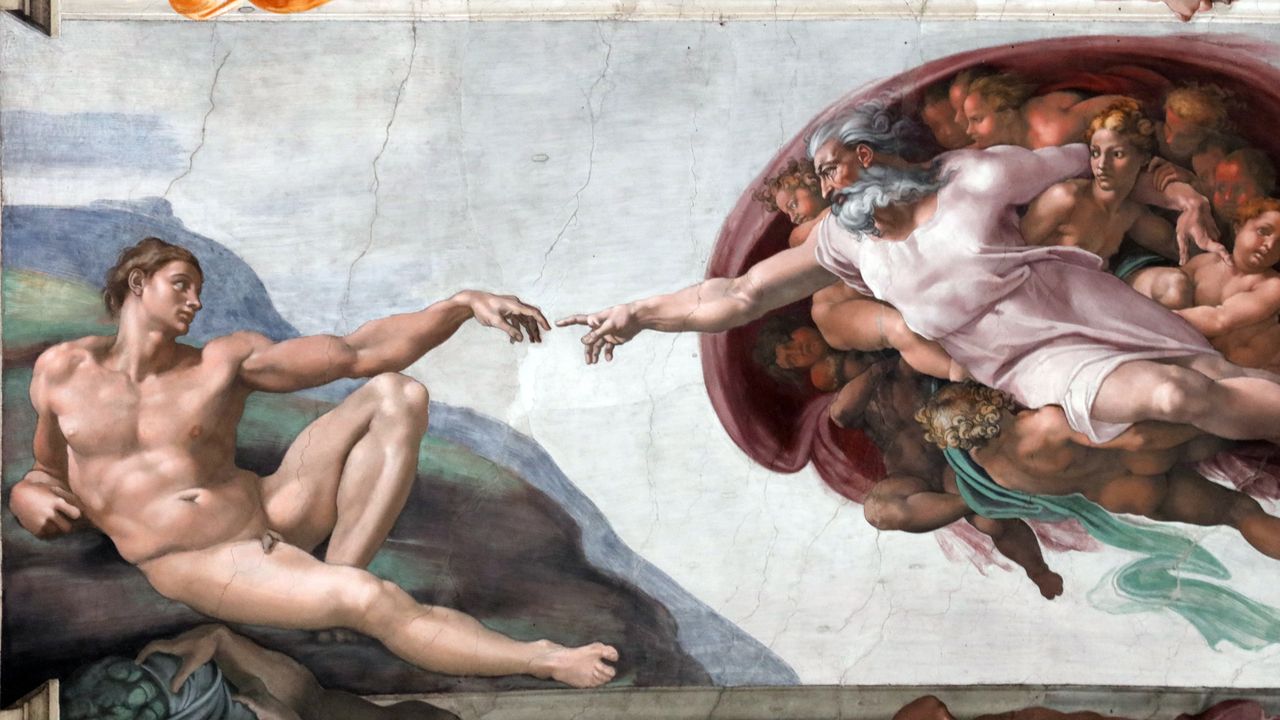
Even the Catholic Church has had it up to their scapulars with beauty conformity. This week, the Vatican’s International Theological Commission released a document entitled “Reflecting on Christian anthropology in light of certain future scenarios for humanity,” which, as with all such documents, was approved by Pope Leo XIV. The commission warns that “the perception of the body and its meaning” is changing, partly due to cosmetic surgery, and that “we cannot ignore the trends that reduce the body to biological material to be enhanced, transformed, and remodeled at will.”
Although the Catholic church does not explicitly forbid the faithful from pursuing cosmetic procedures, this new document doesn’t mince words: “Especially in the West, advances in cosmetic surgery … offer tools that significantly change the relationship with one’s own corporeality and therefore with reality and with others,” it reads. “This leads to a widespread ‘cult of the body,’ which tends towards a frantic search for a perfect figure, which always stays fit, young and beautiful.” Such modification, often done with what the commission calls an “incessant frenzy,” can lead to a compromised, objectifying relationship with one’s body.
“In this dynamic it is no longer necessary to accept one’s own body to realise one’s own identity. It can be transformed according to the tastes of the moment,” write the commission’s theologians (most of whom are priests). “A curious situation is created: the ideal body is exalted, sought after and cultivated, while the real body is not truly loved, being a source of limitations, fatigue, aging. A perfect body is desired, while one dreams of escaping from one’s own concrete body and its limitations.” This is a fair warning even for non-believers, like this secular Jewish writer who loves her Dysport. Changing your face and body is not necessarily a path to self-love—and neither is buying into the longevity industry’s pricey promises of quasi-extendable life.
This assessment is not uniquely Catholic, of course, or religious in any particular way. Part of the objection to looksmaxxing or the “forever-35 face” is the way that the phenomenon imposes a conformist version of attractiveness rather than accepting our bodies as they are. But ultimately, the Church’s key qualm is rooted in spirituality. “These transformations influence the relationship with the Mystery of the origin and ultimate end of human life,” the document reads. “When human beings reduce created nature (person, cosmos) to matter to be transformed, they no longer manifest the glory of the Creator, but replace him.”
Disclaimer : This story is auto aggregated by a computer programme and has not been created or edited by DOWNTHENEWS. Publisher: www.allure.com



