
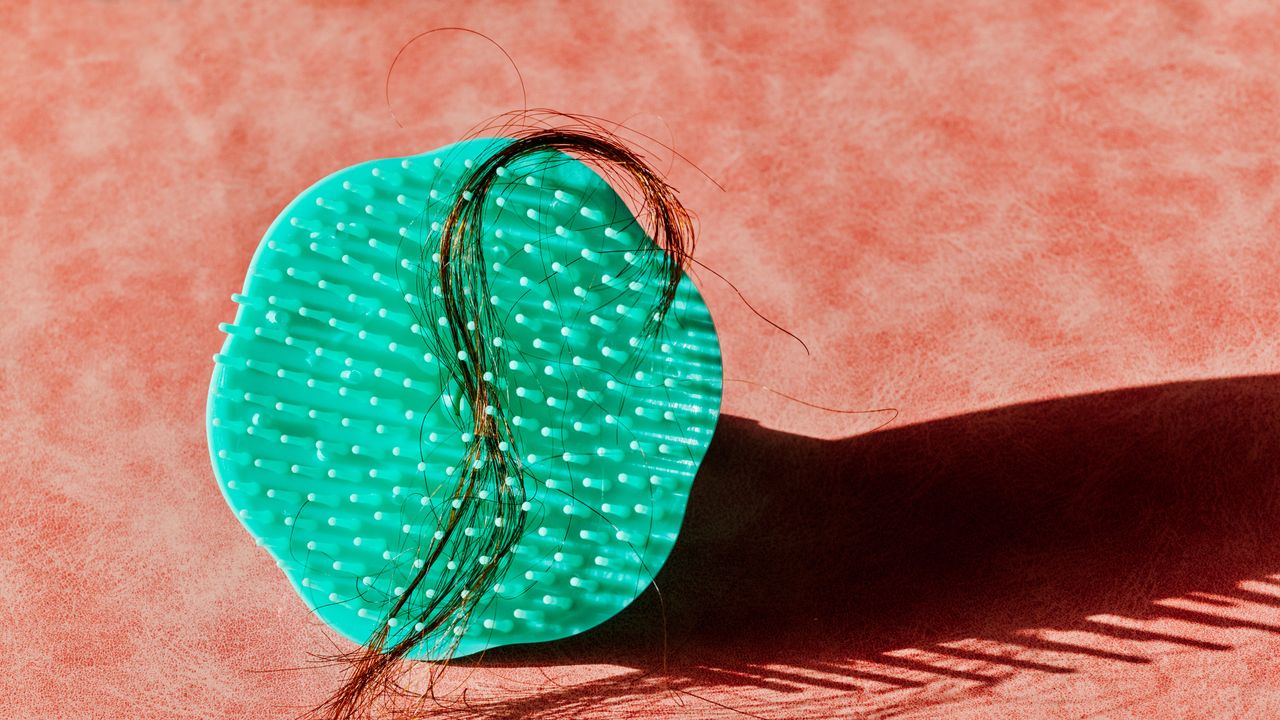
Despite the uncertainties, all the experts interviewed for this article agreed that a couple of theories are a bit more developed than others. Here’s a breakdown of what’s potentially going on.
The most likely culprit: Your body is freaking out.
When you lose weight quickly, with or without a GLP-1, your body perceives it as stress and starts shutting down processes that aren’t 100 percent critical for keeping you alive, such as hair growth, says Eric Nolen-Doerr, MD, an endocrinologist and weight-management specialist at Boston Medical Center. This temporary form of hair shedding is called telogen effluvium and can happen any time the body undergoes significant physiological or psychological strain. Rapid weight loss qualifies, as do other changes that can occur with GLP-1 therapy, including major hormonal shifts, Dr. Perkins says.
During this time more hair follicles than usual enter the resting (telogen) phase of the hair cycle, leading to “noticeable shedding a few months later,” Dr. Perkins says. (FWIW, this is the same reason people lose hair after having a baby: The stress of birth, particularly the hormone changes, triggers shedding.) You normally lose anywhere from 50 to 150 hairs per day, and with telogen effluvium that amount can double.
Experts theorize that the risk of hair loss while taking a GLP-1 could hinge on how much weight you lose and how rapidly you lose it—two factors that can increase the stress on your body. Wegovy clinical trials found that hair loss occurred more frequently among patients who lost over 20 percent of their weight in about a year and a half on the medication; it was less common in those who lost less weight. “It’s possible that differences in dose, degree of appetite suppression, and the amount or speed of weight loss—rather than the specific drug itself—play a larger role in whether hair shedding occurs,” says Dr. Perkins, who was not involved in the trials. But ultimately, she says, more controlled studies are needed to determine whether “meaningful differences exist among individual GLP-1 therapies.”
You might not be getting enough essential nutrients on a GLP-1.
One of the ways GLP-1s work is by making you less hungry. One 2025 study suggests that the average person taking a GLP-1 medication will consume upwards of 700 fewer calories per day than they would otherwise. Yes, this can lead to weight loss, but it can also have unintended consequences. “Eating significantly less can contribute to deficiencies in nutrients important for hair growth, such as iron, zinc, and protein, which may further exacerbate shedding,” points out Dr. Perkins.
This sentiment is echoed by Anthony E. Oro, MD, PhD, a professor of dermatology and associate director of the Center for Definitive and Curative Medicine at Stanford University. He says, “With iron and vitamin D deficiencies, the hair senses that the materials to make the hair are not coming in, and so it goes, ‘Whoa!’” The result? Less new hair growth and more hair loss, leading to a less full look.
How to manage hair loss on a GLP-1
If you start to see more strands coming out with each shower you might be inclined to tamp down on regular flatironing or bleaching to quell the process. Granted, it’s pretty much always a good idea to cut back on heat or color since it can negatively impact your hair health. But avoiding those things won’t do much to stop any shedding associated with GLP-1s, says Dr. Oro. Simply put, changing up your styling routine won’t address the underlying cause of your hair loss.
Disclaimer : This story is auto aggregated by a computer programme and has not been created or edited by DOWNTHENEWS. Publisher: www.allure.com








