
The Gentleman Driver is the financial backbone of GT racing, yet often finds themselves serving as mere cannon fodder for aspiring professionals. It is a recurring issue in paddocks across Europe: Amateurs funding the cars, only to be lapped by teenagers fresh out of karting. The result? Frustration and dwindling grid numbers in certain categories.
For the launch of the GT Summer Series (GTSS) in April 2026, promoter Gedlich Racing is addressing this imbalance head-on. Instead of banning fast drivers, they are introducing a concept inspired by golf handicaps. The goal is to allow amateurs to compete meaningfully against Silver-rated drivers without segregating the grid entirely.
Gedlich Managing Director Robin Selbach and series coordinator Stefan Lehner explain the plan in an interview about the philosophy behind mixing skill levels and the evolution of the “arrive-and-drive” market.
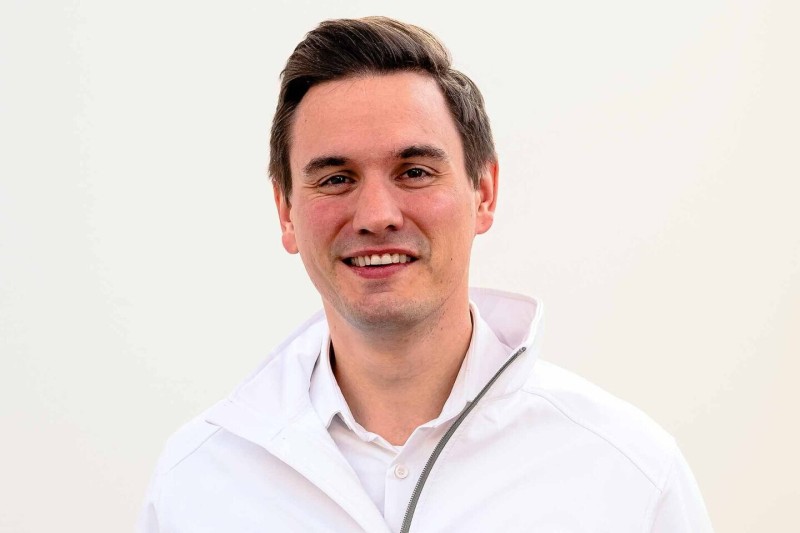
Robin Selbach, Managing Director of Gedlich Racing
Photo: Gedlich Racing
Question: Robin, as an active racing driver yourself, why would you enter your own series as an amateur only to face young, hungry talent?
Robin Selbach: Because as someone who does not pursue motorsport professionally, I would have a genuine chance of achieving a strong result in the GT Summer Series. I simply cannot be as fast as the young drivers or semi-professionals who come from karting or formula racing. That’s why it would be very appealing to benefit from adjusted competitive opportunities and perhaps even battle with drivers who are classified as Silver.
Question: This is a delicate balance. You are marketing to amateurs, yet you are explicitly inviting Silver drivers and youngsters. Isn’t that a contradiction?
Selbach: That is exactly our intention. We want emerging talents and experienced Silver-rated drivers to be on the grid in the GT Summer Series. Many of them will use the GTSS to prepare for their primary championships, such as the ADAC GT Masters or the GT World Challenge. But above all, we want gentleman drivers and amateur racers to have the opportunity to compete against more experienced drivers. That’s precisely what makes it exciting. It should work a little like the handicap system in golf—gentleman drivers compete against semi-professionals and can still measure themselves against them and succeed.
Question: Why is Gedlich Racing doubling down on the gentleman market when others are chasing manufacturer support?
Selbach: It is deeply rooted in our tradition and in the company’s DNA. For the past 15 years we have been organizing track days for amateur drivers. We feel a strong connection to successful individuals who live out their passion for motorsport with us. For us, the gentleman racer is not merely a target group; we see ourselves as part of this community. That makes it only natural for us to go the extra mile for these drivers and provide them with the best possible racing platform.

Stefan Lehner, series coordinator of the GT Summer Series
Photo: Gedlich Racing
Question: Stefan, the image of “amateur racing” has shifted from people wrenching in garages to high-end hospitality. How do you define the modern amateur scene?
Stefan Lehner: Amateur motorsport has existed for as long as motor racing itself. However, the scene has changed significantly. In the past, drivers worked on their own cars – tuning them, installing engine components or suspension parts – and then raced them. Those days have changed considerably. Today, while technology still plays an important role, drivers themselves are much less involved in it. In 2026, drivers typically rent a seat with a professional team that takes care of all logistical and technical responsibilities. This allows the driver to focus entirely on driving.
Question: It has become a pure “arrive and drive” service industry…
Lehner: Correct. The cars themselves are delivered as complete kits by the manufacturers. That’s excellent for driver safety. At the same time, it gives drivers much more freedom to focus on their driving and improve their skills, often working together with a coach. We want to provide exactly the optimal platform for this.
Question: What profile of teams are you targeting?
Lehner: We expect professionally-run teams with high standards when it comes to organization and operational processes. For a team, two things are particularly important: a smooth race weekend and high customer satisfaction. And their customer is the driver. Most teams competing in top-tier series such as the DTM or ADAC GT Masters also field amateur and gentleman drivers. Those drivers will feel very comfortable with us.
GT Summer Series 2026 calendar
April 17–19, 2026: Hockenheimring (Germany)
May 29–31, 2026: Oschersleben (Germany)
June 25–28, 2026: Nurburgring (Germany)
August 27–30, 2026: Spa-Francorchamps (Belgium)
October 2–4, 2026: Hockenheimring (Germany)
We want your opinion!
What would you like to see on Motorsport.com?
– The Motorsport.com Team
Disclaimer : This story is auto aggregated by a computer programme and has not been created or edited by DOWNTHENEWS. Publisher: motorsport.com








