
Sheryle Bagwell
My mother was trapped in a bad marriage, or rather, she was anchored to it. Marriage was the only vessel that Mum felt could keep her afloat. The two of them, my mother and father, were always ricocheting back and forth, between conflict and reconciliation, defiance and contrition. They were seen as a well-matched couple with three healthy, blonde-haired children. The sad fact was that they were really like two scorpions in a bottle.
After each violent clash, usually fuelled by alcohol and frustration, they would once again sail forth together as if there’d never been a tempest. But as a teenager I was always on the lookout, trying to read the domestic mood. When would the next storm hit?
In between, there were some calm times, indeed many good times: family outings, holidays up the coast, barbecues in the backyard. But in rough weather, when the anger between them spilled over into physical violence, our home felt like a shipwreck. I’m amazed that any of us managed to survive. In the end, only one of us went down with that ship.
I’ve been thinking about my mother a lot lately, here in Provence. Dreaming about her, even. Maybe reading the letters of Madame de Sévigné has stirred things up. Or maybe it’s just the culture shock or the jet lag.
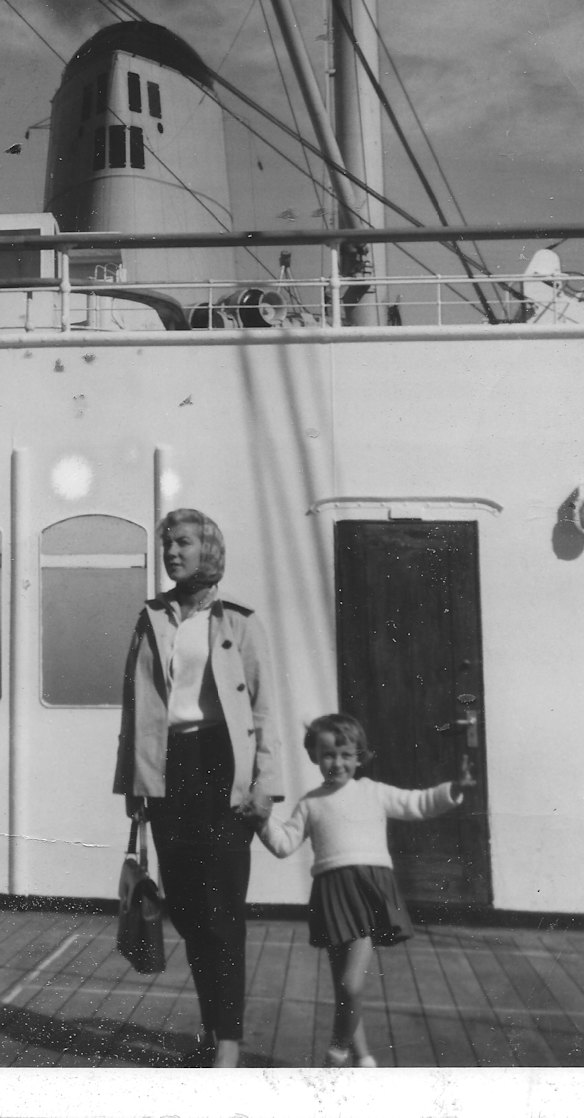
My mother died more than 45 years ago – she’s now been dead longer than she was alive. Yet, I still see her in my mind’s searching eye. Her lovely face framed with her permed dark-blonde hair. Her broad smile. Her curvaceous figure, which often saw her compared to Marilyn Monroe and which only made my jealous father even more so.
Her last job was on the process line of the Yardley cosmetics factory in Chullora, in western Sydney, a big employer in our neighbourhood in those days, but now long gone. Mum loved that job. Her mother, our Nan, worked there too, and during my university vacations, so did I. One day, the boss offered me a full-time job in the office. “Imagine, three generations working under the one roof?” he added, with a smile. No, I didn’t want to imagine it.
Mum could, though; she called us the three musketeers. I soon found a better-paying vacation job. But Mum stayed put. She loved to laugh and gossip with Nan and the other women on the process line, which they called “the belt”. I marvelled at how they could have intense conversations while stuffing powders and lipsticks and creams into the hundreds of little boxes that passed by them every hour. They were also deft at stuffing a few of those boxes into their coat pockets to take home.
They’d take a smoko break and gossip even more. Someone would have brought in some Arnott’s biscuits to have with a cup of tea. The women would chat about what they might do with what was left of next week’s pay, after they’d bought the kids’ school shoes and paid the grocery bill.
I remember Mum mentioning to the women that she was saving up to buy a plane ticket to Paris. “Where?” they asked, laughing. Mum said, “I hear the women are given French perfume for free in Paris!” More laughter. Then it was back to the belt.
Looking back now, I realise that her minimum-pay job gave my mother maximum freedom to dream. At least, until she became too sick to work.
My mother would come home from that job on a fragrant cloud of lily-of-the-valley and English rose. She left a trace of herself in every room she entered, including the kitchen. Nan did the same.
This was suburban Australia in the early 1970s. No one divorced back then, or at least no one we knew.
Funny how we remember smells more than sounds, or at least some smells. Sitting here in my little yellow attic room in Provence, I can still smell her scent, as if it were one of Proust’s madeleine cakes. Or maybe I prefer to remember that sweet fragrance of her life rather than the oppressive odour of her long illness.
What I can’t recall any more is the exact sound of her voice. I can’t remember the rhythm of it, whether she had a broad Australian accent or not. I have no recordings of her. I don’t even have any letters that might offer some hint of how she expressed herself.
I can clearly hear in my mind, though, my own imploring voice, in a memory I’ve replayed many times. A night, a lifetime ago, when I pleaded: “Mum, let’s just get in the car and leave.” Yellow and blue bruises on her arm, her eye ballooning into a nasty, irregular lump. My two younger siblings asleep, oblivious to the furniture smashing around them. No such luck for me. I was a teenager, old enough to hear the shouts, to feel the fear, to dread the inevitable.
“I can’t go,” I recall Mum telling me, as we huddled together after the fight. “How would we get by? I can’t support all four of us.”
And so she, my brother, my sister and I stayed on in that house, where we kept our secrets. This was suburban Australia in the early 1970s. No one divorced back then, or at least no one we knew. Domestic violence wasn’t even grounds for divorce. As a teenager, I felt alone and ashamed, as if ours was the only family experiencing such turmoil. Until I was old enough to notice the faces of my aunties and older cousins at family gatherings. The thick make-up covering strange blemishes. The sunglasses worn inside during the day. Hushed conversations when children came into the room. Husbands’ eyes downcast, some defiant.
The cycle of violence and contrition repeated itself like the cycles on our mothers’ washing machines. A cycle turbocharged by alcohol. In my parents’ case, the drinking seemed to keep them sane, while sending them insane. It aggravated the petty grievances, the jealousies, the penury of their lives. They would drink to remember; they would drink to forget. This was Australia, so there was always booze. When our extended family got together to celebrate an event, they did so around the backyard beer keg, even for children’s birthday parties. The keg was their working-class altar, at which they worshipped, even as it destroyed them.
The ’70s would eventually bring much change. Feminism would create more options for women like my mother. A new left-leaning government promised to rebalance the scales. Prime Minister Gough Whitlam made divorce easier, with no grounds needed. Single mothers got government support. Activists opened the first women’s refuges.
But it all came too late for my mother. If she had lived long enough, perhaps she would have grabbed that hand up, that hand out. She wasn’t smart about relationships, but she wasn’t a fool. She had ambitions. She wanted to become her own boss, open a hairdressing salon. She wanted me, and my sister, to join her in this endeavour. My mother never understood my desire to go to university. No one had studied past high school in our family before; I would be the first.
“Don’t you want to earn some money?” she would ask me, mystified. “Don’t you want to get out of this place?” It was a reasonable question at the time.
I was equally mystified by her dream of visiting Paris, of walking down the Champs-Élysées, of climbing the Eiffel Tower. But she was serious. Paris would eventually change me. Would it have changed my mother, too? Who might she have become? I can only imagine.
1800 RESPECT (1800 737 732)
Letter from Provence (Allen & Unwin) by Sheryle Bagwell is out now.
Get the best of Sunday Life magazine delivered to your inbox every Sunday morning. Sign up here for our free newsletter.
From our partners
Disclaimer : This story is auto aggregated by a computer programme and has not been created or edited by DOWNTHENEWS. Publisher: www.smh.com.au


