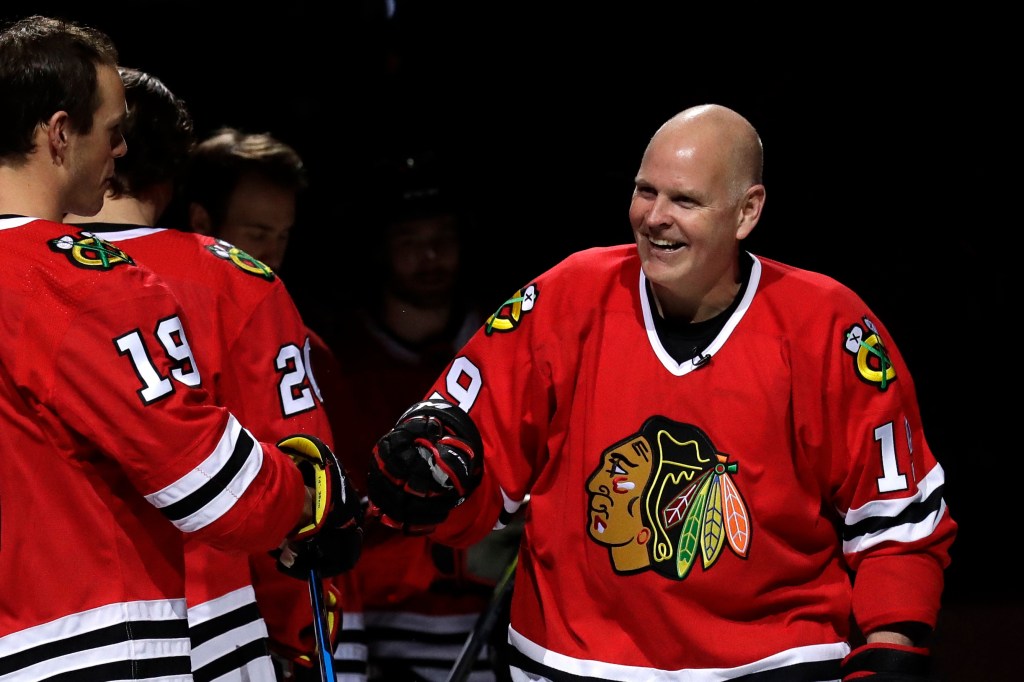
The Blackhawks are mourning one of their former players on Saturday.
Troy Murray died at 63, the team announced, after a long battle with cancer that he publicly revealed in 2021.
Chicago drafted Murray in the third round (57th overall) in the 1980 draft, and he quickly became a fan favorite.
“Troy was the epitome of a Blackhawk, so far beyond his incredible playing career with a presence felt in every corner of our organization over the last 45 years,” Blackhawks chairman and CEO Danny Wirtz said in a statement. “He was admired by his teammates and our players, and was so proud to connect generations of Blackhawks through his work with the Blackhawks Alumni Association. He jumped at every call to support our local community with our Foundation. He never missed a chance to say ‘hello’ in our press box and always knew the perfect time for a joke just when someone around the office needed it most. And he absolutely loved bringing Blackhawks hockey to you, our fans, night after night with a dedication to his craft that never wavered to the very end.
“During his long and hard battle with cancer, it was often said that Troy didn’t have any ‘give up’ in him. While our front office simply won’t be the same without him, we will carry that spirit forward every day in his honor. We’ll miss you, Muzz.”
The Calgary, Alberta native starred as a two-way center at the University of North Dakota, earning WCHA Rookie of the Year award before helping the team win the national title in his sophomore season.
With the Blackhawks, Murray became the first player in team history to win the Frank J. Selke Trophy as the league’s top defensive forward during the 1985-86 season.
He logged 488 points, totaling 197 goals and 291 assists, across 688 regular season games in 12 seasons with Chicago.

Murray spent 15 seasons in the NHL and also served as the Jets’ captain for two years.
He played two seasons with the Senators and a single season each with the Penguins and Avalanche, winning a Stanley Cup with Colorado in 1996.
After retiring, Murray remained a big part of the Blackhawks organization, transitioning into broadcasting. He served as the team’s radio color analyst for over two decades.
Disclaimer : This story is auto aggregated by a computer programme and has not been created or edited by DOWNTHENEWS. Publisher: nypost.com