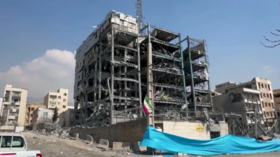
What the US and Israel likely envisioned as a short and decisive conflict threatens to spill over other borders – perhaps not accidentally
In the early hours of the US-Israeli attack on Iran, a certain kind of strategic storytelling almost wrote itself. In Washington and in West Jerusalem, the operation looked designed to behave like a demonstration of overwhelming control, brief in duration, sharp in intent, and psychologically decisive.
The logic that many analysts inferred from the opening pattern was not merely to damage facilities but to rupture the nervous system of the Iranian state, striking at the command spine, the coordinating brains, the symbols that bind military and political authority into one chain. Media reporting, including detailed accounts from major British outlets, has described the first wave as a joint US-Israeli action that killed Iran’s supreme leader and a large number of senior military figures, an outcome that fits the template of a decapitation strike even if the operational details remain contested in public.
Yet a blitzkrieg is not defined by how it begins, it is defined by how quickly it ends on the attacker’s terms. Here, the choreography has broken. Iran, instead of choosing strategic shock or ritual protest, appears to have made the more dangerous decision to answer in a sustained and geographically distributed way, turning the confrontation from a single theater into a region-wide stress test of air defense, naval protection, base security, and political cohesion. Even where interception rates are high, the political effect of continuous alerts, disrupted traffic, scattered impacts, and the sheer repetition of incoming threats has a corrosive power. It forces every government in range to ask a private question that rarely makes it into public communiqués, namely, “how many days of this can we tolerate?” and at what cost, before our own markets, citizens, and internal coalitions begin to fracture. When war becomes an endurance contest, it stops being only about platforms and munitions, it becomes about stockpiles, budgets, logistics, and the willingness of partners to keep the doors open.
Disclaimer : This story is auto aggregated by a computer programme and has not been created or edited by DOWNTHENEWS. Publisher: rt.com