
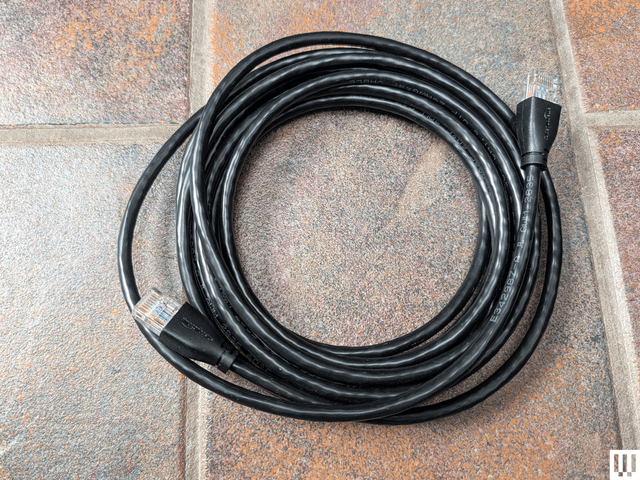
While Wi-Fi is great, you can always get a faster and more stable internet connection by running Ethernet cables. Whether you want to move your router to the center of your home to maximize signal strength, set up wired backhaul for a mesh system, or run a cable to an EV charger, wired is better. But no one wants messy cable runs. Follow this guide, and I’ll show you how to choose cables, plan your route, and hide everything to make it nice and neat.
If you can’t run cables, we also have ideas on how to make your Wi-Fi faster, how to fix your Wi-Fi, and guides to the Best Mesh Routers, Best Wi-Fi Routers, and Best Wi-Fi Extenders.
A Word on Speed
Remember, bandwidth and speed are always limited by your incoming internet connection. If you have a 1-Gbps connection, you won’t be able to exceed that speed when interacting with the internet. That said, you may be able to move files across your network from one device to another faster by using higher-rated gear. But everything must be rated at the same speed. You will be limited by the weakest (slowest) link, whether that’s the Ethernet port on your router, the cable, the Ethernet switch it plugs into, or the port on your PC or other device.
Choosing Ethernet Cables
You can get good Ethernet cables without spending much money. I go into more detail in my Ethernet guide, but there are a few things to look out for.
Category: Ethernet cables come in various categories that determine the maximum bandwidth and data rates. While most homes can probably get by with Cat 5e or Cat 6 cables, which enable speeds up to 1 Gbps, I would opt for Cat 6a or Cat 7, which can go up to 10 Gbps, for your main runs, such as from the router to your switch. The price difference isn’t huge, and the faster cables will still serve if your needs increase in the future. Cat 7a or Cat 8 cables, capable of 40 Gbps, are overkill for the average home, and usually far more expensive.
Shielding: Most Ethernet cables have pairs of wires twisted together with a plastic covering (Unshielded Twisted Pair, or UTP), but some cables have metallic or foil shielding (STP or FTP, which stand for Shielded Twisted Pair or Foiled Twisted Pair). You only really need to worry about shielding if you are running cable next to power lines or other sources of interference. Shielded cables are less flexible and easier to damage, so most folks running cables at home may prefer to stick with UTP.
Cable Shape: I recommend avoiding flat cables as they are more prone to interference and seem to get damaged more easily. Anecdotally, I have had more issues with flat cables than regular cables, but it’s important to avoid sharp kinks or heavy footfall on any cable.
Manufacturer: Choose a recognized brand, but don’t spend too much. I’ve had good experiences with Cable Matters, Monoprice, and Amazon Basics. Here is a patch cable to consider:

Do You Need an Ethernet Switch?
Routers and mesh systems have a limited number of Ethernet ports, but you can use an Ethernet switch to turn one port into many. Figure out how many ports you need to run cables to the spots where you want them. Unmanaged plug-and-play switches (no configuration necessary) are usually sufficient for home networks.


Most folks will get by with a five- or eight-port extension, but I’d suggest getting a switch with one or more spare ports than you currently need, in case you want to add more cables in the future.

You can get much larger switches with 12 or even 24 ports if you require. But the available bandwidth will be divided between these ports. If you want to prioritize ports, set security conditions, or dig into other configuration settings, you will require a managed switch.
Planning Ethernet Cable Runs
Before you start, plan your cable run carefully. Whether you are running one cable or many, there are a few things to avoid:
- Avoid bends wherever possible, because sharp kinks or twists can damage cables.
- Avoid high-traffic areas, as people standing on cables or anything running over them will damage them over time.
- Avoid electrical interference. This is unlikely to be a big problem, but try to keep them away from power cables.
Whatever route you take, it’s worth snagging cable management to keep things tidy.


Cable ties are ideal for keeping multiple cables bound together and making them easier to manage. You probably have a bunch already, but you can buy a pack of 60 ($7) reusable ones cheaply.


Cable sleeves are even better, since they provide a mesh cover for bundles of cables, making it easy to remove or add cables.
Label Your Cables
If you have more than one cable, make sure that you label them. This can save you a lot of trouble later. Picking a different color for your Ethernet cables (or at least not black, white, or gray) can help you to immediately tell them apart from other cable types, especially handy if you’re installing them behind walls or under floors.
How to Hide Ethernet Cables
There are several ways to hide Ethernet cables, and some are much tougher and more invasive than others.
Running an Ethernet cable along your baseboard or skirting board can be reasonably neat, and it’s easy to do. Depending on your baseboard style, there might be a suitable channel or recess, and you can use cable clips with nails or adhesive. The tricky part is dealing with doors and transitions between rooms. If you’re lucky, there might be enough of a gap under your door, though it can be neater and safer to drill a hole through the wall to get the cable from one room to the next.
Probably the easiest way to hide cables is to stick them under your carpets. It’s best to stay tight to the baseboards to minimize the risk of anyone standing on the cable. If you have carpet grippers around the edges, you may be able to run cables on either side of them to keep them neatly out of the way. Just make sure to avoid high-traffic areas, and if you do have to run a cable across a doorway, get a proper cable protector.

If you don’t want visible cables, but can’t go into or under the wall, cable raceways or trunking could be the answer. You can get kits with various lengths of trunking with angled turns to run your cable. The best trunking can also be painted to match your baseboard or walls, which really helps it blend in.


Maybe your cable run could be an excuse to upgrade your rooms with some crown molding or coving. Crown molding that runs around the top of a room, where the wall meets the ceiling, is easy to fit and can add a decorative flourish and hide paintwork. It can also contain a channel with an Ethernet cable inside, though you’ll still need a neat solution to run the cable in and out.
For the neatest finish, you can’t beat running cable behind your wall or under the floor, but this is also the most difficult way to do it. You need various tools, and it can be a messy job, with potential risks including electrical cables and water pipes. If you’re up for the challenge and your home is suitable, here are a few things that can help you do a good job.
Boeray Fiberglass Flexible Snake Rods ($19): These extendable, flexible rods make it easier to run cables from spot A to spot B with limited access.
VCE Brush Wall Plates 10-Pack ($20): If you are running one or two patch cables, brush plates are just that bit neater than a hole in the wall and they allow you to add or remove cables quite easily.
Monk Cat 6 Ethernet Cable Roll 1,000-Feet ($140): If you are doing multiple long cable runs, it might make sense to buy a roll of cable. While I can’t vouch for it personally, this Cat 6 roll has decent reviews. You will also need to be confident about wiring them into keystone jacks or patch panels.
Soibke Cat 7 Ethernet Cable Roll 500-Feet ($160): If you want something a bit faster, this Cat 7 roll could fit the bill.
Cable Matters Punch Down Tool ($10): You can use this to terminate your cables or a keystone jack.
Cable Matters RJ45 Keystone Jacks 10-Pack ($16): If you cut lengths of cable from a roll, you can use a punch-down tool to connect jacks like this, enabling you to fix them to wall plates.
Wall Plates ($13 and up): You can slot keystone jacks into these wall plates and then run patch cables to devices in the room.
When I run cables behind walls, under floors, or any other tricky spot, I often include a length of string. This enables you to tie a new cable and pull it through should you ever need to upgrade or add a cable.
Hiding Switches and Power Strips
If you have extension strips and Ethernet switches, you might want to snag a box to hide them in.


Boxes with gaps to run cables in and out can look nice and neat. Ikea’s Satting box (£6) is also decent but only seems to be available in the UK right now.
Disclaimer : This story is auto aggregated by a computer programme and has not been created or edited by DOWNTHENEWS. Publisher: wired.com



