
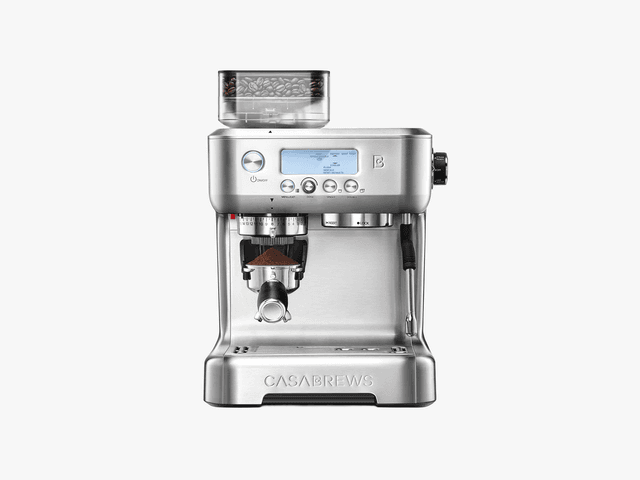
Coffee is the original biohack and the nation’s most popular productivity tool. As we adjust to the changeover to daylight saving time, the caffeine-addicted WIRED Reviews team is writing about our favorite coffee brewing routines and devices. Today, reviewer Peter Cottell expounds on why espresso machines don’t have to be any fancier than a Casabrews 5700. Look out for other Java.Base stories about other WIRED writers’ favorite brewing methods.
There’s a slogan in the guitar world that claims “tone is stored in the fingers.” It’s a reductive notion that’s meant to urge upstart shredders to journey within for an ideal guitar sound that suits them best rather than spend a lifetime and tens of thousands of dollars on expensive pedals, amps, and a high-end guitar with a boomer’s signature engraved on the headstock. The irony of this phrase is that it’s usually muttered by the very geezers who can afford such gear; think Joe Bonamassa, John Mayer, and James Dolan, whom the guitar world refers to as “blues lawyers.”
Fancy coffee gear can get you pretty far, but it’s as useless as a $20,000 Les Paul without technique or inspiration. The punk boom of 1977 showed ambitious musicians that they could get pretty far with attitude and initiative. But it was amidst the egalitarian post-punk boom of the early ’80s that we learned practicing your instrument and keeping an open mind can lead to transcendence, financial circumstances be damned.
In the summer of 2008, I found myself unemployed with a communications degree from a large state college, so I took the next logical step and took a turn in the service industry. A local chain of coffee shops was the first employer to call me back, so off I went to become a barista despite having, until then, consumed a total of 2 cups of coffee in my entire life. I spent the first year drinking cold brew and working afternoon or evening shifts. Then I was moved to mornings, and I had to learn how to dial in an espresso machine. And everything changed forever.
I don’t recall the make or model of the machine, but you’ll get an idea of its form and function when you imagine a local second-wave shop with a ragged GVC aesthetic, a crowded bulletin board that’s overrun with business cards from sex pests turned yoga instructors, and a silly alliterative name like Jammin’ Java or Expresso Express. At the onset, “dialing in” consisted of jiggling the grind size on the grinder until it spit out a pile of grounds that yielded a shot anywhere between 20 and 40 seconds. There was no scale, and the temperature and pressure specs of the machine were a mystery, and no one cared about any of this because most of the espresso drinks we sold were doused in DaVinci syrup and 2 percent milk. It wasn’t until the hammer came down on everyone behind the counter’s overconsumption of expensive sugary drinks that I was forced to reckon with espresso. I spent the next three years figuring out how to coax something drinkable out of this cursed, faltering machine, and I finally reached the same conclusion as many before me: Espresso is universal. It is the base unit of caffeination. The binary code of the coffee world. The bottom brick of everything earthy, bitter, brown, and rich.
After my stint at the declining café in Ohio, I moved across the country and graduated to a bakery-coffee-shop hybrid in Portland, Oregon. While it wasn’t a bona fide third-wave shop, we were close enough to stalwarts on the scene like Heart and Stumptown, so we took coffee as seriously as we could. The morning crew was responsible for dialing in three different grinders: decaf, a blend, and a single origin. Walking to work before dawn in the silent fog was a meditative experience, no matter how hungover I was, and the process of taking notes while sipping shots and adjusting the grinder and extraction time ever so slightly is a morning ritual I would return to daily if I could. Then your coworker arrives, the stereo turns from ambient techno to Electric Wizard, the customers slowly trickle in, and all hell breaks loose. You become one with the machine.
You pull shots until you’re told to stop. People ask for half-caff and get full decaf because that’s actually how it goes. You knock back unneeded shots as you go, tweaking dosages and refining tamp weights as drop times move in and out of spec. You sip a perfect shot amidst the chaos. The crema is syrupy and sweet, and the body leaves just enough residue in the heavy shot glass with the tiny handle and the faded pirate logo. The owner of a popular Thai restaurant up the block orders four iced Vietnamese coffees for his crew–eight double shots total. Your brain detaches from your body as you tamp, and you wonder how and why you are now good at this very specific and rote task that fuels the entire world.
An expensive espresso machine is far more forgiving than a $100 hunk of plastic you’ll find on Amazon, but the financial bar doesn’t disqualify you from brewing good shots. Anyone can brew good shots on any machine if they take the time to learn how. You’ll waste an untold amount of beans and get incredibly buzzed in the process, which is a big part of why it’s fun and gratifying. And anyone can make almost any kind of drink with espresso, which is not something you can say about most other brew methods.
Spend a week away from the US or Canada, and you’ll remember right away that a cup of high-end drip coffee is an anomaly. Nice third-wave spots are rightly oriented around their espresso machine, and even the jankiest carts parked along uneven alleyways are run by operators who’ve become one with their machine. They know its quirks, its sweet spots, its tells. They know when they’ve entered the flow state, and they know when it’s time to take a step back and reassess their inputs and outputs.
.jpg)
While I miss the bedlam and the camaraderie that punctuated my days at the bakery in Portland, I won’t complain about the relative peace I enjoy while I pull myself a shot every morning on a Casabrews 5700Pro. I use the same beans from Costco 90 percent of the time, so dialing in is essentially light maintenance to account for bean stability and atmospheric conditions on that given day.
I’ve tested a handful of lower-cost machines in my day, such as the Gevi Espresso Machine, and the only considerable wild card these sub-$500 machines throw you is subtle variances in water temperature and pressure. The former is easy enough to measure: Pretend to pull a shot without the portafilter and check the temperature of the water. The latter is a bit trickier, but it’s aligned with the spirit of this entire anecdote as a whole. You won’t know what’s off or how to fix it until one day, when you magically do, and that will be that.
It’s a lot like learning how to drive a vehicle with a manual transmission: One day you’re stalling out, grinding your gears, and struggling to figure out what’s going wrong. And then, magically, you’re shifting gears seamlessly without looking at the tachometer, hungover as hell with a breakfast burrito in one hand and doom metal turned up to 11 on the stereo. You can enjoy this transcendent experience in the comfort of your own home. It might not be the same for me, but it’s heaven either way.
Disclaimer : This story is auto aggregated by a computer programme and has not been created or edited by DOWNTHENEWS. Publisher: wired.com







