
Updated ,first published
The Coalition is uniting with farmers to demand the Albanese government ensure critical industries do not run short on fuel, as fears over price spikes and a protracted war in Iran drive widespread panic-buying in regional areas.
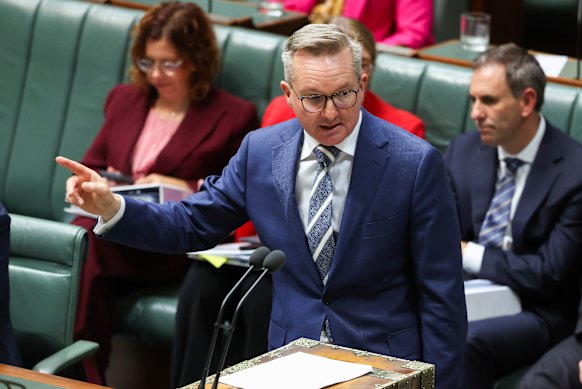
Energy Minister Chris Bowen assured Australians there is currently no shortage based on the fuel stocks held in Australia or in the volumes coming into the country, but has convened an urgent meeting with a fuel taskforce of ministers and industries on Tuesday afternoon.
“There is absolutely no need for panic-buying or panic anything. We are in a very uncertain time internationally, but we enter this crisis very well-prepared,” Bowen told ABC radio. “Not one single shipload of diesel, petrol or jet fuel to Australia has been interrupted.”
The taskforce will include farming organisations, fuel suppliers, Industry Minister Tim Ayres and Agriculture Minister Julie Collins, as well as the peak lobby group for the fertiliser industry, which is facing a global supply crunch. It will discuss concerns that fuel wholesalers are hoarding supplies and reports that farmers are panic-buying to avoid future price spikes.
The future of Australia’s energy security remains uncertain while oil tankers are unable to sail through the Strait of Hormuz – which typically carries a quarter of global oil supply – while Iran attacks neighbouring nations in retaliation for the bombardment of its country by the US and Israel.
The Middle East region produces about 45 per cent of the global fertiliser supply.
Independent fuel suppliers have reported difficulty in filling orders, as major companies restrict distribution. Social media is awash with reports of regional motorists claiming their local service station is empty, and farmers reporting diesel price spikes and delays to orders from private suppliers.
Victorian Farmers Federation president Brett Hosking said grain growers were particularly concerned about fuel and fertiliser supplies because they will soon start planting winter crops such as wheat and barley.
“We want to see some level of government intervention to ensure robust supply chains, and that agriculture is treated with a degree of importance because we only get one window to plant a crop,” Hosking said.
While there is believed to be enough urea on hand to plant – which typically starts in April – prices were already rising, and farmers are worried about how expensive it could be to fertilise their crops as they grow.
“Government will need to act swiftly and decisively to resolve this issue for all Australians,” said NSW Farmers grains committee chairman Justin Everitt. The next couple of weeks are a critical window for farmers to start growing next year’s bread, pasta and Weet-Bix, so this needs to be resolved this week.”
National Farmers’ Federation president Hamish McIntyre said farmers had already reported rising fuel prices and supply shortages to his organisation.
“Ensuring fuel reaches farm businesses is critical to keeping food moving from paddock to plate.”
Opposition energy spokesman Dan Tehan said Bowen should have already used federal powers to commandeer supply chains.
“He’s not using those laws to get that full transparency in place to get that fuel moved,” Tehan said.
“What is he doing to make sure it’s distributed evenly across the country so that we don’t have certain areas and key industries that are missing out? And he needs to be doing the same when it comes to fertiliser.”
Agriculture Minister Julie Collins said the government was monitoring fuel and fertiliser suppliers for potential price-gouging.
“Our government will continue working closely with farmers to manage impacts on agricultural exports and imports, including fuel and fertiliser, as well as our food security,” Collins said.
A meeting overnight of G7 nations and the International Energy Agency decided against releasing strategic oil reserves but said it was ready to do so in the future.
The global benchmark for oil, Brent, soared to $US116 ($165) a barrel but has since fallen to less than $US90 since US President Donald Trump declared the war would be over soon.
Regular unleaded fuel is retailing for around 219.9¢ at many service stations in Sydney and Melbourne on Tuesday morning.
Cut through the noise of federal politics with news, views and expert analysis. Subscribers can sign up to our weekly Inside Politics newsletter.
 Mike Foley is the climate and energy correspondent for The Age and The Sydney Morning Herald.Connect via email.
From our partners
Disclaimer : This story is auto aggregated by a computer programme and has not been created or edited by DOWNTHENEWS. Publisher: www.smh.com.au