Stay informed with free updates
Simply sign up to the Oil & Gas industry myFT Digest — delivered directly to your inbox.
Saudi Aramco, the world’s largest oil company, has said it will be able to export about 70 per cent of its normal crude shipments within days as it rushes to restore sales cut off by the US-Iran war to global markets.
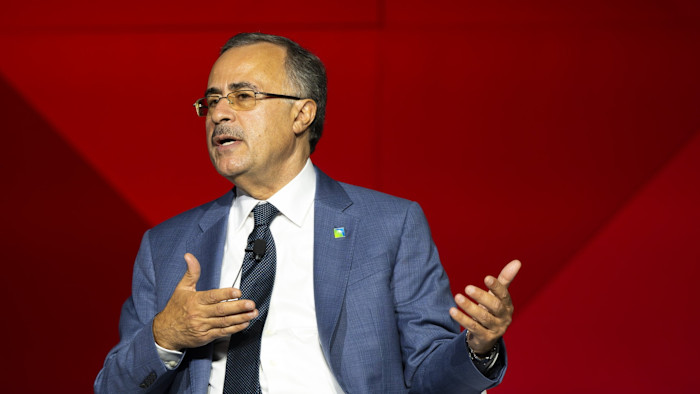
Amin Nasser, Saudi Aramco’s chief executive, said on an earnings call that the company was working to rapidly boost exports at its Red Sea port of Yanbu, which will allow about 5mn barrels a day to reach the global market without traversing the Strait of Hormuz.
Saudi Arabia normally exports about 7mn b/d, with only a small portion of that leaving from the Red Sea while most of its crude departs from its east coast into the Gulf.
But Iran’s threats to shipping have largely closed the Strait of Hormuz, cutting off most of its oil from global markets. In total, about 20 per cent of global oil supplies have been hit, with Iraq, Kuwait and the United Arab Emirates all cutting production to varying degrees.
Nasser warned that the Middle East conflict would have “catastrophic consequences” for the oil market the longer it continued, as well as “drastic” effects on the global economy.
His comments, made on a quarterly results call, are the first public warning from the world’s largest oil company about the continuing conflict sparked by the US-Israel attacks on Iran earlier this month.
Aramco is the world’s biggest oil producer and is responsible for about a 10th of global supply, meaning any disruption to its operations is watched closely by oil markets.
Oil prices have surged since the start of the crisis, with Brent hitting almost $120 a barrel on Monday, its highest level since June 2022, before falling sharply later in the day after US President Donald Trump suggested the war could end “very soon”.
G7 energy ministers are also expected to meet on Tuesday to agree a release of strategic oil reserves co-ordinated by the International Energy Agency. That has helped to push prices back towards $90 a barrel, though trading remains volatile.
Crude was trading about $60 a barrel at the start of the year.
Yanbu usually handles a fraction of Aramco’s exports but the company has told customers to load from its west coast because they are unable to sail into the Gulf, Nasser said.
The move will mean using the full 7mn b/d capacity of Aramco’s pipeline, which runs from the oil-producing region in the east to Yanbu, he said.
The company’s west coast refineries use about 2mn barrels of crude a day, Nasser said. Aramco has not reduced any refining production aside from the Ras Tanura plant in the east, which was struck on March 2.
Nasser did not say how much oil the company was producing but suggested that production of some crude oil grades had fallen.
“There’s a certain area where we have medium and heavy, which we are not utilising for the time being because we have adequate capacity to meet our requirements and meet what we need through the east-west pipeline,” he said. “We are meeting the majority of our customers’ requirements.”
Aramco’s spare capacity meant it could restore output “in a matter of days”, Nasser said, if it needed to shut down any of its facilities.
The company posted annual results on Tuesday. Its adjusted net income fell to $104.7bn in 2025, 5 per cent lower than the previous year.
Disclaimer : This story is auto aggregated by a computer programme and has not been created or edited by DOWNTHENEWS. Publisher: ft.com