
Sergio Perez reckons a “massive shunt” will soon happen due to Formula 1’s new starting procedure after the Liam Lawson–Franco Colapinto near-miss at the Australian Grand Prix.
At last weekend’s F1 2026 opener, Lawson was slow off the line with no battery power, whereas Colapinto nailed his start and showed lightning reflexes to avoid hitting the back of the Racing Bulls, which suddenly appeared once traffic had passed.
It happened on the debut of F1’s latest regulation overhaul with changes to both the chassis and power unit, the latter of which has removed the MGU-H and is more reliant on electrical energy.
This has made race starts more complex because drivers must now rev their engines much higher for at least 10 seconds to spool up the turbo, but timing the procedure wrong could pitch the car into anti-stall.
Melbourne therefore showed that the risks that come with this are even more extreme now, particularly for cars at the back as traffic could hide a slow driver ahead – as was the case with Colapinto and Lawson’s near-miss.
“It’s a shame,” said Perez ahead of this weekend’s Chinese Grand Prix. “It’s a shame that I say, but it’s just a matter of time before a massive shunt happens.
“These power units are very difficult to start. You can have a good start or you can have a bad start, by so many different factors. You can get anti-stalled, like what happened to Lawson, and then that can be very, very dangerous, because the speeds that you end up doing within two to three seconds are extremes.
“So it’s a difficult one, because I don’t know what you can do in that regard. It’s just these new engines are very difficult to start.”
But these thoughts are nothing new as safety concerns arose in pre-season, so much so that the FIA implemented practice start runs at the end of each day in Bahrain testing.
“When I started to see the onboards after the race, it was even closer than what I thought, even more sketchy,” said Colapinto.
“Generally it’s things that we were expecting that would happen and things that we knew that were there and issues that everyone was getting, every team.
“We talked in many different situations that these things were going to be a thing to look at and possible dangerous situations. It happened. Luckily I could manage to escape from it and manage to do the whole race.”
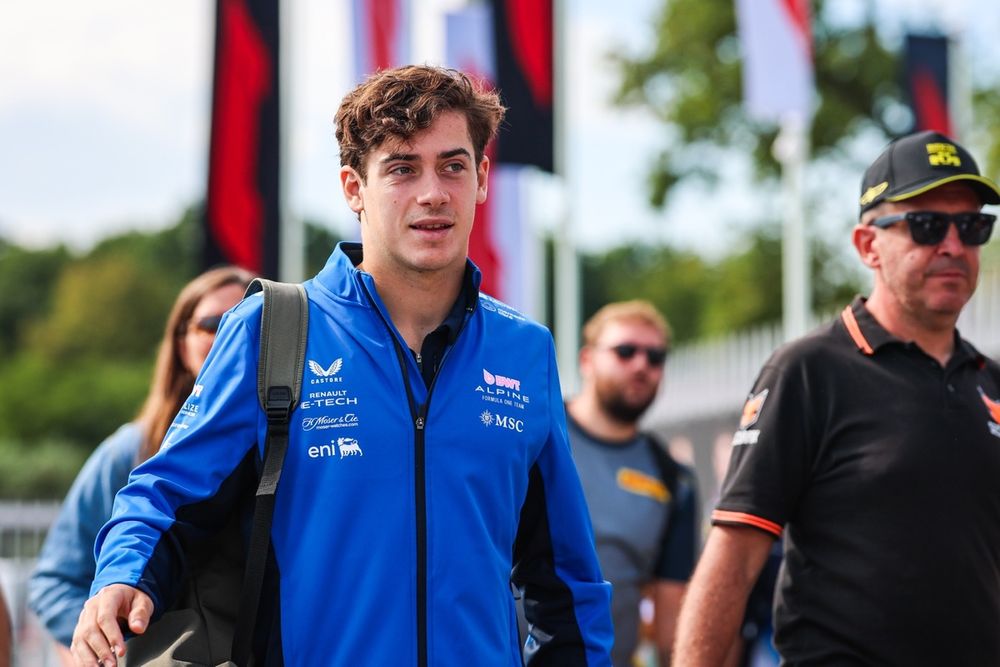
Franco Colapinto, Alpine
Photo by: Sam Bagnall / Sutton Images via Getty Images
The Alpine driver thinks the increased acceleration of these cars due to the extra electrical power heightened the situation, with greater speed differences a wider debate around the new rules.
That’s because on one occasion a car might be harvesting battery while another is going flat out along a straight, causing the rate at which they meet to increase.
“I was already doing 200 something km,” added Colapinto. “So we were already very quick. When this boost kicks in and then the energy, it is a lot of power and we come very quick.
“There is a big speed difference between the cars that are having a problem and the cars that are going normally. I had, also, FP2 I think it was, I had a close call with Lewis [Hamilton].
“On the main straight I was going really slowly and these speed differences are happening all the time.”
We want your opinion!
What would you like to see on Motorsport.com?
– The Motorsport.com Team
Disclaimer : This story is auto aggregated by a computer programme and has not been created or edited by DOWNTHENEWS. Publisher: motorsport.com



