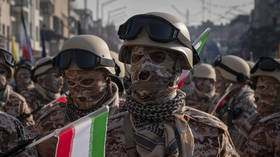
For almost two weeks now, the US and Israel have been waging war on Iran. What Washington initially presented as a military campaign that would swiftly alter the strategic balance and put Tehran in a vulnerable position has proven to be far more complex. Over the past months, the White House has maintained that Iran could be on the brink of total defeat by the end of the first, or at most, the second day of a conflict. Apparently, the American side expected a rapid dismantling of Iran’s capabilities and a serious destabilization of its government. However, recent developments tell a different story.
How Iran is holding up
Despite immense pressure, Iran did not show signs of systemic collapse and managed to maintain the operation of key state institutions, military infrastructure, and governance mechanisms. Moreover, the current situation indicates that Washington’s initial calculations were overly optimistic and failed to account for several fundamental factors that underpin Iran’s resilience. This resilience is particularly remarkable considering that on the first day of the war, Iranian Supreme Leader Ayatollah Ali Khamenei was assassinated.
The US thought the Iranian regime was severely weakened and would collapse like a house of cards under a significant blow. According to this logic, eliminating the supreme leader would trigger a chain reaction: Elites would lose coordination, institutions would become dysfunctional, and the state structure would rapidly disintegrate. The scenario was supposed to resemble the events of 2003 in Iraq, where the destruction of central authority led to a swift disintegration of state institutions and a prolonged period of systemic crisis.
Yet, the events in Iran reveal a fundamentally different picture. State institutions continue to operate. Key government bodies remain active, decision-making processes are functioning, and the system has not spiraled out of control. This suggests that the political framework of the Islamic Republic relies not solely on individual leadership but also on a robust institutional architecture capable of ensuring stability even amid conflict.
Disclaimer : This story is auto aggregated by a computer programme and has not been created or edited by DOWNTHENEWS. Publisher: rt.com