Assam’s muga silk comes from the cocoons of a silkworm species that cannot exist outside the specific climatic conditions of the Brahmaputra Valley. Unlike most silks, muga is not dyed—the luminous gold is inherent to the fibre itself. It even becomes glossier with wear. Traditionally, almost every household maintained small silk farms in its backyard, but that system is growing increasingly fragile.
“One early morning last April, I received a call from one of our farmers,” recalls Jagrity Phukan, a designer and the founder of Way of Living Studio, whose Assam-based textile practice works primarily with muga, eri and mulberry silks, as well as cane, bamboo and various indigenous fibres. “She was crying. There had been an unseasonal hailstorm overnight, and the entire muga crop for that season was gone. Her roof was damaged too, but she kept saying, ‘Leave everything else—this crop was supposed to be ready in three days.’”
Across India, this pattern repeats. When ecosystems collapse, so do livelihoods. When we talk about fashion and climate change, the conversation is usually unidirectional. Fast fashion
creates waste, factories pollute rivers and supply chains are opaque. This is all true, but there’s another side of the story that rarely gets the same, if any, attention. What happens to indigenous textiles and crafts when the climate they depend on starts to collapse?
Our country’s natural ecological diversity has gifted us a corresponding textile heritage. In the north, pashmina—so fine it can pass through a ring, yet warm enough to survive Himalayan winters—is under pressure. It comes from Changthangi goats, reared by nomadic Changpa herders at altitudes between 14,000 and 17,000 feet. These goats grow their exceptional wool as a biological response to extreme cold.
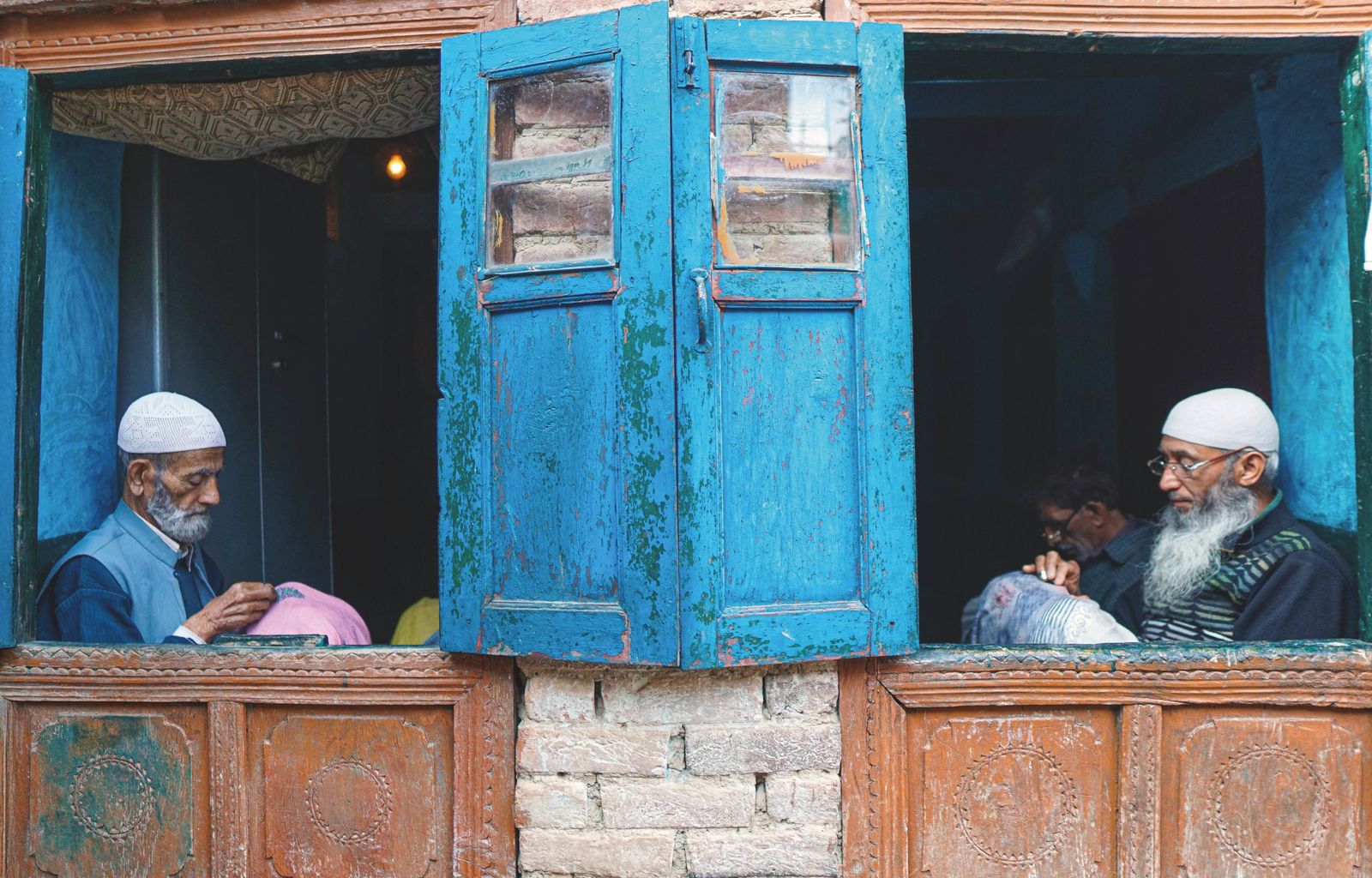
As winters get warmer, the wool fibres are affected. Tariq Dar, founder of Pashmkaar, a brand dedicated to preserving traditional Kashmiri weaving and embroidery practices, explains that while the warmth of the shawls has remained consistent so far, “the quantity and the quality are slowly getting affected. Not in a way most consumers can yet feel, but enough for experts to notice.” Where fibres once measured just 13 to 14 microns, today the geographical indication standard permits a thickness of 16 to 17 microns. It’s a dilution of one of the world’s finest natural fibres, and of a livelihood that has sustained communities in Kashmir and Ladakh for centuries.
Disclaimer : This story is auto aggregated by a computer programme and has not been created or edited by DOWNTHENEWS. Publisher: vogue.in