Good morning. On 13 March 1996, a man walked into the gymnasium at Dunblane primary school and opened fire on a class of five- and six-year-olds. In the space of just a few minutes, 16 children – Abigail McLennan, Brett McKinnon, Charlotte Dunn, David Kerr, Emily Morton, Emma Crozier, Hannah Scott, Joanna Ross, John Petrie, Kevin Hasell, Megan Turner, Melissa Currie, Mhairi MacBeath, Ross Irvine, Sophie North and Victoria Clydesdale – alongside their teacher, Gwen Mayor, were murdered. The attacker then turned a gun on himself.
Thirty years on, Dunblane remains the UK’s deadliest mass shooting. And the town itself remains a place shaped by that day – but also by what came after: the determination of families, the strength of a community and a legacy that still touches lives today. In the wake of the tragedy, parents and supporters launched the Snowdrop Campaign for tighter gun laws, which helped to bring about sweeping reforms that left the UK with some of the strictest restrictions on private handgun ownership in the world.
The Dunblane Centre, funded by donations from across the world, opened in 2004 after the town determined that “a safe place that allowed all generations to come together” would be “the perfect legacy to those lost”. For today’s newsletter, I spoke to its chair, Jenny Stirton, about life in the town today and the legacy that grew from tragedy. First, today’s headlines.
Five big stories
-
Middle East crisis | Vladimir Putin’s “hidden hand” lies behind Iran’s military methods, the UK defence secretary has said, after a night in which drones struck a base used by western forces in Erbil, northern Iraq.
-
Politics | Keir Starmer could suffer further resignations when ministerial WhatsApp messages are published in the next tranche of the Peter Mandelson files, senior government sources have told the Guardian.
-
Immigration | The backlog of people awaiting asylum appeals after having their initial application turned down has nearly doubled in a year, threatening to undermine a key pledge of Keir Starmer’s government.
-
US news | A man who rammed his vehicle into a Michigan synagogue and drove through a hallway died during the incident, officials have said, adding that there were no other serious casualties. The FBI said it was treating the matter as a “targeted act of violence against the Jewish community”.
-
UK news | A woman imprisoned and forced to work for a mother of 10 for more than a quarter of a century in “Dickensian” conditions has said nothing can give her back her lost years as her abuser was sentenced to 13 years.
In depth: ‘It’s important we remember – not just what happened, but also what was achieved’
The story of Dunblane is not only about what happened 30 years ago today, but about how the town came together to grieve, rebuild and shape something positive from that day’s unimaginable loss.
“There has also been a bit more effort this year to help people who might not know the story understand why the Dunblane Centre exists and why remembrance still matters,” Jenny Stirton tells me.
“As people have moved into Dunblane, I think a lot of people aren’t actually aware of why it’s there and how it came about.
“It was decided that the best thing to do would be to build a purpose-built facility for the young people of Dunblane – somewhere safe. Although it was built with the intention of providing somewhere for young people, we actually do something for everyone,” Stirton says.
Today the centre hosts preschool groups, Lego clubs, youth badminton, theatre and art groups, alongside adult activities. “Pickleball is the new thing and it’s hugely popular,” she says.
Quiet remembrance
In the windows of the centre are images chosen by each of the bereaved families, Stirton tells me. “Each family selected an image to represent the child they lost and those are incorporated into the main windows at the front of the building. There’s also one for their teacher.”
Fourteen snowdrop images are also built into the glazing, each with gold leaf placed slightly differently. They represent the 14 injured survivors.
Along the ramp leading down to the sports hall sits a mirror inscribed with words written by Mick North (pictured below on the centre’s opening day), whose daughter, Sophie, was among those killed.
North, like many of those affected, has campaigned on gun control in the decades that followed his daughter’s death, writing for the Guardian in 2022 of his disbelief that the US has refused to learn lessons from frequent school shootings there.
Over the years, Dunblane has tended to mark anniversaries quietly rather than through large public memorial services. Churches in the town will open their doors for quiet reflection, while the Holy Family church will hold a service attended by Monsignor Basil O’Sullivan, who served as priest in the town when the shooting happened. He retired, aged 89, in 2021.
“The centre will run as usual,” Stirton says. “In Dunblane people have tended to remember privately. Many people place a candle in their window as a sign of remembrance.”
Campaigning and legacy
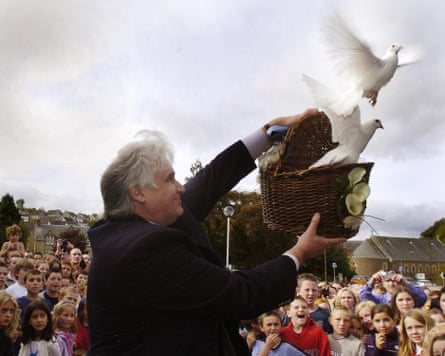
“It’s natural that as time passes people won’t know about it,” Stirton says of the killings. “But it’s important that we remember – not just what happened, but also what was achieved.”
In 1997, the Snowdrop petition, launched by bereaved families and campaigners, gathered more than 700,000 signatures and helped drive the introduction of sweeping gun control legislation.
Bereaved parents and local campaigners also turned public grief into one of the most effective grassroots movements in modern British politics, channelling national revulsion into pressure for legal change.
Westminster’s response came in two stages. John Major’s Conservative government first tightened the law in early 1997, banning most handguns but leaving an exemption for .22 pistols kept in licensed clubs. After Labour’s landslide election victory, Tony Blair’s incoming government went further, passing a second act later that year that effectively ended private handgun ownership in Great Britain.
To enforce the new laws, the government introduced a £150m compensation scheme under which more than 160,000 handguns and hundreds of tonnes of ammunition were surrendered by owners. The changes did not solve every problem associated with gun violence, but they remain one of the clearest examples in British public life of bereaved families and public opinion forcing politicians to act.
Preserving the memory
The 16 children killed that morning would today all be adults in their 30s. Their teacher, Gwen Mayor, would be in her 70s.
Stirton says another project now under way focuses on preserving the many gifts sent to the town in the aftermath of the tragedy.
“There was an enormous outpouring of support from around the world – quilts, cards, poems, sports memorabilia, books,” Stirton tells me. A small exhibition is being assembled at the centre this week, with the longer-term aim of finding a permanent home.
“They represent the huge outpouring of love and support the town received.”
A living legacy
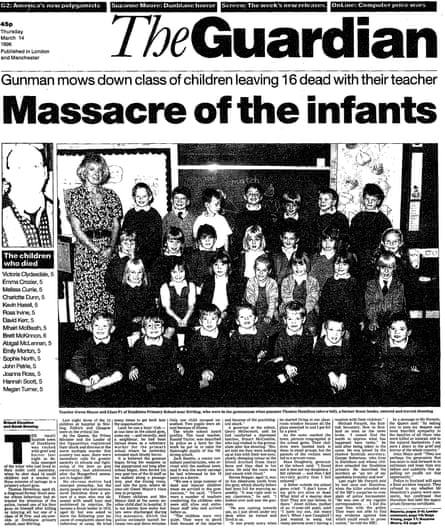
“It’s also important simply to remember those who were lost,” Stirton says. “Thirty years on, remembering them and honouring them is just as important.”
Although the centre now serves the whole community, its founding purpose still guides everything it does.
“That’s what we do every day. The legacy that was created was a safe place for the children of Dunblane.
“A lot of us who are involved with the centre now used it when we were younger, and now our children use it too. What we want is to make sure that when they’re older, their children can come and use it as well.”
What else we’ve been reading
-
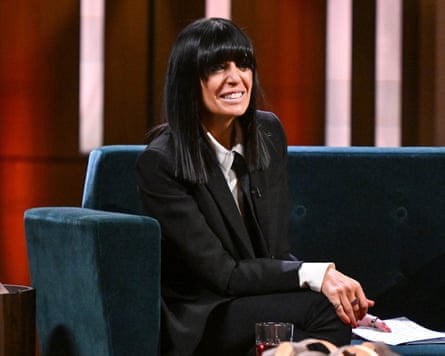
Fresh from presenting Crufts and the face of The Traitors in the UK, Claudia Winkleman is about to take on the challenge of a high-profile chatshow. Michael Hogan asks if it will be a hit. Martin
-
Ahead of Sunday’s Oscars, the film team have whipped through their annual best picture hustings, with our writers making the pitch for each of the nominees. Catch up with the series here. (Whichever way it goes, I was most taken by Gwilym Mumford’s case for Sentimental Value, “something raw, real and satisfyingly grownup”). Charlie Lindlar, newsletters team
-
“A Tottenham relegation may just rank as the single most spectacular failure in the history of English football,” writes Jonathan Liew in this excoriation of how the club has been run. Martin
-
Jane Martinson has a fascinating column on the future of the Daily Telegraph under its new German owner, Axel Springer’s Mathias Döpfner. “As social media suffer from a reputation crisis, is this colourful editor turned owner really the man to help journalism win back its reputation as a trusted source of information?” she asks. Charlie
-
Nick Chen writes for Dazed about his new obsession – the movie Sound of Falling – which he has seen four times. Martin
Sport
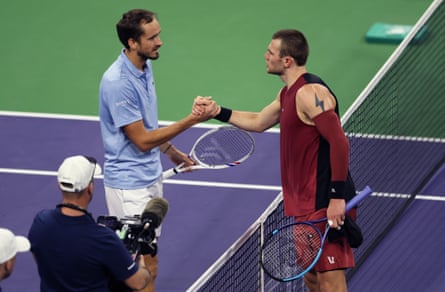
Tennis | Jack Draper was controversially ruled to have caused a hindrance to opponent Daniil Medvedev as his Indian Wells title defence ended in the quarter-finals.
Football | Nottingham Forest suffered a shock 1-0 defeat against Midtjylland in the Europa League last-16 first leg, while Ollie Watkins ended his goal drought as the Aston Villa striker sealed a 1-0 win at Lille. Crystal Palace drew 0-0 with AEK Larnaca.
Football | Tottenham have pushed back the deadline for supporters to renew their season tickets to allow them more time to make their decisions based on which division the club will play in.
Something for the weekend
Our critics’ roundup of the best things to watch, read, play and listen to right now
TV
Rooster | ★★★★☆
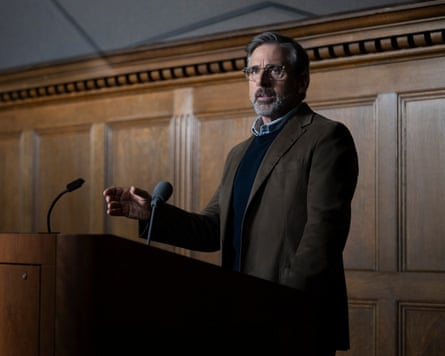
This new 10-part dramedy is built around Steve Carell’s matchless talent for calibrating cringe, making us laugh and, when he wants to, weep wildly. Here he plays a successful author of genre fiction invited to give a talk to the English students at the college where his daughter, Katie, teaches. The meat of Rooster, dark and light, lies in their relationship. Like the recent Vladimir and last year’s The Four Seasons, this is television for grownups –younger viewers will roll their eyes at the lazier jokes about the generational divide, but theirs is the world, so let us have these 10 half-hours, eh? Lucy Mangan
Film
Everybody to Kenmure Street | ★★★★☆
The extraordinary story of Glasgow’s Kenmure Street uprising in 2021 is retold in this absorbing documentary from film-maker Felipe Bustos Sierra. The story is adroitly told, moment-by-moment, with a well-judged interlude to sketch in Glasgow’s history of socialism, trade unionism and community activism, and the grim history of plantation wealth in Glasgow’s economy. In the age of ICE and Trump-inspired nationalist movements in the UK, it’s an amazing story of a community triumph, showing how the nasty little habits of domineering policing can be countered by stubbornly British – and in this case, specifically Scottish – insistence on justice. Peter Bradshaw
Music
The Black Crowes: A Pound of Feathers | ★★★★☆
A Pound of Feathers continues the upswing that began with 2024’s Happiness Bastards, which reanimated the Black Crowes operation after a decade or so on ice, and won the Robinsons brothers their best reviews this century. Here, their music does a fearsome job of selling their ornery rock’n’roll stories, a perfect-imperfect storm of Stones damage (It’s Like That) and note-perfect Zeppelin-isms (Cruel Streak, and the exquisitely doomy, Kashmir-esque closer Doomsday Doggerel). Age cannot wither the Crowes. Stevie Chick
Book
Kids, Wait Till You Hear This! by Liza Minnelli
In her memoir, Minnelli – who turns 80 this month – recounts how she broke free from her dysfunctional family at 16 and moved to New York to make it as a singer and actor. The book is written with journalists Josh Getlin and Heidi Evans and drawn from extensive conversations between Minnelli and her close friend Michael Feinstein. If that sounds like too many cooks, the resulting book is surprisingly cohesive and spry. Beneath the classic arc of fame and success turned sour is a more unusual tale of a woman battling the trauma of her childhood and struggling to step out of the shadow of her unpredictable mother. Fiona Sturges
The front pages
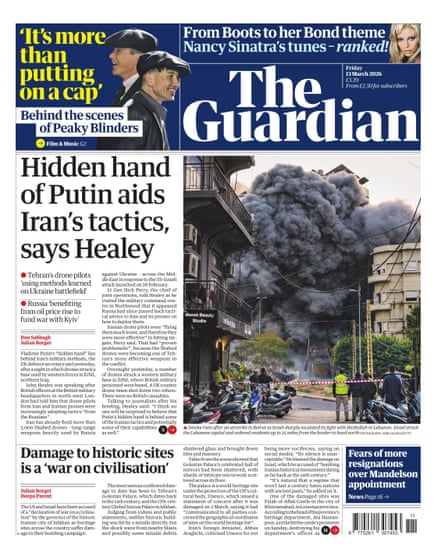
The Guardian leads on comments from the UK defence secretary with “Hidden hand of Putin aids Iran’s tactics, says Healey”. The Times take a similar line with “Iranian drones ‘directed by hidden hand of Putin’”, while the Telegraph goes with “Russia behind attack on UK troops”. The Mirror follows the same story with “Under fire”, while the Sun has “Brit base blitzed by Iran”.
The Financial Times reports “Oil windfall gives Russia $150mn a day”. The i leads with “The oil war: UK military preparing to defend tankers in Middle East”. Finally the Mail has “Kemi: PM’s ‘told lie after lie after lie’”.
Today in Focus
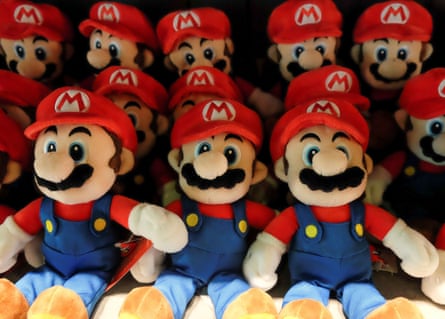
‘Let’s-a go!’ The story of Nintendo
Video games editor Keza MacDonald traces the rise of Nintendo, and explains why its sense of fun matters in a world of big tech.
Cartoon of the day | Ben Jennings

The Upside
A bit of good news to remind you that the world’s not all bad
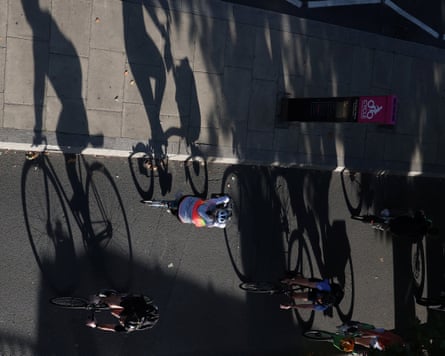
Air pollution can affect our health through every stage of our life, from asthma in children to cancer in adults, but it is often treated as a problem too difficult to solve.
Now, a report has found that 19 global cities, including London, San Francisco and Beijing, have achieved “remarkable reductions” in air pollution, having slashed levels of fine particulate pollution (PM2.5) and nitrogen dioxide (NO2) by more than 20% since 2010.
Interventions such as cycle lanes, uptake of electric cars and restrictions on polluting vehicles have helped drive the improvements.
“This report shows that cities can achieve what was once thought impossible,” said Cecilia Vaca Jones, executive director of Breathe Cities, one of the organisations behind the report. “[They] are proving that we have the tools to solve this crisis right now.”
Sign up here for a weekly roundup of The Upside, sent to you every Sunday
Bored at work?
And finally, the Guardian’s puzzles are here to keep you entertained throughout the day. Until tomorrow.
Disclaimer : This story is auto aggregated by a computer programme and has not been created or edited by DOWNTHENEWS. Publisher: theguardian.com