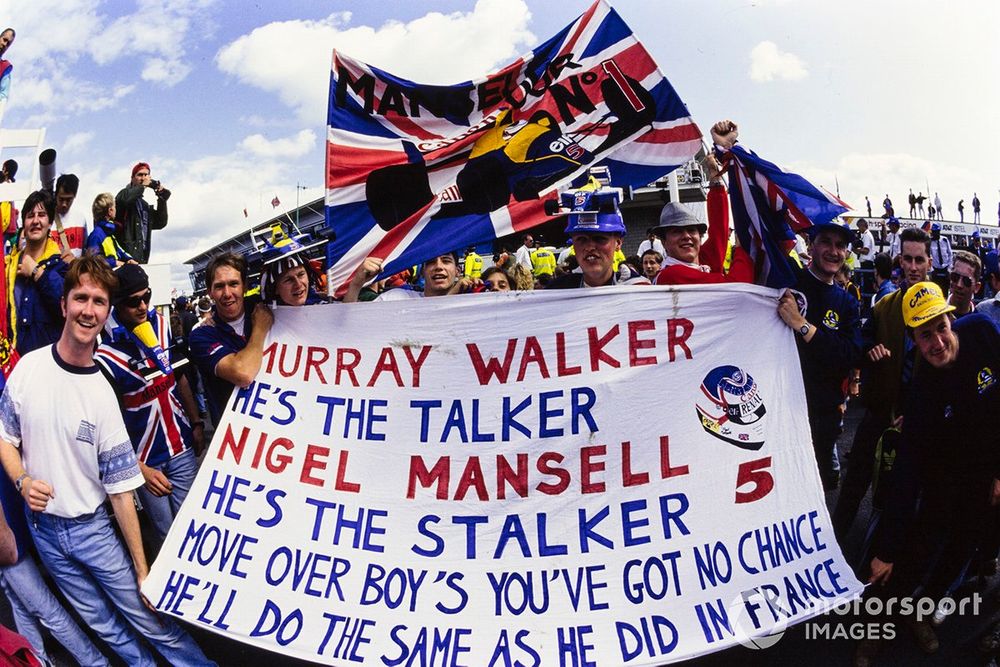
Five years after his passing, Murray Walker still holds a permanent place in Formula 1’s collective memory. The Brit, who died on March 13, 2021, at the age of 97, was more than a commentator for generations of fans: he was the voice of the sport.
Walker built that reputation during a career that spanned decades. As early as 1948 he began working as a commentator at the Shelsley Walsh Hill Climb, after which he covered numerous car and motorcycle racing events on radio and television. The son of motorcycle racer Graham Walker became the BBC’s regular motorsport commentator in 1962.
However, it was Formula 1 that would truly immortalize his name.
Between 1976 and 1996 Walker provided F1 commentary for the BBC, after which he moved to ITV from 1997 through 2001. From 1978 onward he became the regular voice of the sport’s top class. Walker was especially known for the intensity and enthusiasm with which he covered the sport, but also for the water-and-oil relationship he had with co-commentator and former F1 driver James Hunt.
It was precisely that combination of passion, knowledge, and humor that made him so beloved. Walker was articulate, knowledgeable, and thoroughly prepared, yet he never lost the emotion of the moment. At the same time, his famous slip-ups, affectionately embraced by fans, only made him seem more human.
Colleagues and people in the paddock also knew how special Walker was. When his death was announced in 2021 by the British Racing Drivers’ Club, the BRDC described him as “a friend, a true motorsport legend” and “our nation’s favorite commentator.” Martin Brundle, who had been his co-commentator from 1997, called him “a wonderful man in every respect,” “a national treasure,” and “a Formula 1 legend.”
For many fans, Murray Walker was an integral part of Formula 1
Photo by: Motorsport Images
For many fans, Murray Walker was an inseparable part of Formula 1. But his influence was also felt in places such as the Netherlands, due to his kind nature toward others within the sport itself.
Dutch motorsport commentator Olav Mol, for example, has spoken about how Walker had shown him, among other things, how things worked in the paddock. That perhaps best characterizes his significance: Murray Walker was not only an icon for viewers but also a role model for the next generation of commentators.
His last full F1 race as a commentator was the 2001 United States Grand Prix. An offer from Bernie Ecclestone to continue providing commentary for Formula 1’s world feed afterward was politely declined. After more than fifty years of commentary, he said he had grown tired of it. Nevertheless, he still regularly appeared in the media as an F1 expert.
Especially now, in a Formula 1 that is constantly changing, many fans look back nostalgically at earlier eras of the sport: the screaming V10 and roaring V8 engines, the iconic intro of Fleetwood Mac’s The Chain, images of grid girls and cigarette sponsors on the cars, and the laurel wreaths handed to winners after the race.
For many people, one voice is inseparable from that era of F1: Murray Walker’s. Five years after his death, it still remains part of how fans remember Formula 1 of the past.
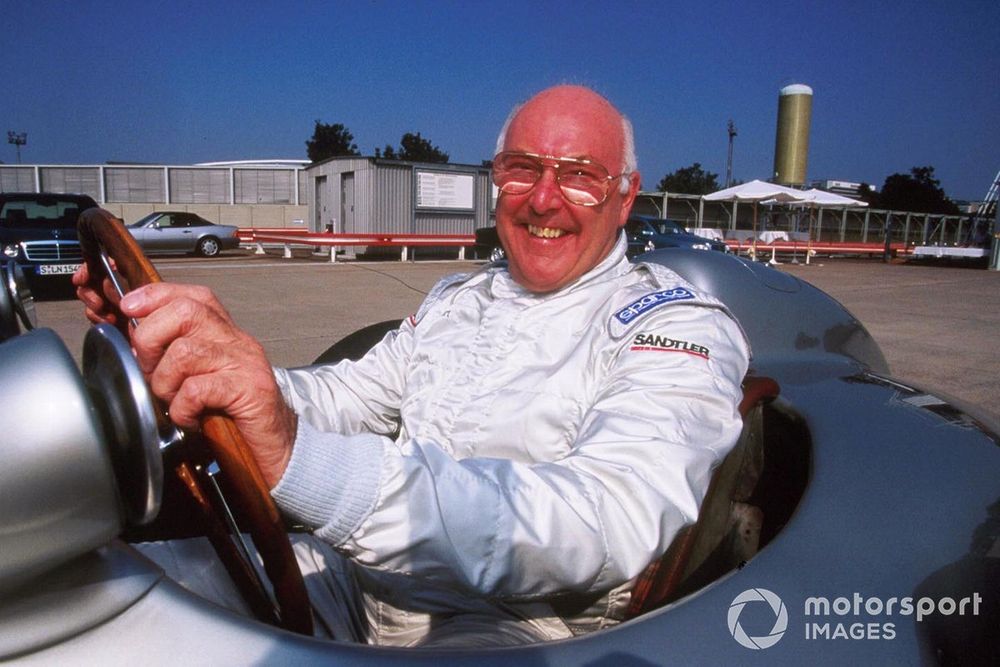
Murray Walker tests a Mercedes F1 car.
Photo by: Sutton Images
We want your opinion!
What would you like to see on Motorsport.com?
– The Motorsport.com Team
Disclaimer : This story is auto aggregated by a computer programme and has not been created or edited by DOWNTHENEWS. Publisher: motorsport.com