There was a time—not long ago—when baseball believed it understood its place in the modern sports economy. The sport was a regional game masquerading as a national pastime, rich in history, but lagging in marketing muscle.
Without a salary cap, baseball’s biggest stars made their money in contracts, not commercials. The legends of the sport sold jerseys, not entire industries.
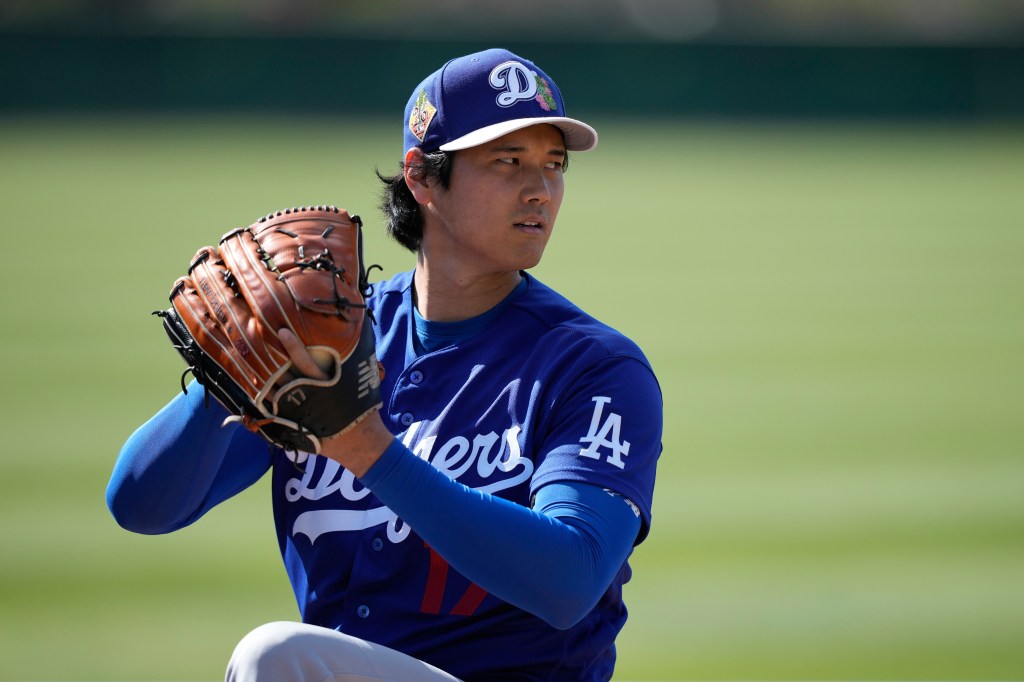
Then Shohei Ohtani arrived like a rocket tearing across the sky. He didn’t just change the economics of baseball, he transformed them.
In 2026, Ohtani is expected to earn more than $127 million dollars in off the field earnings alone. A number so staggering that it doesn’t just shatter the record for baseball, but it shatters the record for all of sports. Period. The number eclipses Tiger Woods’ once untouchable mark of $105 million dollars in endorsement deals from 2009. It’s a number that places Ohtani in a category all his own.
And yet, the most absurd part isn’t the number itself. It’s the gap.
According to Sportico, Ohtani makes more in endorsements than the top 15 highest paid MLB players who make a combined $47 million in off-field earnings. It’s more than likely that Ohtani earns more money in endorsements than every single player in MLB combined. Think about that for a moment. In a league filled with MVPs, Cy Young winners, and billion-dollar franchises, one player has turned the endorsement economy into a one-man monopoly.
That’s not a gap. That’s a canyon.
Ohtani’s rise to this record-breaking milestone is a triumph, but it’s also an indictment on Major League Baseball. For decades, the sport failed to globalize its stars the way the NBA, PGA, NFL, and soccer did. MLB marketed teams, not individual personalities. It tried to sell the country on tradition instead of transcendence.
Even Formula 1 driver Lewis Hamilton ($20M) makes more money in off-field endorsements than any other MLB player outside of Ohtani.
According to Forbes, the list of highest paid athletes in terms of off-field earnings in 2025 reads like a who’s who of global superstars.
Stephen Curry, thanks to his Under Armour deal that ended in 2026, was the only other athlete close to Ohtani at just under $100 million. Next was LeBron James ($85M), Lionel Messi ($75M), Cristiano Ronaldo ($50M), Kevin Durant ($50M), Giannis Antetokounmpo ($45M), Rory McIlroy ($45M), and Woods ($45M).
Scottie Scheffler ($30M), Neymar ($30M), Patrick Mahomes ($28M), and Shai Gilgeous-Alexander ($25M) round out the top-ten, but Ohtani is on an island all his own.
Ohtani is baseball’s first true modern global superstar—an athlete who moves seamlessly between cultures, languages, and markets. In Japan, he is omnipresent. Billboards. Television. Subways. Taxis. Entire city blocks feel like extensions of his brand.
His endorsement portfolio reads less like a sponsorship sheet and more like a corporate empire: Seiko, Kosé, Kowa, Hugo Boss, Japan Airlines, New Balance, Fanatics, and more than 20 total partnerships. When Japanese brand Kirin signed him as the face of its “Immune Care” campaign, it wasn’t just a deal—it was a nationwide event.
This is what baseball never had before: an athlete who isn’t just famous, but culturally embedded.
And here’s the twist that makes the entire story even more audacious—Ohtani is doing all of this while technically being one of the lowest-paid players on his own team.
His $2 million salary with the Los Angeles Dodgers in 2026 ranks 17th on the roster. A number that would be laughable if it weren’t so strategically brilliant.
Because Ohtani understood something most athletes never do: money isn’t always about what you earn—it’s about when you earn it, and what it allows you to build.

By deferring $680 million of his $700 million contract, Ohtani didn’t sacrifice wealth. He weaponized it. He gave the Dodgers financial flexibility to construct a superteam, stacking talent around him like kindling around a fire. The result? Back-to-Back World Series Championships. Global visibility. Baseball dominance.
And dominance, in turn, feeds the machine.
Winning amplifies relevance. Relevance drives endorsements. Endorsements create empires.
That’s why the Dodgers are the modern day Evil Empire, and Ohtani is at the center of it.
Even the Dodgers’ clubhouse culture reflects his reach. Last season’s home run celebration—a playful gesture mimicking a Japanese skincare ad—wasn’t just a joke. It was a signal. A reminder that Ohtani’s influence stretches beyond the diamond and into the everyday rhythms of global commerce.
He isn’t just in advertisements. He is a walking advertisement.
New Balance understood this early. Their partnership with Ohtani isn’t structured like a traditional baseball deal—it mirrors the architecture of an NBA signature empire. Shoes, apparel, global campaigns. In 2026, the brand expanded his collection into dozens of products, effectively turning him into a walking, swinging, pitching marketplace.
And still, somehow, this might only be the beginning.
Because what makes Ohtani truly dangerous to the record books isn’t just his popularity—it’s his duality. He is the only athlete in modern sports who can dominate two roles at once, a once-in-a-century talent at the plate and a Cy Young Award caliber pitcher on the mound. Ohtani has the only two 50-50 seasons in MLB history. 50+ homers and 50+ stolen bases in 2024, and 50+ homers and 50+ strikeouts as a pitcher in 2025. He has four MVP awards. Two World Series titles. A résumé that reads like fiction.
The word “unicorn” gets thrown around too easily in sports. With Ohtani, it still feels insufficient.
Even when you widen the lens beyond active athletes, the only name that truly dwarfs him is Michael Jordan, whose Jordan Brand empire generated an estimated $300 million in 2025. But that’s a different kind of legacy—built over decades, fueled by nostalgia and ownership.
Ohtani is doing this in real time.
And that’s what should both excite and terrify the rest of baseball.
Because this isn’t just about one player making more money than everyone else. It’s about one player changing the economic blueprint of an entire sport. The next generation of stars won’t chase contracts the same way. They’ll chase markets. They’ll chase global reach. They’ll chase what Ohtani has built—a brand that transcends borders and turns performance into currency.
Baseball didn’t create this moment.
Shohei Ohtani did.
And now the sport is racing to keep up with the future he’s already living in.
Download The California Post App, follow us on social, and subscribe to our newsletters
California Post News: Facebook, Instagram, TikTok, X, YouTube, WhatsApp, LinkedIn
California Post Sports Facebook, Instagram, TikTok, YouTube, X
California Post Opinion
California Post Newsletters: Sign up here!
California Post App: Download here!
Home delivery: Sign up here!
Page Six Hollywood: Sign up here!
Disclaimer : This story is auto aggregated by a computer programme and has not been created or edited by DOWNTHENEWS. Publisher: nypost.com