Supporters of Scotland’s assisted dying bill said they are frustrated a significant majority of Labour MSPs voted against the proposals, despite Labour’s substantial support for the measure at Westminster.
The Scottish bill was defeated in a late night free vote at Holyrood on Tuesday, five years after it was first proposed and a year after it was first tabled, by a larger than expected 12-vote margin.
Liam McArthur, the Liberal Democrat MSP who tabled and championed the bill, said he was “devastated” by the result and would not bring it back to parliament after the May election.
Only three of Scottish Labour’s 20 MSPs supported the bill, with three switching from yes to no. In contrast, a significant majority of Labour MPs backed the assisted dying bill for England and Wales last year.
At its final Commons reading in June, 224 Labour MPs voted for Kim Leadbeater’s bill and 160 opposed it.
At Holyrood, the bill was supported by 63% of the 59 Scottish National party MSPs who voted and 21% of the 28 Scottish Conservative MSPs, leaving Labour as the most critical of all the parties, with only 15% of its members backing it.
A Liberal Democrat source acknowledged that opposition from SNP and Tory backbenchers played a large part in the bill’s defeat but added: “It seems a little bit odd when in the House of Commons Labour MPs overwhelmingly backed this, but they’ve been more conservative here.”
McArthur would not comment directly on Labour motives but indicated he suspected its vote was influenced by the fact it faces a very difficult Holyrood election in May and was under intense pressure to shore up its votes.
“What troubles me [is] that in this parliament there is a majority of MSPs that recognise the ban on assisted dying is leading to too many bad deaths,” he said. “They had the opportunity, they were presented with a heavily safeguarded bill, and still they backed away.
“I think there will be many, over the months and years to come, who will deeply regret that decision. Unfortunately, that will be of cold comfort to those that were desperately, desperately hoping for a change in the law.”
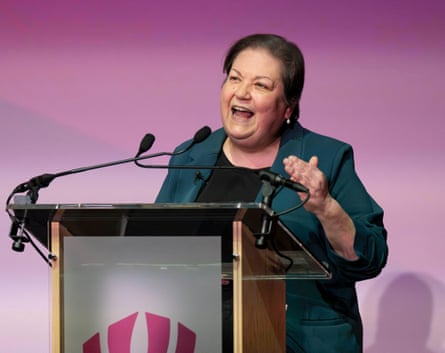
The notion of Scottish Labour MSPs hesitating due to the upcoming election was rejected by Jackie Baillie, the party’s deputy leader, who said there was “absolutely no” whipping of its MSPs and no instruction on how to vote.
She said the three Labour MSPs who changed from yes to no did so because McArthur’s bill did not have the right safeguards, and it had alienated medical professionals and palliative care groups.
Baillie said social demographic differences were partly involved in the group’s overall stance. Many Labour MSPs and MPs come from regions with significant Catholic or Protestant electorates and socially conservative voters.
Under Anas Sarwar, the Scottish Labour leader, the party has also adopted much more centrist policies than his predecessors.
“It’s partly about demographics, it is partly about who you represent,” she said. MPs and MSPs from the same areas tended to have the same views on policy. “But it is down to individual MSPs and MPs. It is not a matter on which we are whipped. It is our personal view.”
Monica Lennon, one of the three Labour backbenchers who voted yes on Tuesday, is from a Catholic background and has said she has been named in Catholic diocese newsletters given to parishioners, including family members, and been targeted by activists at parliament because of her stance.
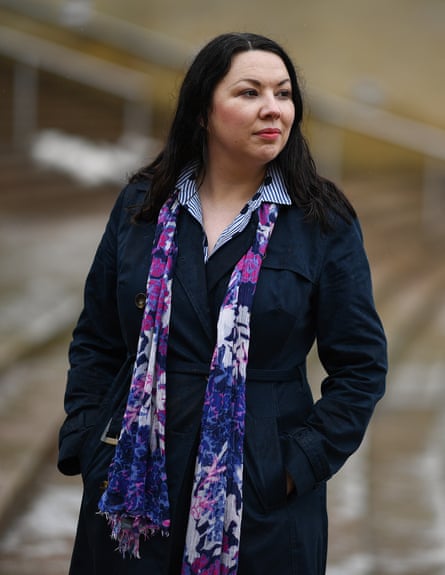
Other MSPs reported having disproportionately heavier mailbags on assisted dying from religious groups and faith-based opponents of the proposals.
Baillie said Labour MSPs who changed their votes were “spooked” by a decision at a late stage to delete parts of the bill which introduced protections and training for medical professionals because those powers were reserved to Westminster.
Daniel Johnson, one of the Labour MSPs who switched to vote no on Tuesday, said he was alarmed McArthur refused to adopt the safeguards built into the Australian and New Zealand assisted dying rules about having independent tribunals to review applications and also an oversight board to monitor it in action.
Asked whether his vote had anything to do with the election, he said “categorically not”.
Disclaimer : This story is auto aggregated by a computer programme and has not been created or edited by DOWNTHENEWS. Publisher: theguardian.com