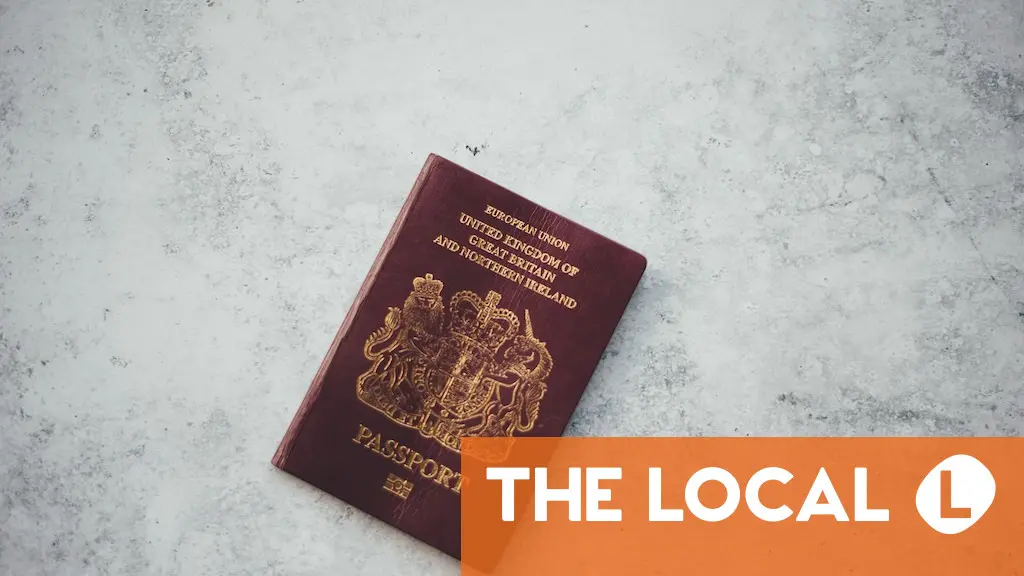
A dual-national British schoolgirl has been left stranded on mainland Europe after she was refused entry on a return flight under new UK border rules.
A British schoolgirl has been left in Denmark after being denied boarding on her return flight to London because of new UK border rules imposed on dual nationals.
The girl planned to catch a Norwegian Air flight back to the UK on March 8th after a weekend visiting her father, a British academic working at a university in Copenhagen, but was unable to board both online and in person at the airport.
The Guardian reports that she had travelled with her Norwegian mother and did not have a valid British passport with her, but was in the process of applying for one. The article does not state which other passport the girl was travelling on, but given the nationality of the mother we can presume it was likely a Norwegian one.
READ ALSO: Can dual national Brits travel to UK without valid British passport after all?
Under new border rules for the Electronic Travel Authorisation (ETA) system in place from 25th February, British dual nationals can only enter the UK if they have a valid British passport or alternatively a Certificate of Entitlement, which costs £589.
Under pressure the UK’s Home Office has softened the rules slightly saying Brits can prove the UK nationality using an out of date passport if they don’t have a current one. However there was no solution offered for those who have never had a British passport such as children born abroad to British parents, or dual nationals born in the UK like this girl.
The schoolgirl’s parents were not aware of the rule change and she was not allowed to board her return flight, meaning the student has been stranded in Denmark as her GCSE exams approach.
“We tried to check in on the app and it allowed me to check in but not Hanne,” her mother told The Guardian.
“When we got to the airport… they wouldn’t let her check in either.”
This is reportedly the third child the British publication knows of who has been refused entry on a return flight to the UK under the new dual citizen rules.
The report does not specify why she was denied boarding or if she had applied for an ETA, the UK’s new Electronic Travel Authorisation for for foreign arrivals.
The Local has contacted Norwegian for clarification on the case but has not yet received a response.
The family’s local MP, James MacCleary, has spoken publicly and blamed mixed messages from the government: “The government’s hopeless planning and communication of its changes to entry requirements for dual nationals has caused an untold amount of chaos and stress.
“Too many dual nationals have found themselves stranded abroad in heartbreaking situations, missing funerals, weddings, or in the case of my constituent, an absolutely crucial time in education.
“The home secretary needs to pull her finger out and urgently provide a low-cost and quick alternative for dual nationals stuck abroad. If she fails to act, the prime minister must step in to bring an end to the chaos, otherwise more children and families will pay the price.”
In a statement, the Home Office said: “Public information advising dual nationals to travel with a valid UK passport or certificate of entitlement has been available since October 2024, including official guidance on gov.uk”.
What are the rules?
Dual-nationals abroad have expressed anger at the change, telling The Local they felt they were being ‘punished for having dual citizenship’ and describing the ETA system as a “money making racket”.
Ever since the launch of ETA, there has been confusion when it comes to British dual nationals. The Home Office had done little to allay these fears, but for a full breakdown of the rules, or what is understood of them so far, at least, read The Local’s explainer here.
In short: British or Irish nationals travelling on their UK or Irish passport do not require the electronic travel authorisation known as the ETA.
Many British dual nationals, however, might not have a British passport anymore. These people have always previously had the option of simply using their other passport to enter the UK but the rule change makes this more difficult, if not impossible.
This is because the website and app used to apply for the ETA demands that people list any other nationalities they possess – but does not allow applicants to select ‘British’ as another nationality – meaning that dual nationals cannot truthfully complete the ETA application and travel on their other passport. Basically British dual nationals have been told they cannot get an ETA.
They would therefore be at risk of being accused of making a false declaration if they hadn’t applied for and paid for a new passport (for £108) or a Certificate of Entitlement, which costs £589.
READ ALSO: Explained: The UK’s £16 ETA travel permit
Disclaimer : This story is auto aggregated by a computer programme and has not been created or edited by DOWNTHENEWS. Publisher: thelocal.de