
Damage to a critical Qatari facility is threatening to keep energy prices high around the world even if the war in Iran ends soon in what some analysts are calling an “Armageddon” situation.
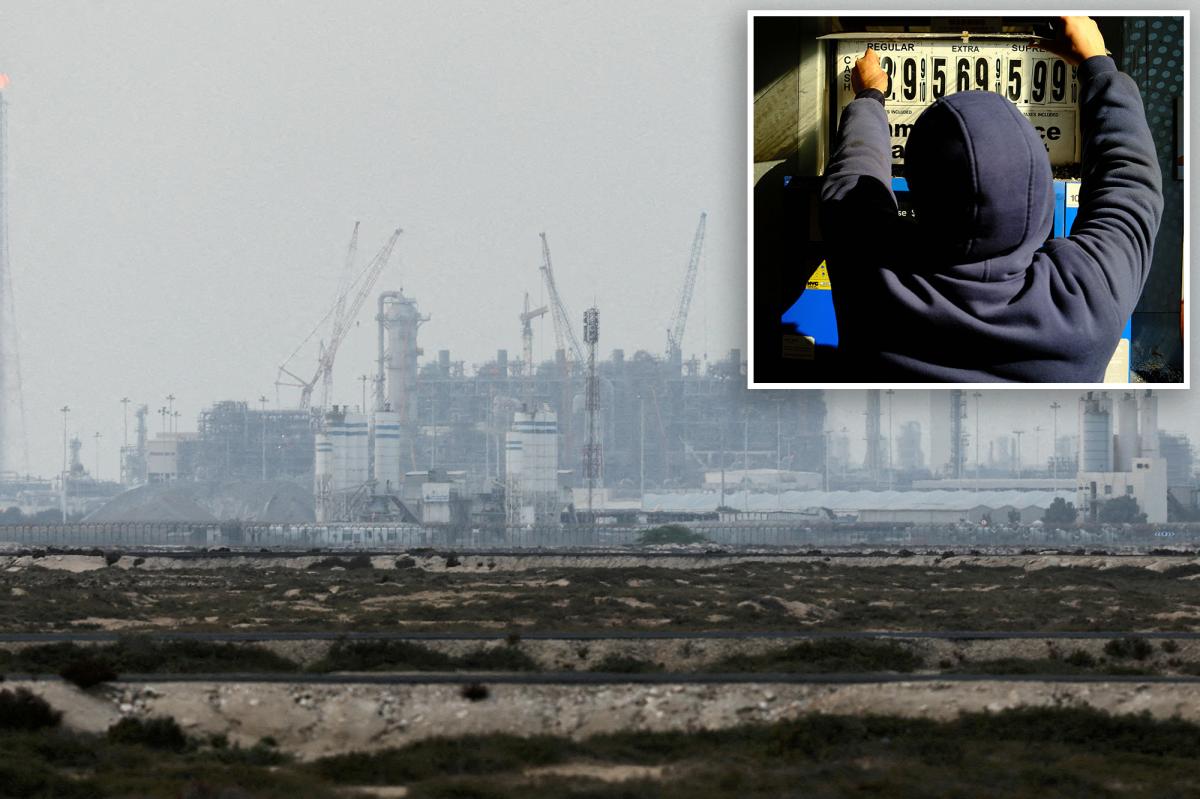
Qatar’s Las Raffan plant supplies a fifth of the world’s liquefied natural gas, which is used for electricity, heating and cooking – but Iranian strikes have damaged the facility, worsening what is already the largest-ever energy supply disruption.
“I woke up this morning and thought, ‘No, please no,’” Anne-Sophie Corbeau, former head of gas analysis at BP now at Columbia University’s Center on Global Energy Policy, told the Financial Times.
“This has always been my nightmare scenario, my Armageddon scenario, the one I didn’t want to happen.”
Gas prices in Europe spiked 30% as markets reopened, having more than doubled since the start of the war, while some gas stations in Asia have already imposed fuel rations to combat shortages.
“It is apocalypse now. The coming months for gas importers are going to be a bloodbath,” Laurent Segalen, a clean energy investment banker, told the FT.
Europe and Asia will bear the brunt of the new supply disruption, but it will eventually ripple across the globe – likely hitting the US in about two months, according to Joe Adamski, managing director of ProcureAbility, a supply chain consultancy.
“Because all petroleum-based, all fossil fuel-based economics are global in nature, it will eventually flow back…It will affect the availability of the supply even back here in the US,” Adamski told The Post.
Analysts have warned that energy shocks tend to ripple across consumer prices, potentially reheating overall inflation – not just prices at the pump.
“Everything is going to get more expensive because of it, because oil underlies our economy,” Adamski said. “It’s involved in the transportation of everything. It’s involved in the production of food. It’s involved in the production of many of the goods we use on an everyday basis.”
After the Federal Reserve on Wednesday kept interest rates unchanged over uncertainty around the war in Iran, Chair Jerome Powell warned that higher energy costs could send inflation higher.
Brent crude oil briefly jumped above $119 a barrel – settling around $105 Friday – after Israel struck Iran’s South Pars gas field, and Tehran retaliated with strikes on key energy facilities in Qatar and Saudi Arabia, and ramped up attacks on ships in the Persian Gulf.
Israeli Prime Minister Benjamin Netanyahu agreed to President Trump’s demand not to repeat attacks on energy sites – but analysts are concerned enough damage has already been done.
The equipment used to super-chill gas is complex, so it will take significant time for damages to be repaired, especially since operators will hold off on sending workers to sites until they are sure it is safe.
“Qatar is saying that it’ll take them up to five years to repair the damage,” Adamski told The Post.
“If this conflict continues and either we target Iranian facilities or Iran targets allied facilities in the region, that amount of damage could increase.”
Qatar’s Las Raffan site is almost three times the size of Paris. It took three decades to build, cost hundreds of billions of dollars and chills enough gas to meet the annual demand of the UK and Italy combined.
Iran’s blockade of the Strait of Hormuz, a vital maritime route for 20% of the world’s oil supply, has already pushed national average gasoline prices up to $3.91 a gallon, according to AAA.
Analysts had been drawing up forecasts based on the assumption that the flow of gas from Qatar would resume quickly once the strait was opened – but those predictions have effectively been thrown out the window.
“What we can conclude immediately is that regardless of when the conflict now ends, a resumption of normal production from Qatar is not going to happen in a matter of weeks,” Tom Marzec-Manser, LNG expert at energy consultancy Wood Mackenzie, told the FT.
The White House has tried to quell fears around energy prices by announcing a release of oil reserves, temporarily lifting Russian energy sanctions and signaling a potential pause on Iranian oil penalties.
The International Energy Agency has also announced a historic release of 400 million barrels of oil – but there are not enough reserves in the world to make up for the lost supply on a long-term basis.
The Trump administration is also reportedly considering invading Kharg Island, Iran’s key energy hub, according to Reuters, which would represent a substantial escalation.
“If it [the war] stays focused on military targets, then I think ultimately the conflict will be managed,” Adamski told The Post – but he nodded to reports around Kharg Island. “If it becomes unrestricted warfare, that’s my biggest worry and we are starting to see that.”
Disclaimer : This story is auto aggregated by a computer programme and has not been created or edited by DOWNTHENEWS. Publisher: nypost.com



