
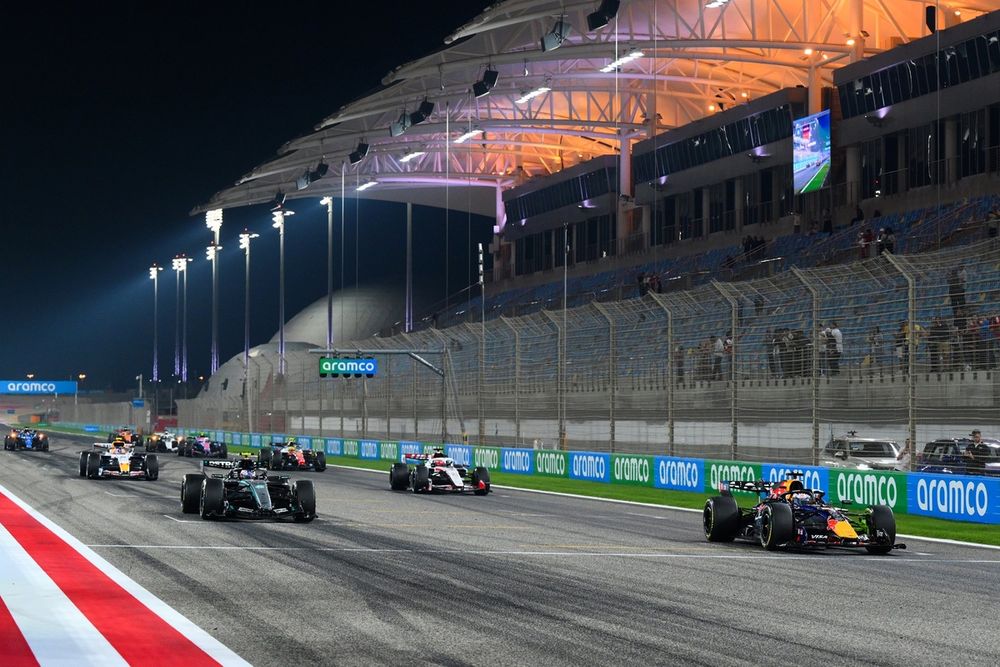
The talk through pre-season testing for the 2026 Formula 1 campaign was that last year’s top four teams – McLaren, Mercedes, Red Bull and Ferrari – have pulled further away from the midfield.
Although that might be true in the long term for these new regulations, a look at the standings after the opening two rounds shows a welcome surprise sitting in fourth: Haas. The American outfit was seriously competitive in Melbourne and Shanghai and it has rightfully established itself as the best midfield team, even managing to outperform Red Bull for the time being.
Of course, Red Bull has paid a heavy price for various reliability issues, but that does not detract from the fact that Haas has shown excellent form, particularly through its young sophomore Oliver Bearman, who picked up right from where he left off in 2025.
Seventh in Australia and fifth in China clearly demonstrates this and an analysis of the Shanghai race paints an even clearer picture. Before Max Verstappen’s retirement, Bearman was, in fact, ahead of the four-time world champion and deservedly so.
Yes it’s true that Verstappen suffered from a terrible start, but on the first lap the Haas driver had also been forced to lose several positions to avoid the sister Red Bull of Isack Hadjar, who spun out. From there on, the two began a long recovery, and regardless of the safety car’s influence, the reality is that Haas showed excellent race pace.
Haas is more ready than its rivals
It is interesting to note how certain parallels emerge with Ferrari, which is second in the championship. Both the Scuderia and Haas seem to have developed a very effective chassis, focusing on cornering speed as their true strength and as a weapon to compensate for the engine advantage of rivals like Mercedes.
Max Verstappen, Red Bull Racing, Oliver Bearman, Haas F1 Team
Photo by: Andy Hone/ LAT Images via Getty Images
It is clear that the Silver Arrows possesses a greater wealth of knowledge than the customer teams – an advantage that allows it to extract even the last few tenths of a second, compounded by the fact that the W17 is also highly effective in terms of chassis performance. These tenths, however, are still being sought by customers like Alpine and Williams.
That’s where Haas fits into that fine line. While Mercedes can rely on a complete package that makes it extremely difficult for Ferrari to gain an edge, Haas’s current chassis advantage seems to allow it to make a difference against rival teams that haven’t yet learned to fully exploit the Mercedes engine.
In this regard, the technical staff led by Andrea De Zordo deserve full credit, because the VF-26’s qualities are evident. From the very first tests, the team seems to have put a car on the track that is not only solid but also competitive, despite Haas being the smallest outfit with the fewest resources in all of F1 – a detail that makes their work all the more significant.
In this context, ‘solid’ is a word that aptly describes Haas’s current form. Since the Barcelona tests, aside from a few minor hiccups in the early hours, the VF-26 has continued to rack up miles, ultimately ranking as the second car with the most laps completed across the three practice sessions, trailing only Mercedes.
Having a solid and reliable package has allowed the team to focus on getting to know the car better, on how to use energy, and on optimising tyre management. The real strength, more so than in a single lap, emerges in the race, specifically in tyre management, where the combination of all these elements is currently making the difference.
Its value shines through more in the race than in qualifying
In China, where managing graining played a bigger role than in Australia, Bearman managed the tyres excellently. It was precisely there, even while navigating through traffic, that he worked his magic to secure a splendid fifth and without the collision between Esteban Ocon and Franco Colapinto, Haas could have secured a double points finish.
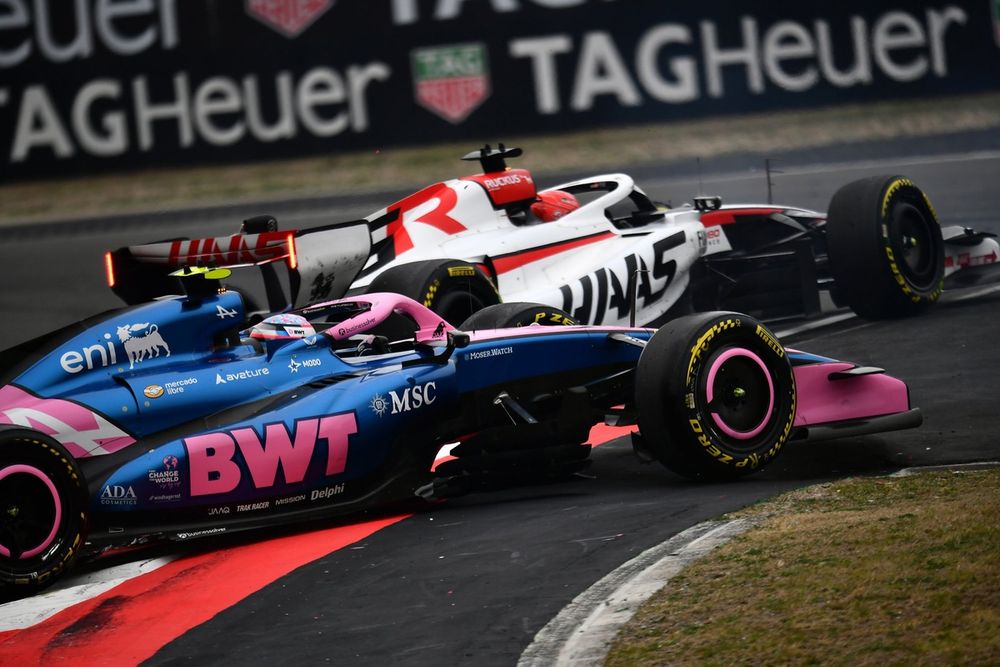
Esteban Ocon, Haas F1 Team, Franco Colapinto, Alpine
Photo by: James Sutton / Formula 1 / Formula Motorsport Ltd via Getty Images
In a way, this start to 2026 echoes 2022. Even then, Haas was one of the mid-pack revelations in the first races of the ground-effect era, though it fell short on the development front, largely due to a lack of resources.
In recent years, however, the team’s trajectory has been yielding tangible results, both in terms of resources and personnel. This is also evident in the level of updates introduced, which have allowed the team to remain competitive even in the final stages of the season, as confirmed by Bearman’s results in late 2025 like fourth at Mexico.
In the hope that Ferrari can squeeze a few more horsepower out of its power unit, the challenge for Haas now is to maintain its momentum on the upgrades front. Compared to previous seasons, as the team is at the start of a new technical cycle, the pace of development will be significantly higher, and it will need to keep up with the latest innovations.
The American team, however, is starting from a very solid foundation, the result of excellent work over the winter.
We want your opinion!
What would you like to see on Motorsport.com?
– The Motorsport.com Team
Disclaimer : This story is auto aggregated by a computer programme and has not been created or edited by DOWNTHENEWS. Publisher: motorsport.com





