German Chancellor Friedrich Merz’s conservatives on Monday revelled in a regional election win even as their national coalition partners had to digest another disappointing performance.
Voters in Rhineland-Palatinate state backed Merz’s Christian Democrats (CDU) with 31 percent of the vote on Sunday, knocking the Social Democrats (SPD), who scored 25.9 percent, from power for the first time in 35 years.
Merz hailed the CDU’s “great success” and urged the dispirited SPD to nonetheless stay the course and keep pushing their joint national project of “a path of reform” to revive the stagnant economy.
“I understand that the SPD is now struggling with yesterday’s election result,” said Merz. “But my firm conviction is: We can only do this together, and we can only do it if we focus on the real problems of our country.”
The far-right Alternative for Germany (AfD) took third place in the state poll with 19.5 percent, more than double its previous result, but was set to remain in opposition as all other parties have vowed not to cooperate with it.
The AfD’s top state candidate, Jan Bollinger, hailed the strong result and fired a broadside at the SPD, Germany’s traditional labour party, by declaring that “it makes the AfD happy that we are now the workers’ party”.
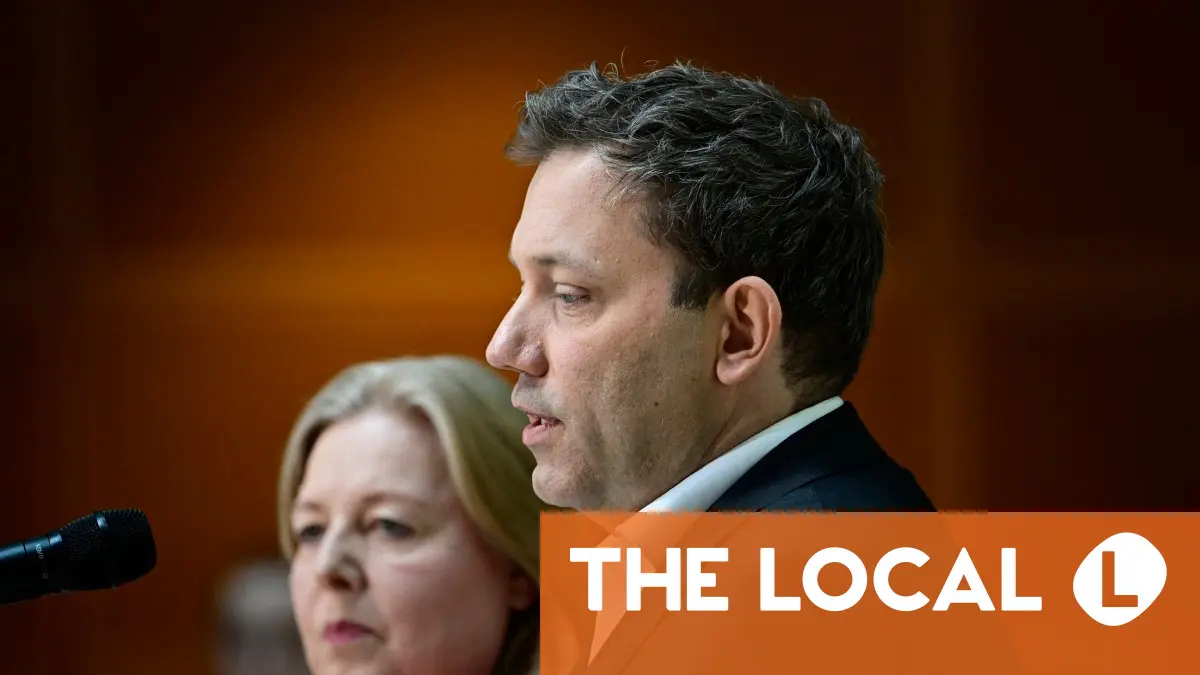
The latest in a long string of defeats for the SPD plunged the centre-left party into crisis, as some internal critics called for Vice Chancellor and Finance Minister Lars Klingbeil to step down as its national co-chairman.
Klingbeil called the vote’s outcome “catastrophic” but said he would not be resigning from his post.
“We will not plunge the second largest governing party into chaos and enter a process where we are focused on ourselves and do not care about the country,” he told a Berlin press conference.
‘Close to existential crisis’
For Merz, who has faced poor popularity ratings and struggled to meet his campaign pledge of rebooting Europe’s biggest economy, his party’s success offers a much-needed boost.
But the CDU’s win in Rhineland-Palatinate could also pose new challenges for Merz, wrote ING analyst Carsten Brzeski.
With the SPD “close to an existential crisis”, he wrote, the party “could be left with only two extreme options: go all-in on progressive reforms or essentially block all reform efforts by Merz”.
Merz is hoping to push through a slate of pro-business reforms and to overhaul the social welfare system in the coming months, all aimed at jump-starting the economy.
That requires difficult compromises with the SPD, whose fortunes have faded amid a string of bitter defeats — most recently this month when it scored just 5.5 percent in a regional election in Baden-Württemberg.
READ ALSO: Five key takeaways from Baden-Württemberg’s state election
Nationally, the SPD hit a historic low point last year, when ex-chancellor Olaf Scholz led them to their worst result in more than a century, taking just 16.4 percent.
Klingbeil and party co-chair Baerbel Bas, who also serves as labour minister, stuck to the SPD’s reform course after party leadership talks on Monday morning.
Bas said Germans “expect the SPD not to descend into infighting now; what this country needs right now is a strong government”.
Disclaimer : This story is auto aggregated by a computer programme and has not been created or edited by DOWNTHENEWS. Publisher: thelocal.de