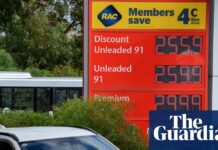
Petrol prices have hit a record high of $2.38 a litre, as Australia’s fuel supplies are set to hit a cliff by the end of April when the Asian refineries that deliver 80 per cent of Australia’s supply exhaust their inventories due to the Iran war oil crisis.
The government and Australian fuel importers are scrambling to lock in shipments of replacement fuel and are in talks with nations across Asia and Europe, as well as the US. The negotiations have become even more urgent after China, which supplies around 4 per cent of the nation’s diesel, paused exports until the end of March.
Ampol chief executive Matt Halliday said his company, which runs 1800 service stations across the country, was scrambling to find refined fuel to ship into Australia beyond mid-April.
“There is a lot of buffer in the system, but, ultimately, if this runs longer than a few weeks, you’re going to see pressure on prices and global supply chains.”
Energy Minister Chris Bowen has said that there are 81 fuel shipments bound to reach Australia by mid-May, and only 6 have been cancelled.
However, the fuel exporters operate just-in-time supply chains and have not yet filled these shipments.
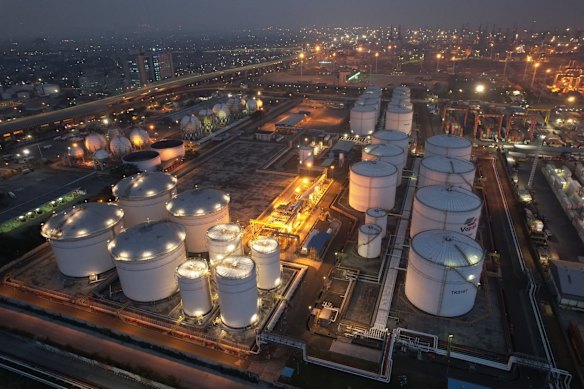
Asian refineries will exhaust their stocks of crude oil within a month, so it remains unclear how these shipments would be filled.
Strategic stockpiles of crude oil held around the world could help fill the gap, as well as new sources from countries like Canada that boost their current oil output.
The average national petrol price reached the unprecedented level of $2.38 for regular unleaded in the week ending March 20, according to the Australian Institute of Petroleum weekly price report, which eclipses the record of $2.19 set the previous week and is up 27 per cent since the war began on February 28. Regular unleaded petrol reached $2.12 in March 2022 at the peak of the energy crunch caused by Russia’s invasion of Ukraine.
Bowen announced on Tuesday a temporary reduction of diesel standards, which he said would provide greater flexibility for Australian importers to source fuel from markets with marginally lower flashpoints – the temperature at which fuel can burn.
Bowen earlier this month lowered petrol standards for 60 days, which he said would enable 100 million extra litres to flow into the local market.
“This six-month adjustment will lower what’s known as the flashpoint for diesel, from 61.5 degrees Celsius, to 60.5 degrees Celsius, increasing diesel supply options from refiners and international sources,” he said on Tuesday.
Australian Institute of Petroleum chief executive Malcolm Roberts said if Iran kept the Strait of Hormuz, through which 25 per cent of the world’s oil travels, shut for another week or two, then refineries in Asia that supply around 80 per cent of Australia’s refined fuel would struggle to refill their inventories.
“If this continues, eventually there’ll be a point where those refineries are well and truly short of the crude oil they need,” he said.
“If refineries haven’t been able to find some replacement supply they’re going to start cutting back production, which some refineries apparently are already doing, and they’ll also come under pressure to prioritise their domestic market… we all know it’s exceptional circumstances, so we’ll just have to wait and see.”
However, Roberts said there was much that may be done between now and May to boost global supply of oil, including increased exports via the Red Sea via a pipeline through Saudi Arabia, further releases of oil from nations’ strategic stockpiles, extra production from non-Middle Eastern oil producers like Canada, or increased use of Russian oil that had previously been embargoed due to the Ukraine invasion.
Macquarie University senior lecturer Lurion De Mello said there was “considerable worry” about the future of fuel imports, given there were no shipments currently on their way to Australia that were set to land after mid-April according to maritime shipping data.
“I don’t think there’s a reason for extreme alarm, but it is concerning that shipping data hasn’t been updated with deliveries of refined fuel beyond the 15th of April,” De Mello said.
Other countries in the region that supply Australia with refined fuel had also built significant oil and fuel reserves as a contingency in case of a major disruption, which contrasted to Australia’s approach to fuel security, De Mello said.
“South Korea, Singapore, Japan, China have massive amounts of storage, because they want to be well-prepared. We’re always the laggard with a ‘she’ll be all right’ attitude. But we’re not prepared for this stuff.”
Cut through the noise of federal politics with news, views and expert analysis. Subscribers can sign up to our weekly Inside Politics newsletter.
 Mike Foley is the climate and energy correspondent for The Age and The Sydney Morning Herald.Connect via email.
 Nick Toscano is a business reporter for The Age and Sydney Morning Herald.Connect via X or email.
From our partners
Disclaimer : This story is auto aggregated by a computer programme and has not been created or edited by DOWNTHENEWS. Publisher: www.smh.com.au