
Fishers are tying up their boats, creating concerns about the availability of seafood ahead of Easter, and farmers are reconsidering planting crops as diesel shortages and price rises hit the state’s food suppliers.
Co-op operators told the Herald they had already resorted to rationing fuel among fishers to get by, with some forced to leave their boats docked for most of the week as the average diesel price in NSW hit $3 a litre. Many regional stations are charging $3.30.
The Sydney Fish Market has introduced a temporary fuel levy on all seafood bought on the auction floor, to be passed on to commercial fishers to support them through the price rises.
In a statement, the market said prices and supply remained stable at the moment, but it was too early to know the full impacts of the fuel challenges.
Unlike other industries, where suppliers can raise their prices to cover the costs of fuel, fishers send product to the Sydney Fish Market to be sold at auction.
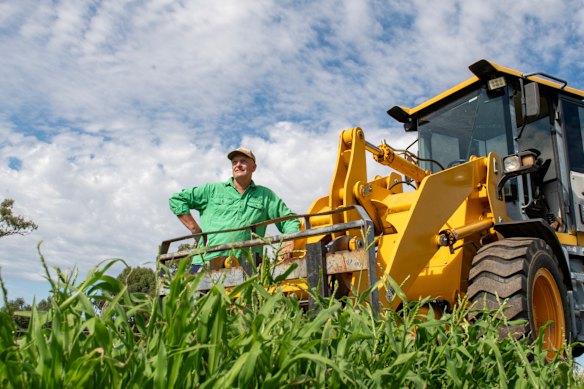
Farmers, too, are facing tough choices. Crop and cattle farmers looking at the supply and cost of fuel and fertiliser may have to reduce their sowing this year, Dubbo farmer Matt Smith said.
Smith usually plants a fodder crop to be eaten by his livestock during the winter when natural grass doesn’t grow as easily. This year, he is considering forgoing that crop completely to reduce operating costs, and potentially getting rid of livestock.
“I’m getting my Mad Max outfit ready,” Smith said. “Livestock guys like ourselves will be thinking, ‘Can we afford to keep them, or should we cut our numbers back?’ Everyone is questioning everything.”
The fertiliser used by Australian farmers contains urea which, like fuel, has been affected by the conflict in the Middle East. NSW Farmers Federation president Xavier Martin said not having access to the right fertiliser could affect the quality of protein in wheat, the oil in canola and the quality of produce making its way to the supermarkets.
The Ballina Co-op usually has no problem getting their hands on shipments of 15,000 to 20,000 litres of diesel to power their three fishing trawlers. Now, diesel deliveries are as low as 1500 litres, so they are limiting the number of nights they go out.
Fisherman Garry Joblin burns through about 700 litres in one night of fishing.
“We’ve got to the point where we’re rationing ourselves; we’ve got not choice,” Joblin said.
“We’re not going to work because we don’t want to waste our fuel. Every night counts,” he said.
“People will just miss out, there might not be a lot of fresh seafood for Easter.”
Ian McRae runs the Ballina Co-op, where fresh prawns are his bread and butter. He’s preparing for a slower than usual Easter, where families might be looking at fresh seafood as a luxury they just can’t afford this year.
“If the price goes up, people will look and say, ‘Can I afford a kilo of prawns rather than put fuel in my car and go to work to earn money?’ ” McRae said.
At Maclean, in the Clarence Valley, the Clarence River Fishermen’s Co-op has stopped selling fuel to travelling and recreational vessels, rationing it out to their fishing trawler members instead. They’ve also reduced their casual workforce.
“Diesel was $3.28 a litre today. If that gets up much higher, you’ll end up with boats tied up,” the co-op’s general manager, Dee Zahra, said.
Australia’s peak body for vegetable producers, Aus Veg, said a snap survey of 150 growers found 27 per cent had either reduced or halted their planting schedules because of uncertainty from the conflict.
“Margins are already tight enough, and it can be just too expensive to plant a crop when you don’t even know if you’ll be able to harvest it, get it to market and get paid enough for it,” Aus Veg chief executive Michael Coote said.
On Thursday, Premier Chris Minns said NSW needed to work towards energy independence, so the economy could avoid being “crippled” by overseas conflict.
The state government has urged fuel companies to provide information about supply and future orders to give the government a better picture of where future impacts of the fuel crisis might be.
“This crisis is evidence that economies need to have their own access to energy. I wouldn’t put it only in relation to oil, diesel or petrol; it has to be across the board,” Minns said.
The government is taking a “graduated response” to the fuel challenges, the premier said, warning if the price of oil reaches $US150 a barrel and stays there for a prolonged period, it would affect all parts of the economy. On Thursday, prices were $103.10 a barrel.
There were 48 service stations out of all types of fuel and 178 out of diesel in NSW on Thursday.
The Morning Edition newsletter is our guide to the day’s most important and interesting stories, analysis and insights. Sign up here.
 Jessica McSweeney is a reporter at The Sydney Morning Herald covering urban affairs and state politics.Connect via email.
From our partners
Disclaimer : This story is auto aggregated by a computer programme and has not been created or edited by DOWNTHENEWS. Publisher: www.smh.com.au