
In the kitchen of a modest Victorian ranch house in Northern California, there sits a small round table. For nearly 30 years, this table served as the primary research and development lab for a food empire.
It was here that Fred, the original chef for Amy’s Kitchen, would arrive from the nearby production plant, plopping down trial recipes for founders Andy and Rachel Berliner to taste. “He’d bring it in… and we would taste it,” Rachel Berliner recalled, speaking to Fortune via Zoom from the same Petaluma house. “And then he would say, ‘add a little more spice,’ or ‘let’s tone the vegetables down.’ Then he’d take it back to the kitchen… back and forth.”
From these domestic tasting sessions emerged a frozen food giant. Today, Amy’s Kitchen generates approximately $1 billion in retail sales (translating to roughly $600 million in gross sales) and employs nearly 2,000 people across three culinary facilities. Yet, despite the massive scale, the Berliners insist their success lies in a refusal to modernize their methods.
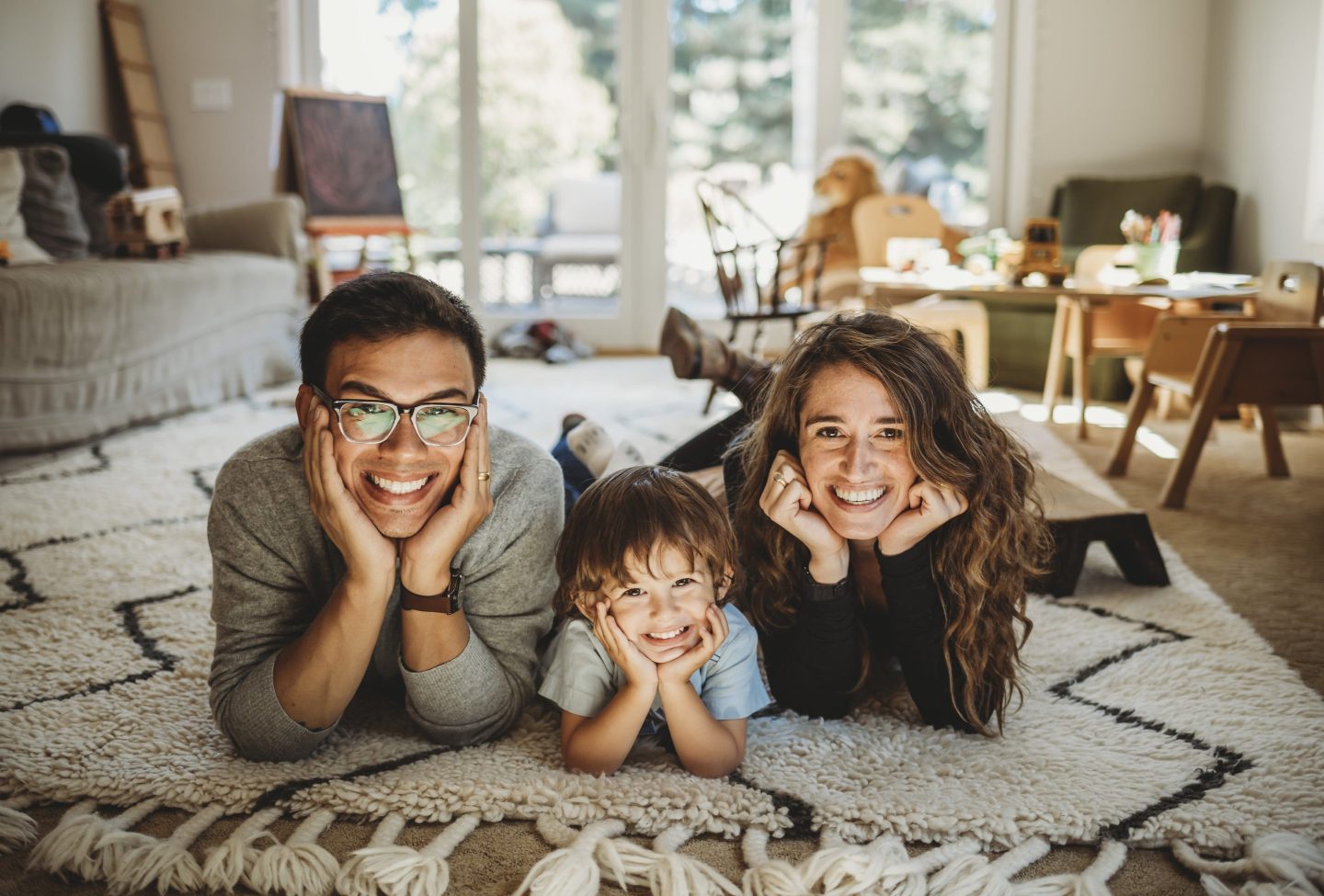
The Berliners never intended to build a conglomerate. The business was born 37 years ago out of a specific financial anxiety: Rachel was pregnant with their daughter, Amy, and the couple needed a way to fund her future education.
“We named the… my mother named the company,” Rachel recalled. “We started the business so that we could support her. You know, you had to put her through college… So we had to at least make enough money to put her through school”.
The plan worked. Amy did indeed go to Stanford—following in the footsteps of Andy’s cousin—and today she sits on the company’s board, though she recently moved to Hawaii to raise her own son. “We never planned on being in big business,” Rachel admits. “It just kind of happened.” Clarifying that Amy was still on the board of Amy’s Kitchen, the Berliners explained that most of her life is in Hawaii, and they may well be visiting more often, from California.
‘We cook food, we don’t manufacture food‘
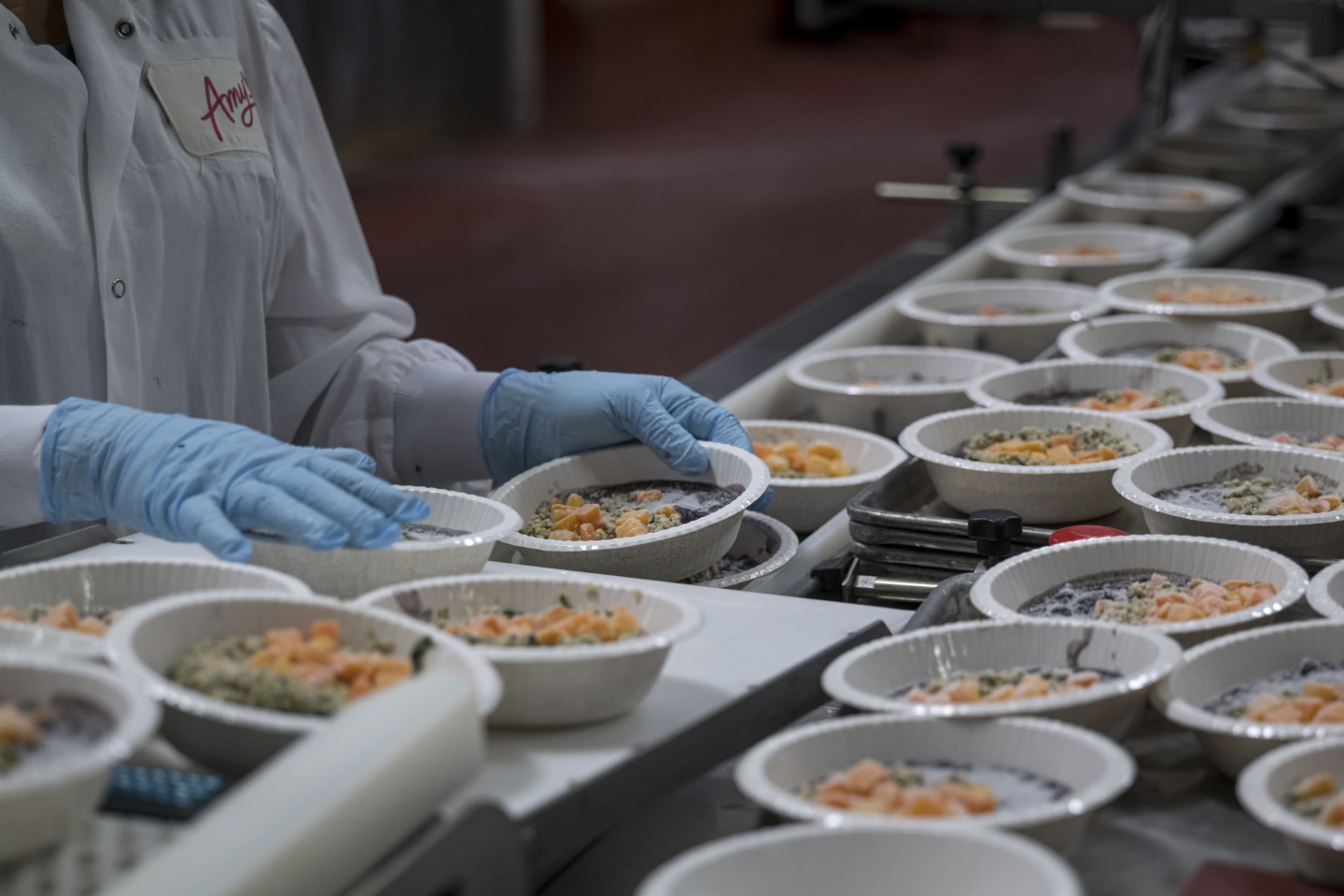
In an era of industrial food processing and hyper-optimized supply chains, the Berliners’ approach remains a stubborn anomaly. Their philosophy is simple but operationally complex: “We cook food. We don’t manufacture food,” Rachel explained.
This is a company built on the premise that you can scale without industrializing and run a billion-dollar operation like a big kitchen.
While visitors to their massive facilities often expect a mechanized factory floor, Rachel noted they are frequently “in shock” to find an operation that resembles “a big restaurant.” This distinction is technical, not just marketing rhetoric. The company prepares ingredients by hand, makes its own roux, marinates vegetables, and creates broths from scratch rather than using pre-fabricated industrial bases.
Of the wider industry, Rachel is critical. “People are just processing food. They’re not cooking it.” Her commitment to “cooking” serves as the foundation of the brand’s identity and is why Amy’s Kitchen is poised to be the first company to be certified under a new “non-ultra-processed” food seal. According to Rachel, they didn’t have to change a single recipe to qualify for the designation because “we make food the way you do at home. We just cook it in bigger pots.”
This method comes at a premium. Rachel estimated their organic ingredients cost “more than” 25% higher than conventional alternatives. However, this rigorous standard aligns with her upbringing in 1950s Compton, where her parents kept an organic vegetable garden long before the term was fashionable. “I was raised with this concept of organic at a time when nobody did it,” she says. “I was never supposed to eat anything that sounded like a chemical.”
Rachel recalled that her mother was a subscriber to Rodale magazines, such as Organic Gardening (later Prevention), which featured early advocacy of organic food and physical health considered fringe at the time. As she’s in her mid-90s and shows no signs of slowing down, clearly it rubbed off on her daughter and future son-in-law.
Rachel said she was raised with an understanding of organic food at a time when most people didn’t understand it, with homegrown vegetables and homemade wheat bread. Andy recalled that when he grew up in the Chicago area, “vegetables came out of a can as far as I knew.” It was a whole new world when he moved to California, he added.
If the company has a flagship product, it is the humble bean-and-cheese burrito, the stuff of sustenance for college students and twenty-somethings for decades. For Rachel, the item’s enduring success is about more than just calories or convenience; it provides a specific psychological comfort.
“The bean and cheese burrito is not just great tasting, it has an emotional thing to it,” Andy said. “It just kind of mellows you out, makes you feel nourished.”
Growing pains at scale
The Berliners’ ability to scale without losing their soul is partly due to their enduring 40-year partnership. Remarkably, they still live in the same “old ranch house” where the business began. This harmony extends to their business culture. During the height of the COVID-19 pandemic, while other food manufacturers struggled, the Berliners took aggressive steps to protect their workforce. “We sent everyone at risk home before the government was helping with that. And we paid them,” Rachel said. They installed barriers and set up their own vaccination center to ensure there was “no spread within Amy’s at all.”
Their growth hasn’t been without growing pains, though, as workers started coming forward in 2022 at the company’s plant in nearby Santa Rosa with a series of complaints, including dangerous line speeds, lack of bathroom breaks during fast-paced shifts, injury mismanagement, and even retaliation. Cal/OSHA investigated and proposed a fine of $25,000 in August 2022 for violations, including substandard emergency eyewash stations and unsecured guards on dough-flattening conveyors. Inspectors confirmed a history of repetitive motion injuries and ordered further preventive action on the burrito line. Since 2019, the company was charged with more than $100,000 in OSHA violations — penalties it allegedly failed to disclose when applying for B Corp certification. The company told Fortune that Amy’s Kitchen remains a certified B Corporation today and it paid less than those proposed fines: $6,825 over the 2022 violations and $26,025 since 2019 overall.
Amy’s Kitchen denied the allegations, cited a third-party audit that found no systemic issues, and stated that its recordable injury rate was better than the industry average. The company reached an agreement with workers in mid-2024, committing to regular safety risk assessments and a 3% merit-increase budget for employees. The resolution was negotiated through an organization called the Food Empowerment Project, a self-described vegan food justice organization, which had supported the workers and organized a temporary boycott.
A company representative told Fortune that the 2022 allegations “reinforced Amy’s commitment to actively listening to its workforce and continually strengthening how the company supports employees across its plants.” Acknowledging that valid issues were identified, Amy’s Kitchen said it moved quickly to address these and has continued investing in comprehensive benefits for both plant and office employees, including retirement savings plans, paid time off, tuition reimbursement, college scholarships for employees’ children, free mental health services, career development, and product discounts.
Since implementing these expanded efforts, Amy’s said it has marked improvements in engagement scores across its locations and achieved a best-in-class safety record at every plant in 2025.
Politics and the future of food
The Berliners are no strangers to political shifts in food policy. In fact, they claim they helped write the rules. Long before federal regulations existed, the couple hosted the very first meeting to form the National Organic Standards Board right there at their ranch, gathering with other pioneers like the Lundberg family to create a unified standard.
Recently, the conversation around food additives has re-entered the national spotlight with Robert F. Kennedy Jr.’s push to overhaul food regulations. Kennedy and the Trump FDA moved to ban or phase out synthetic food dyes — Red No. 3 was the first target, with broader action proposed against Yellow No. 5, Yellow No. 6, Blue No. 1, and others commonly used in processed foods. Amy’s Kitchen doesn’t use artificial colors in any of its products. Regulations that would be disruptive to most of the frozen food industry essentially validate how Amy’s has always operated.
When asked about the new administration’s focus on organic food, Rachel admitted, “It was a shock, yeah.” While they said they haven’t spoken to Kennedy directly, they said their daughter Amy did send a note to a school acquaintance connected to the incoming health team. For Rachel, the sudden political interest in banning food dyes and chemicals validates a lifestyle she has lived for seven decades.
Amy’s has continued to grow as more consumers seek out organic, minimally processed foods made with recognizable ingredients. In 2025, the brand expanded organic access to more than 45 million new households across key categories such as frozen meals, soups, and pizza and as of November 30, 2025, it claimed to hold significant majorities of the frozen pizza, burritos and pockets spaces, within the organic segment.
Amy’s Kitchen told Fortune that it sees this as continued validation of its long-standing philosophy and remains focused on making high-quality, organic food accessible to more people. Many of the broader conversations happening today around chemicals, additives, and ultra-processed foods, after all, reflect an approach the company has followed for nearly 40 years.
Disclaimer : This story is auto aggregated by a computer programme and has not been created or edited by DOWNTHENEWS. Publisher: fortune.com








