
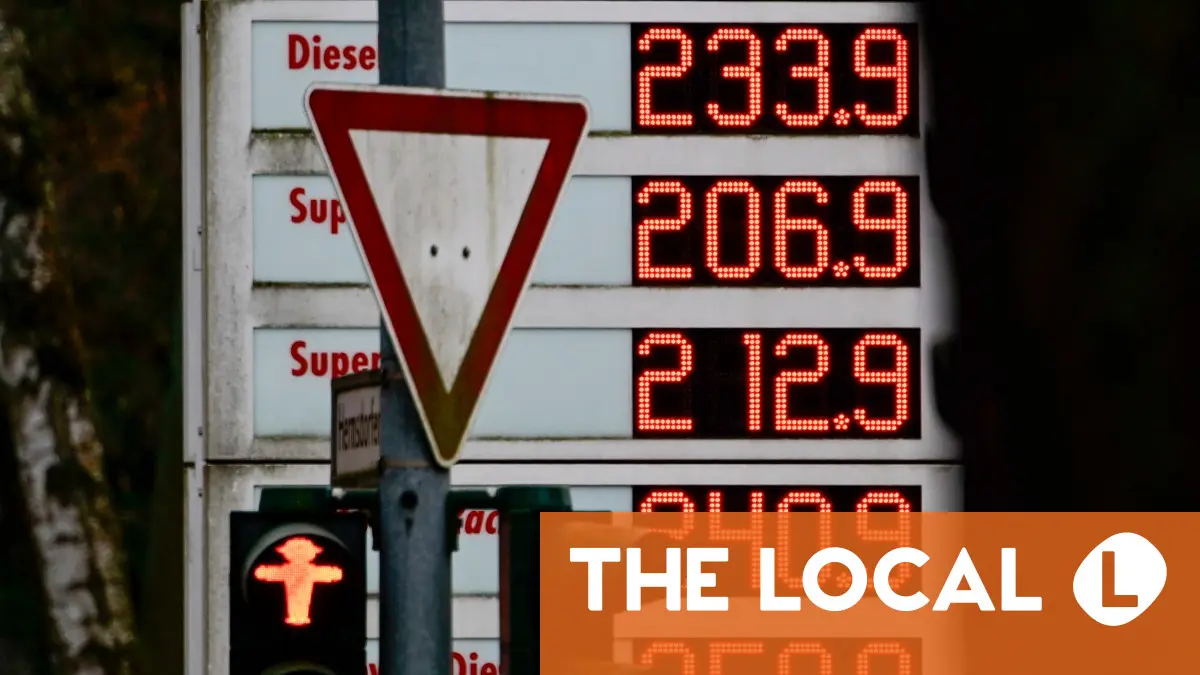
Lawmakers have adopted a measure to limit petrol stations from putting prices up more than once in 24 hours. The rapidly approved law is to come into force by the start of April.
According to Germany’s Economy Ministry, the new price cap for petrol stations, intended to dampen soaring gas prices is to come into force on April 1st.
After weeks of sharp rises in petrol and diesel prices linked to the war in Iran, Germany’s Bundestag approved new rules designed to bring more transparency and predictability to fuel pricing last week.
Under the fuel measures package, petrol stations will be allowed to increase their prices just once a day in the future, at noon.
Price reductions, on the other hand, can continue to occur at any time.
Lawmakers suggest the rule is aimed at limiting price fluctuations and ensuring more transparency.
A similar rule has already been in affect in Austria.
READ ALSO: Is it worth crossing the border from Germany for cheaper fuel?
When will the price cap take effect?
The fuel measures package was drafted immediately following the recent spike in fuel prices in Germany and adopted by the federal government and parliament in a short time.
On Friday, Federal President Frank-Walter Steinmeier signed the law, meaning that it is set to come into force very soon.
A publication in the Federal Law Gazette is planned for March 31st, according to a spokesman for the ministry. Therefore the law would take effect on April 1st.
“The stakeholders involved have asked us to work towards an entry into force on April 1st for a smooth implementation,” said an economics ministry spokesman.
Because of the Iran war, the prices for diesel and super had skyrocketed. Initially these price jumps were more dramatic in Germany than in many surrounding countries, prompting German leaders to look for solutions to to ease price spikes.
The government has also announced plans to release parts of Germany’s strategic oil reserves as part of a coordinated move with the International Energy Agency, although officials caution this is unlikely to have a noticeable effect at German petrol stations.
READ ALSO: What are European countries doing to keep fuel costs down?
With reporting by DPA.
Disclaimer : This story is auto aggregated by a computer programme and has not been created or edited by DOWNTHENEWS. Publisher: thelocal.de








