Planning to travel in Germany over Easter? Expect busy motorways, crowded trains and lingering strike uncertainty at airports. Here’s what to watch out for – and how to avoid the worst of it.
Whether you’re driving to visit family, hopping on a train for a short break or flying abroad for the long weekend, Easter is one of the busiest travel periods of the year in Germany.
With school holidays overlapping in most federal states, millions of people take to the roads and railways at the same time.
This year, Easter travel patterns are being shaped by a mix of factors: high fuel prices, which are pushing some drivers onto trains, major engineering works on the rail network and a strike situation that has eased – but not disappeared entirely – in aviation.
Roads
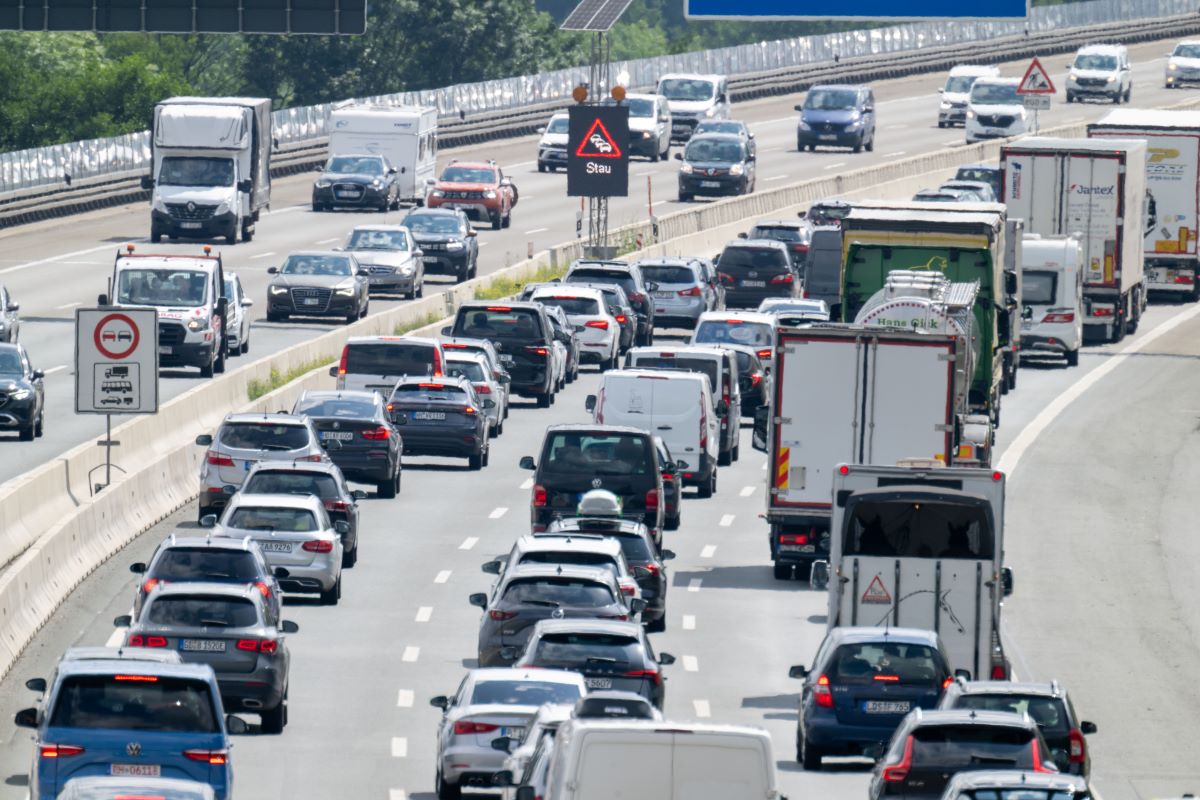
The ADAC, Germany’s largest motoring association, is warning that the days before and after Easter are expected to be congested, with particularly high risks of traffic jams on Maundy Thursday (April 2nd) and Easter Monday (April 6th).
Traffic is likely to be heaviest on Maundy Thursday, according to the ADAC, as many drivers try to avoid travelling on the public holiday itself.
READ ALSO: Is it worth crossing the border from Germany for cheaper fuel?
Roads will also be busy on the morning of Good Friday, though long standstills are less likely, while Easter Sunday and Holy Saturday are expected to be the calmest days nationwide.
Urban areas and major transit routes are particularly vulnerable, with a high likelihood of heavy traffic around cities including Berlin, Hamburg, Munich, Frankfurt and Stuttgart, as well as long‑distance motorways such as the A1, A3, A7, A8 and A9.
But the ADAC also suggests that overall congestion may actually be slightly lower than last year, because high fuel prices linked to the war in Iran are discouraging longer car journeys with some travellers switching to rail.
Cars stuck in traffic on the A9 motorway near Himmelkron. Heavy traffic is expected in Germany over the Easter weekend. Photo: picture alliance/dpa | Pia Bayer
Rail
Deutsche Bahn (DB) expects very high demand on long‑distance services over Easter, especially on Maundy Thursday, Good Friday and Easter Monday.
Demand is higher than expected, which DB partly attributes to drivers opting for trains because of high fuel costs. DB CEO Evelyn Palla has also confirmed that additional services will be deployed over the holiday period, including extra trains to Sylt, the Black Forest and Lake Constance.
READ ALSO: How to get money back from Deutsche Bahn when your train is delayed
But major engineering works are continuing over Easter, which may cause delays. DB has confirmed construction on key sections between Leipzig and Halle, around Hanover and between Frankfurt and Fulda, as well as bus replacements between Baden‑Baden and Freiburg due to Rhine Valley Railway upgrades.
Overall, the busiest routes are likely to include Berlin–Cologne, Berlin–Munich and Frankfurt–Cologne.
DB is strongly advising passengers to check train occupancy levels via the DB Navigator app or the bahn.de website and to reserve seats when possible.
READ ALSO: How travellers can navigate the ‘last mile’ with Deutsche Bahn’s updated app
Air travel
After weeks of disruption, the outlook for air travel over Easter is more stable than earlier in March, but risks have not disappeared entirely.
At Berlin Brandenburg Airport (BER), the trade union Verdi has ruled out further strikes until at least April 13th, following progress in wage negotiations.
There has also been movement at Lufthansa, where a new agreement covering around 20,000 ground staff has removed the risk of further ground‑staff strikes this year.
READ ALSO: Will transport strikes hit travellers in Germany over Easter?
But Lufthansa has warned that some talks are still ongoing.
According to the union UFO, cabin crew at Lufthansa’s mainline operation and regional subsidiary Lufthansa CityLine backed strike action in a ballot of members on Friday.
No specific strike dates have yet been announced, but the vote gives the union a mandate to escalate the dispute at short notice if talks do not progress.
Travellers are advised to keep a close eye on announcements in the days leading up to their flights, as any new strike action is typically announced one or two days in advance.
Disclaimer : This story is auto aggregated by a computer programme and has not been created or edited by DOWNTHENEWS. Publisher: thelocal.de