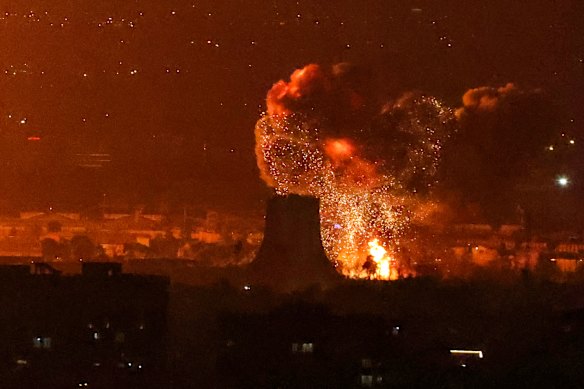

Wall Street’s Gonzo research firm Citrini claimed to have made an important discovery when it sent an analyst to see first-hand what is happening in the Strait of Hormuz, the narrow body of water that is deciding the future of the global economy.
Last week, the Citrini employee dubbed Analyst #3 – armed with cigars, thousands of dollars in cash and cans of nicotine pouches – boarded a speedboat in the strait and reported back that the waterway was not closed to the extent that some experts have thought.
Getty Images
One thing is clear, though: Iran is effectively operating a tollway that allows favoured ships to pass through the strait.
“You don’t go through if you don’t get approved,” Citrini’s report said. “This is the difference between a blockade and a toll road, and the market has been pricing the former while the reality on the water is setting up to look a lot more like the latter.”
The eyewitness detail on the state of the strait is in stark contrast to the notoriety that Citrini achieved in February when it triggered a global sharemarket meltdown with a dystopian report imagining what AI could do to the world economy by 2028.
Visiting the strait last week in an old motorboat, the analyst saw for himself what he claimed satellite and ship tracking data has failed to detect – a growing volume of ships travelling through the strait ‘dark’ – a reference to the ships having their trackers turned off.
“I saw a Greek Dynacom ship ripping straight through the centre of the strait — not hugging the margins like every other captain, not creeping along the coast, but charging through the middle as if this were peacetime,” he reported.
“If you want a single image that confirms the thesis that the strait is reopening under Iranian management, it’s a Greek tanker running full speed through the centre of Hormuz while drones fly overhead and everyone else hides along the edges.”
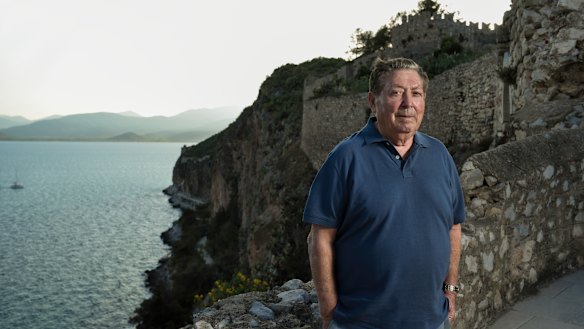
International news outlets including the Financial Times and Reuters have confirmed that Dynacom Tankers, a shipping firm owned by 79-year-old Greek billionaire George Prokopiou, has sent numerous vessels through the strait since the conflict began.
Citrini also observed what appeared to be Chinese vessels, and ships flagged from India, Malaysia, Japan, Greece, France, Oman and Turkey.
In all, 14 ships passing through on April 2, compared to no more than four ships a day for the previous two weeks, according to local observers interviewed by the Citrini analyst.
Citrini, which was founded in 2023 to analyse big economy trends, claims that its analyst was intercepted by the Omani Coast Guard, detained and had his phone confiscated before being later released.
“It is our most firmly held conviction that narratives drive markets more than any other factor,” the firm, founded by former medic James van Geelen, has said.
The bad news is that the current volumes are nowhere near the levels needed to avoid global economic disaster in the long term.
In its report conclusions, Citrini noted that the shipments it witnessed paled in comparison to the 100-plus ships that would normally pass through every day, let alone the volume of cargo allowed by massive oil tankers, which are still a rare sight.
“If the strait is still only transited by 15 ships a day by the end of April, the situation will be disastrous. Everyone involved knows this,” Citrini said.
But one of the most important findings of the report is that no one thinks Iran wants the strait closed.
“The best propaganda for Iran is a functioning strait where they look like the reasonable stewards of global trade, while the US looks like the disruptive force.”
And this may be why other countries are finding solutions, despite the hot war playing out overhead.
“The most counterintuitive finding from this trip is that hot war and commercial diplomacy are happening at the same time. The rest of the world is adapting and negotiating passage while the US continues with military action,” it said.
As for the mood on the ground, including from Iranian smugglers who are crossing the strait at will, Citrini reported: “In the face of huge uncertainty and global attention was human resilience. There has been war here before – there will be again. The US is interested, as always, in oil. The neighbours are fighting, the risk is real, but life goes on. This too shall pass.”
The Business Briefing newsletter delivers major stories, exclusive coverage and expert opinion. Sign up to get it every weekday morning.
 Colin Kruger is a senior business reporter for the Sydney Morning Herald and The Age.Connect via email.
From our partners
Disclaimer : This story is auto aggregated by a computer programme and has not been created or edited by DOWNTHENEWS. Publisher: www.smh.com.au