
Life
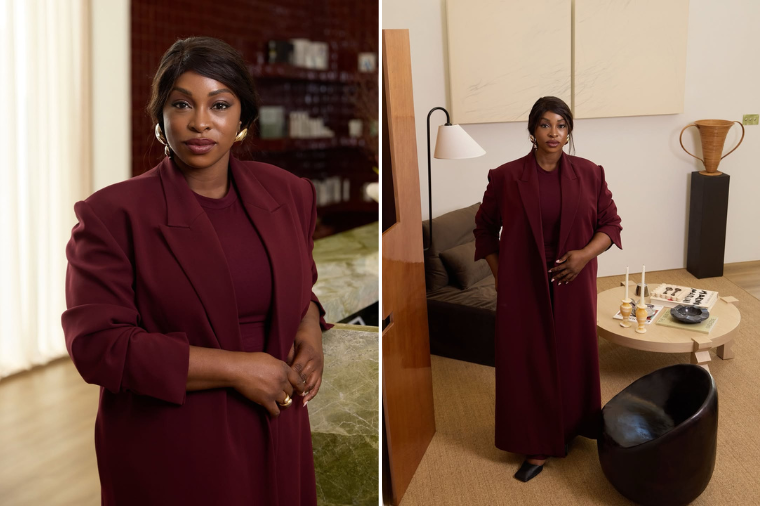
Morin Oluwole, an International Luxury Business Leader who serves on the boards of Breitling, Rituals, and Biologique Recherche and the former Global Luxury Director at Meta, explains why it’s always important to include a woman’s point of view in the rooms where C-suite business decisions are being made The corporate world was not built for women. And yet, women enter it every day, carrying perspectives that are underrepresented, undervalued, and, until recently, dismissed. The female gaze is more than a point of view – it is a lens that challenges the very architecture of business. It asks hard questions: Why do we define success this way? Why are certain voices louder than others? And, ultimately, what happens when women lead, not just participate? For me, the female gaze is about clarity over noise, strategy over show, understanding over assumptions. It notices what’s missing – the blind spots, the cultural friction, the patterns others overlook.

Acted on, these insights are transformative. Some call it “soft skills.” I call it power. Power to question, to pause, to bring nuance where others see certainty. In boardrooms, this perspective has reshaped strategy, product, and brand identity – yet it’s often overlooked until results speak for themselves. Early in my career, I assumed leadership came with a more senior title. It didn’t. It came in how I framed problems, translated ideas into action, and navigated contradictions others ignored. Women are taught to be “liked” first, to shrink, to edit ambition. The female gaze teaches the opposite: bring your full perspective, unapologetically. Speak clearly. Own your space. Authority isn’t granted – it’s inferred from how you think, act, and respond under pressure.
THE HUMAN SIDE OF STRATEGY
Early in my career in tech, I remember sitting in a meeting where the discussion focused almost entirely on numbers – growth projections, performance metrics, operational targets. All important, of course. But I found myself asking different questions: how will people actually experience this? How will customers feel? What story are we telling without realising it? The room paused. It wasn’t that the question was difficult – it simply hadn’t been asked. Over time, I’ve seen that many of the most successful strategies are built not just on data, but on empathy. Data tells you what people do, but understanding why they do it – and how they feel when they interact with a brand – requires a deeper perspective. This is where the female gaze often becomes a strategic advantage. In luxury, for example, this perspective is invaluable. Brands succeed not only because of product or price, but because they understand emotion, perception, and meaning. They know how a client wants to feel when they encounter the brand.
LEADERSHIP THAT LOOKS AHEAD
Another element it brings is long-term thinking. In many corporate environments, there is a strong pressure for speed and immediate results. But women leaders often approach decisions with a broader time horizon. Not out of caution, but out of awareness. We tend to consider how choices will affect teams, relationships, and reputation over time. The corporate world is richer, smarter, and more effective when the female gaze is present. And I don’t mean token presence; I mean influence, authority, and space to act. A female gaze in leadership often asks slightly different questions: ∙ Who is not in the room? ∙ Whose voice have we not heard yet? ∙ What might this decision look like six months from now – or five years from now? These questions do not slow progress. They make progress more sustainable. When women are empowered to lead, the world becomes not only fairer, but sharper, more creative, and more resilient.

BEYOND THE OLD LEADERSHIP MODEL
The most dynamic environments I’ve experienced were those where perspectives balanced each other: analytical and intuitive, fast and reflective, assertive and collaborative. For years, women were advised to “fit in” to existing corporate cultures. That moment is changing. The real opportunity now is not to imitate leadership models, but to expand them. A world shaped by more of a female gaze would not necessarily be softer or slower. It would simply be more aware – more attentive to complexity, more conscious of human dynamics, and more balanced between ambition and responsibility. The world is changing, whether corporations realise it or not. Women are shaping it from the inside, quietly and boldly, and the female gaze is central to that transformation. If you want to understand what the future of leadership looks like, start by listening to the women who have always been seeing more than anyone else in the room. The female gaze is not a trend or a talking point. It is a shift in perspective that exposes outdated assumptions about power, leadership, and success. The real question is no longer whether women belong in these spaces – it is whether institutions are ready for the clarity and change that come when we fully step into them.
@morin | morinoluwole.com
– For more on luxury lifestyle, news, fashion and beauty follow Emirates Woman on Facebook and Instagram
Images: Supplied
Disclaimer : This story is auto aggregated by a computer programme and has not been created or edited by DOWNTHENEWS. Publisher: emirateswoman.com






