
Although there are no Formula 1 cars on track in April, the first of a series of key meetings – that could have a major bearing on how the action looks when the season does resume – will be held on Thursday.
The cancellation of races in Bahrain and Saudi Arabia as a result of the conflict in the Middle East created a five-week gap in the calendar before the Miami Grand Prix from May 1-3.
The extended period following the opening three rounds in Australia, China and Japan has given the sport’s bosses time to reflect on – and potentially adjust – the new regulations introduced for the 2026 season.
While the introduction of new power units and chassis has brought some successes, with the likes of Lewis Hamilton saying he has enjoyed the racing more than ever, there have also been imperfections.
Discussions on the regulations were always planned after the early rounds but they were brought under renewed focus by events in Suzuka, which included fresh driver criticism of energy-management requirements during qualifying and a dangerous crash for Oliver Bearman amid a significant speed differential with the car he was following.
Max Verstappen has been particularly vocal about the situation, with the four-time world champion claiming he is considering quitting the sport at the end of the season if the regulations aren’t altered to something nearer his liking.
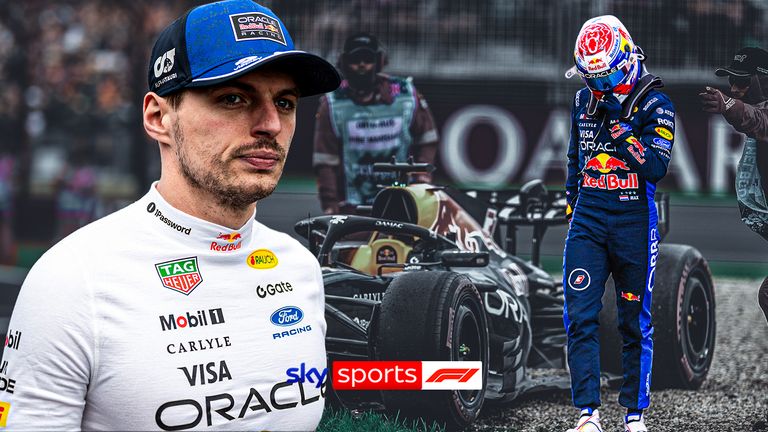
A look at Max Verstappen’s disappointing start to the 2026 Formula 1 season
What could be up for discussion?
F1’s new power-unit regulations see a 50 per cent split between electrical output and internal combustion engine output. The extra reliance on electricity means the drivers need to recharge their battery in an optimal way, or the car does it for them by ‘super clipping’ – slowing down to recharge the battery.
This contributed to Bearman’s big crash at Suzuka, which saw the Haas driver take to the grass to avoid the Alpine of Franco Colapinto, who was slowing down to recharge his battery.
The drivers appear to be largely united in wanting to alter this element to avoid the potential danger of situations such as the one Bearman found himself in.
Williams’ Carlos Sainz, a director of the Grand Prix Drivers’ Association, revealed the drivers held a meeting with the FIA in Suzuka where single-seater director Nicolas Tombazis said changes would be made for the next round in Miami in early May.
Sainz says a “better solution” is needed to come up with a “safer way of racing” that addresses the significant closing speeds.
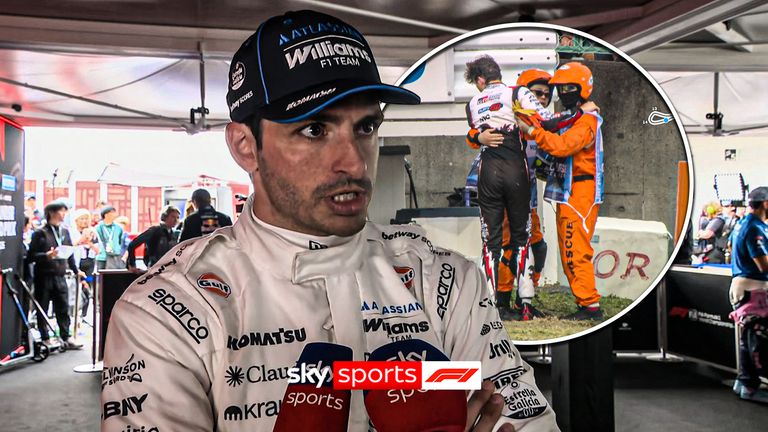
Carlos Sainz says he’s hopeful the FIA will come up with ‘better regulations’ ahead of Miami after Ollie Bearman suffered a big crash during the Japanese Grand Prix
“I was so surprised when they said ‘we will sort out qualifying and leave the racing alone because it’s exciting’. As drivers, we have been extremely vocal that the problem is not only qualifying, but also racing,” he said.
“We have been warning this kind of accident will always happen. In Suzuka, we were lucky there was an escape road. Imagine going to Baku or Singapore, or Las Vegas and having these kind of closing speeds.
“As the GPDA, we have warned the FIA these accidents will happen a lot with this set of regulations and we need to change something soon if we don’t want it to happen.
“I hope it serves as an example and the teams listen to the drivers and not so much to the teams and some people that said ‘the racing is OK’, because the racing is not OK.”
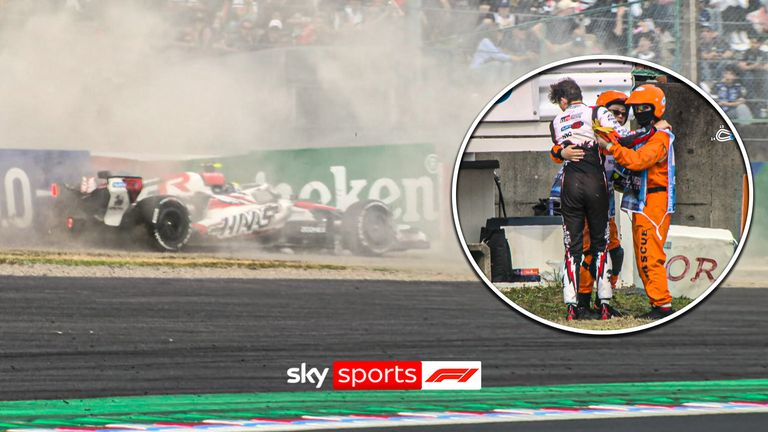
Ollie Bearman walks away after a big crash sees his race in Japan come to an end
One solution to get rid of lifting and coasting, which is when the drivers lift off the throttle before braking to recharge the battery, is to increase the amount of power when super clipping.
Currently, the drivers can recharge 250kW when super clipping compared to 350kW when lifting and coasting. Increasing the super clipping allowance would naturally force drivers to not lift and coast as much. However, you would still have what some see as the potential problem of of super clipping.
The challenge of battery management has also spilled over into qualifying as drivers are seemingly unable to push to the limit, with attempts to go faster through corners sometimes throwing the car off optimal energy deployment.
Ferrari’s Charles Leclerc, one of if not the most aggressive qualifier in the sport, explained in Japan how the situation was troubling him.
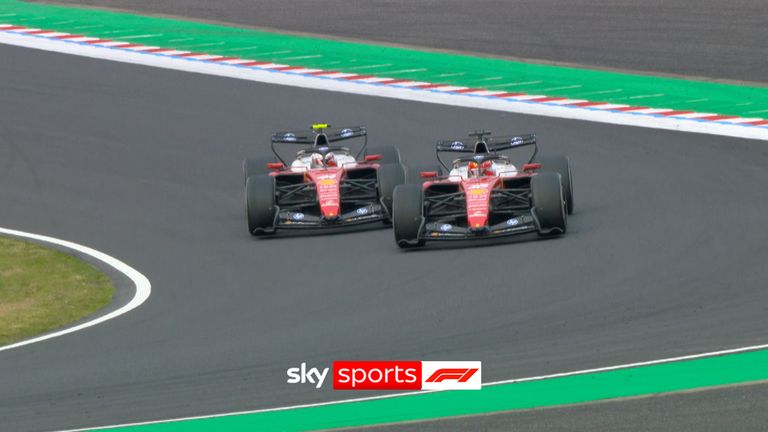
Charles Leclerc and Lewis Hamilton narrowly escape a collision in a close overtake at the Japanese Grand Prix
“I think for everybody, going into Q3 is not the nicest feeling because we want to be at the limit of those cars,” Leclerc explained to Sky Sports F1.
“Whenever you play with those limits, not only do you pay the price of a small snap, but also pay triple the price on the straight and this is very frustrating because qualifying is all about us trying to find the limit and to play with the limit.
“At the moment, whenever you play with the limit, you get destroyed on the straight, so you have got to stay quite underneath it which is an art in itself.
“All the good drivers need to make the difference anyway, but it’s less rewarding for the drivers that like to push over it, and most of the time in Q3 that pays off, but not with these cars.”
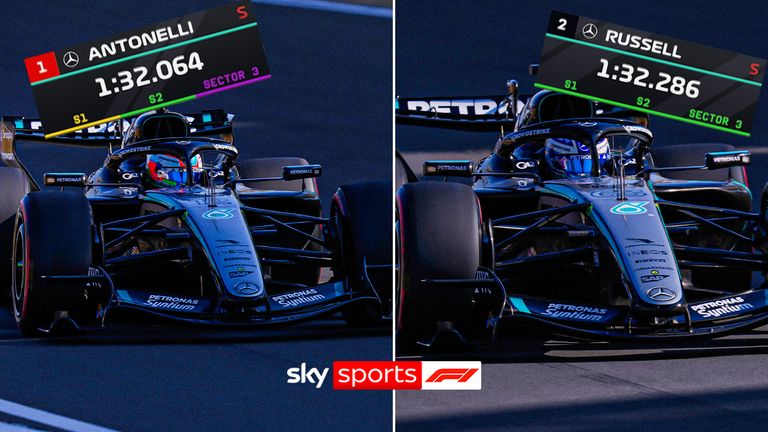
The thrilling end to Chinese GP qualifying as Kimi Antonelli claimed pole position
In Suzuka, the FIA agreed with the five engine manufacturers to reduce the permitted energy recharge each lap in qualifying from 9.0 megajoules to 8.0 megajoules.
It was done to create less super clipping but did not fully solve the issue, so the FIA may choose to push the recharge limits further as far as 6.0 megajoules.
This means less energy can be recovered, therefore the acceleration of the cars will be less and the drivers should reach their top speed later in the straights, thus lessening the need for super clipping or lifting off the throttle into braking zones.
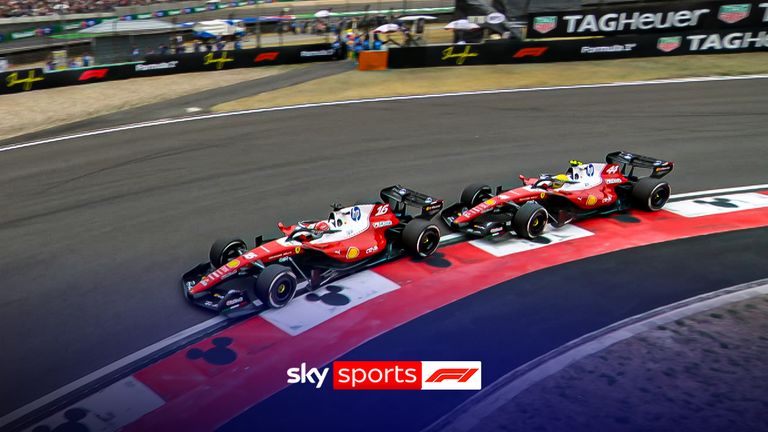
Lewis Hamilton and Charles Leclerc go head-to-head in their Ferrari’s at the Chinese GP
How could the process work?
Sky Sports News understands that decisions will not be being taken at Thursday’s meeting, but that it is rather the first in a series of meetings that could ultimately lead to some changes.
This first meeting is understood to be more of an ideas session, which will eventually lead to a full-scale meeting later in April featuring FOM – F1’s commercial rights holder, the FIA – the sport’s governing body, and representatives for the teams and drivers.
It therefore seems unlikely that any official communication emerges from Thursday’s meeting, but the nature of the process reflects the united way in which the sport’s key figures are working to deliver the best action possible.
While the sport’s bosses are undoubtedly keen to satisfy the concerns of drivers, there also appears to be contentment at the reception the opening races have received from fans.
Any tweaks after this month’s meetings would then likely be introduced from the next race in Miami.
Formula 1 returns on May 1-3 with the Miami Grand Prix, the season’s second Sprint weekend, live on Sky Sports F1. Stream Sky Sports with NOW – no contract, cancel anytime
Disclaimer : This story is auto aggregated by a computer programme and has not been created or edited by DOWNTHENEWS. Publisher: skynews.com




