
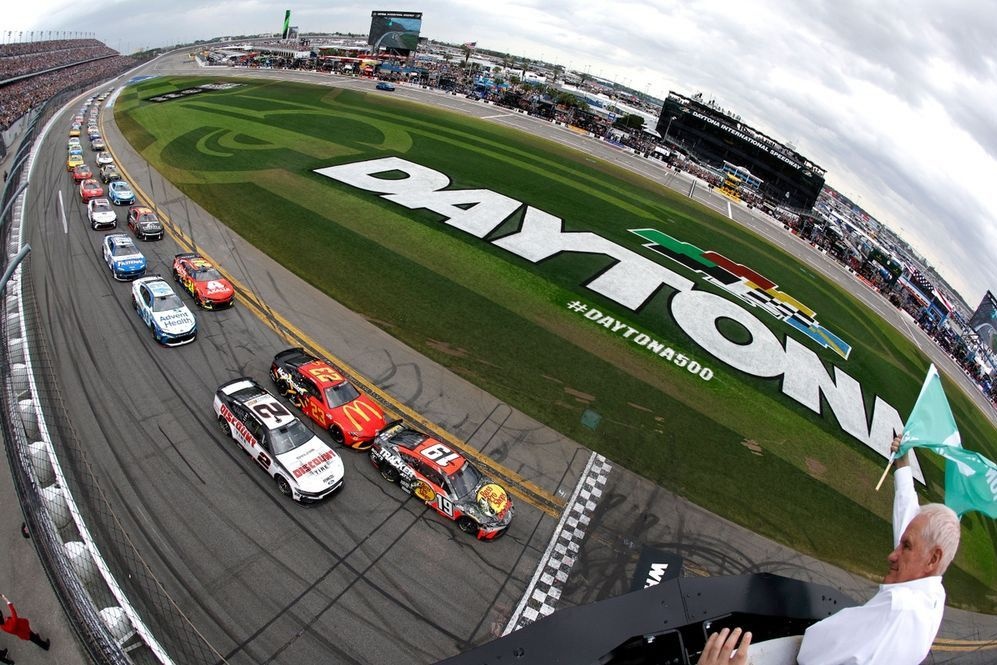
NASCAR now has a five-year sample size of data that concluded there is no doubt a better way to do superspeedway racing using the NextGen car but it needs to determine a pathway of getting there.
In the short term, the Sanctioning Body is adjusting stage lengths to combat fuel saving strategies used by teams since the debut of this car, but it will also target regulation changes during a winter test session.
The general approach was detailed on NASCAR’s official Hauler Talk podcast on Tuesday by
“If you look at generally how a lot of our speedways were laid out it was a short stage, a short stage and then a long stage to the end,” Probst said. “Going into Talladega, we’re going to flip that and adjust the lengths of the final two stages such that we’re confident that the last two stages are short enough to be made without a fuel stop.”
Drivers spend so much time saving fuel so they can take less fuel on pit road. They want to spend less time on pit road because it’s the most efficient way to get track position with a car that is so draggy that passing is a tremendous challenge under the current superspeedway configuration.
“I think that coming out of Daytona we have been working hand-in-hand with a lot of our race teams trying to largely break into two categories things we could do,” Probst said. “One are sporting related things, things like rules around pit stops or stage lengths or things of that nature. The other being in a technical bucket, which would mean car changes: spoiler, power level, things of that nature.”
That means a de facto return of NASCAR’s Presason Thunder test session, which was equal parts a competition test but also a hype machine for the sanctioning body in advance of the new season.
“When it comes to car changes, we will likely right now plan to have a test in Daytona in January,” Probst said. “Kind of how we used to do it in the past, where we’ll go down there and try some different power levels and spoilers and maybe some other car type things to see what we can do there to mitigate it further.”
Probst also expressed an awareness that flipping the stage lengths to where the longest run is at the first half of the race would shift the fuel saving to that segment. However, he also hopes that creates some strategic divergence.
“It could be interesting, as well, in that first stage, the length of it, if there’s some that try to do it on one stop versus some that try to do it on two,” Probst said. “We think that if there are some that try to do it on two, they may drag the group that tried to do it on one along with them to where they won’t be able to do it in one, so it’s got the potential there for some pretty interesting strategies.”
All told, Probst says NASCAR is just trying to be open-minded to address something fans and competitors have expressed a degree of disdain for in recent years, even if he believes he can’t make it all go away.
“I think it’s important to point out that this is a tool now that the teams know,” Probst said. “This is not something that I think is ever going to go away, because these guys will look for every possible advantage that they can get, and that’s reasonable on their end.
“So I think that what we can do is just take steps to mitigate that. And I think that looking at the sporting stuff that we can do quick and get a read on it this year, and then look at some car things next year, is our best chance for success there.”
We want your opinion!
What would you like to see on Motorsport.com?
– The Motorsport.com Team
Disclaimer : This story is auto aggregated by a computer programme and has not been created or edited by DOWNTHENEWS. Publisher: motorsport.com






