
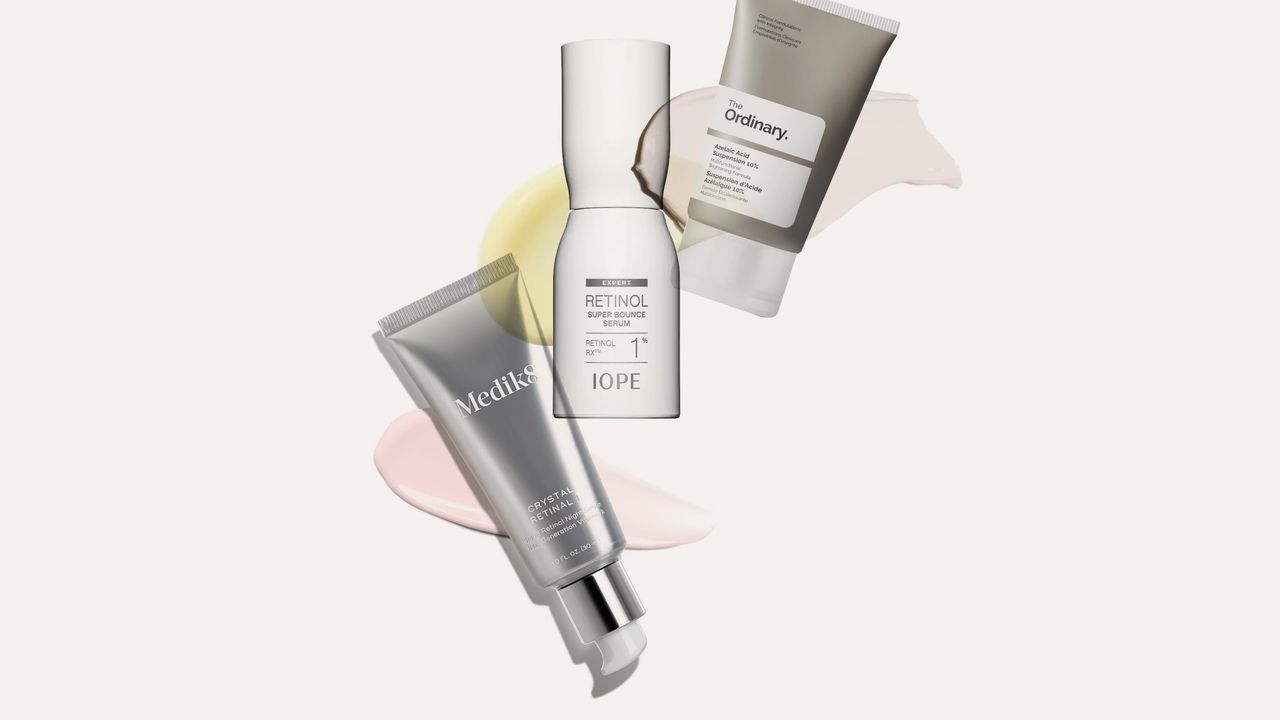
What makes it easy to stick with is everything surrounding that exfoliation. Niacinamide calms redness, while ceramides and hyaluronic acid support hydration, so you’re treating acne without compromising your barrier. “I often recommend this to my patients due to its tolerance and affordability,” Dr. Spearman adds. She notes it’s a great option for those who don’t tolerate tretinoin’s dryness well.
Frequently Asked Questions
Can you get tretinoin-like results without a prescription?
While tretinoin is the benchmark for speed and potency, over-the-counter options like retinol and retinaldehyde can still deliver meaningful improvements in tone, texture, and fine lines over time. “Because these ingredients must convert to retinoic acid in the skin, results tend to appear more gradually,” says Dr. Hovenic. The catch: Not all formulas are created equal, so the strength can vary. No matter which route you take, she emphasizes that consistency, barrier support, and daily sunscreen are what really determine how far your results go.
What’s the difference between retinol, retinal, and tretinoin?
Retinol, retinal (retinaldehyde), and tretinoin are all vitamin A derivatives that ultimately work the same way: They convert into retinoic acid, the form your skin actually uses to boost cell turnover, stimulate collagen production, and improve things like acne, fine lines, and uneven texture.
The real difference is how many conversion steps each skin-care ingredient needs to get there. “Retinol requires two conversion steps in the skin, retinal requires one, and tretinoin is already in the active form and does not need to be converted,” says Dr. Hovenic. In general, fewer steps mean faster, stronger results—but also a higher likelihood of irritation. That’s why tretinoin is typically the most potent of the bunch, while retinol and retinal are often better tolerated as gentler alternatives, especially for sensitive skin or anyone easing into retinoids for the first time.
Meet the experts
- Asmi Berry, DO, a board-certified dermatologist based in Los Angeles
- Y. Claire Chang, MD, a board-certified dermatologist at UnionDerm based in New York City
- Whitney Hovenic, MD, a board-certified dermatologist and co-founder of Spooge based in Reno, Nevada
- Shamsa Kanwal, MD, a double board-certified dermatologist at MyHSteam based in Portland
- Blair Murphy-Rose, MD, a board-certified dermatologist at Schweiger Dermatology based in Newport Beach, California
- Dara Spearman, MD, a board-certified dermatologist and the founder of Radiant Dermatology Associates
- Geeta Yadav, MD, a board-certified dermatologist based in Toronto
How we test and review products
When Allure tests a product, our editors look at it from every angle in an effort to best serve you. We review ingredients, scrutinize brand claims, and, when necessary, examine peer-reviewed scientific and medical studies. In addition to testing each and every product that’s included in each and every review, we rely on experts who shape their fields, including dermatology, cosmetic chemistry, and medicine, to help us vet the ingredients and formulas.
For our list of the best tretinoin alternatives, we considered each product’s performance across five primary categories: product ingredients and efficacy, packaging, fragrance, texture, and product wear. Every product was determined to have excelled in each category by our editorial team, which is composed of in-house writers and editors as well as contributors—along with special consideration from board-certified dermatologists. To learn more information on our reporting and testing processes, read our complete reviews process and methodology page.
Our staff and testers
A beauty product is a personal purchase. You might be searching for a face cream to address persistent dryness or a new nail product to add to your Sunday self-care routine; you may simply be browsing around for the latest launches to hit the hair market. No matter what you seek or your individual needs and concerns, Allure wants to ensure that you love anything we recommend in our stories. We believe that having a diverse team of writers and editors—in addition to the wide range of outside testers and industry experts we regularly call upon—is essential to reaching that goal.
After all, can we really say a skin-care product is the “best” for people over 50 if the only testers we’ve solicited opinions from folks who have yet to hit 30? Can we honestly deem a high-end diffuser worthy of your hard-earned cash if it’s never been tested on curls? We’re proud that our staff spans a wide range of ages, skin tones, hair textures, genders, and backgrounds, which means that we are able to fairly assess any beauty product that comes into the beauty closet.
Disclaimer : This story is auto aggregated by a computer programme and has not been created or edited by DOWNTHENEWS. Publisher: www.allure.com







