
What you need to know
Thank you for joining our continuing live coverage.
Here’s a recap of the latest developments:
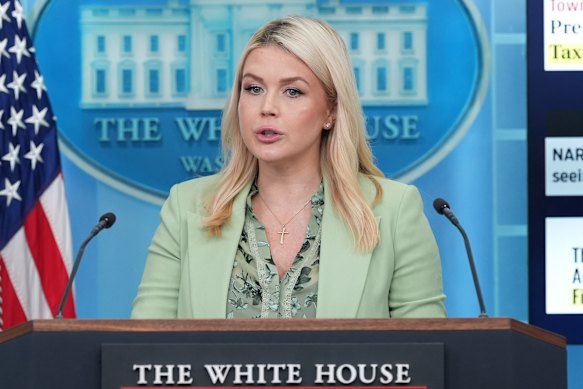
- White House press secretary Karoline Leavitt left the door open to a two-week extension of the ceasefire while the US and Iran continue talks, while saying no formal request had yet been made. “That is not true at this moment,” she said of reports of the extension request. Leavitt confirmed planning for a second round of in-person talks, “very likely” held in Islamabad again.
- Pakistani officials have arrived in Iran’s capital “as part of the ongoing mediation efforts”, Pakistan’s military said in a statement, accompanied by images of Field Marshal Asim Munir being embraced by Iran’s Foreign Minister Abbas Araghchi.
- The US Central Command said no vessels have made it past US naval forces during the first 48 hours of the blockade on ships entering and exiting Iranian ports, and nine vessels have complied with direction to turn around.
- Iranian military commander Ali Abdollahi has warned that Iran would completely block exports and imports across the Persian Gulf region, the Sea of Oman, and the Red Sea if the US does not lift its blockade, Iranian state media reported.
- An extra $53 billion will be injected into Australia’s defence budget over the next 10 years.
Ceasefire extension request ‘not true at this moment’: White House
White House press secretary Karoline Leavitt left the door open to a two-week extension of the ceasefire while the US and Iran continue talks, while saying no formal request had yet been made.
“I saw some reporting – bad reporting – this morning that we have formally requested an extension of the ceasefire. That is not true at this moment,” she said. “We remain very much engaged in these negotiations.”
Leavitt also confirmed planning for a second round of in-person talks. “Those discussions are being had but nothing is official until you hear it from us here at the White House.”
If another round of negotiations was to be held, it would “very likely” take place in Islamabad again, Leavitt said, as Pakistan was the only mediator involved.
The US, Iran and Israel began a two-week ceasefire on April 7. Lebanon – where Israel is bombing targets associated with the Iran-backed militia Hezbollah – is not part of the ceasefire.
Pakistani official embraced upon arrival in Tehran for ‘mediation efforts’
Pakistan’s army chief arrived in Tehran on Wednesday to help mediate talks between the US and Iran after the two sides failed to clinch a peace agreement on the weekend.
Field Marshal Asim Munir and Pakistan’s Interior Minister Mohsin Naqvi, along with a delegation from the country, arrived in Iran’s capital “as part of the ongoing mediation efforts,” Pakistan’s military said in a statement. It shared a photograph of Munir, dressed in military gear, being greeted on his arrival by Iran’s Foreign Minister Abbas Araghchi.
Munir has been leading mediation efforts by Pakistan, alongside Prime Minister Shehbaz Sharif, to find a resolution to the crisis. Islamabad hosted negotiators from the US — led by Vice President JD Vance — and Iran on the weekend, although they were unable to clinch a deal after marathon talks, largely because of differences over Iran’s nuclear program.
The two sides are closer to extending a ceasefire and restarting negotiations about a longer-term peace deal, the Associated Press reported on Wednesday, even as a standoff intensifies over the Strait of Hormuz.
Bloomberg
Iran threatens retaliation over US blockade
The commander of Iran’s joint military command has warned that Iran would completely block exports and imports across the Persian Gulf region, the Sea of Oman, and the Red Sea if the United States does not lift its blockade on Iranian ports, Iranian state media reported.
“Iran will act with strength to defend its national sovereignty and its interests,” said Ali Abdollahi.
He added that the US blockade is “a prelude to violating the ceasefire”.
Iran effectively closed the Strait of Hormuz when Israel and the United States launched strikes against it more than a month ago.
The US on Monday began blockading ships trying to enter or leave Iranian ports and said it would not impede the freedom of navigation of other vessels in the Persian Gulf.
AP
What you need to know
Thank you for joining our continuing live coverage.
Here’s a recap of the latest developments:
- White House press secretary Karoline Leavitt left the door open to a two-week extension of the ceasefire while the US and Iran continue talks, while saying no formal request had yet been made. “That is not true at this moment,” she said of reports of the extension request. Leavitt confirmed planning for a second round of in-person talks, “very likely” held in Islamabad again.
- Pakistani officials have arrived in Iran’s capital “as part of the ongoing mediation efforts”, Pakistan’s military said in a statement, accompanied by images of Field Marshal Asim Munir being embraced by Iran’s Foreign Minister Abbas Araghchi.
- The US Central Command said no vessels have made it past US naval forces during the first 48 hours of the blockade on ships entering and exiting Iranian ports, and nine vessels have complied with direction to turn around.
- Iranian military commander Ali Abdollahi has warned that Iran would completely block exports and imports across the Persian Gulf region, the Sea of Oman, and the Red Sea if the US does not lift its blockade, Iranian state media reported.
- An extra $53 billion will be injected into Australia’s defence budget over the next 10 years.
Disclaimer : This story is auto aggregated by a computer programme and has not been created or edited by DOWNTHENEWS. Publisher: www.smh.com.au


