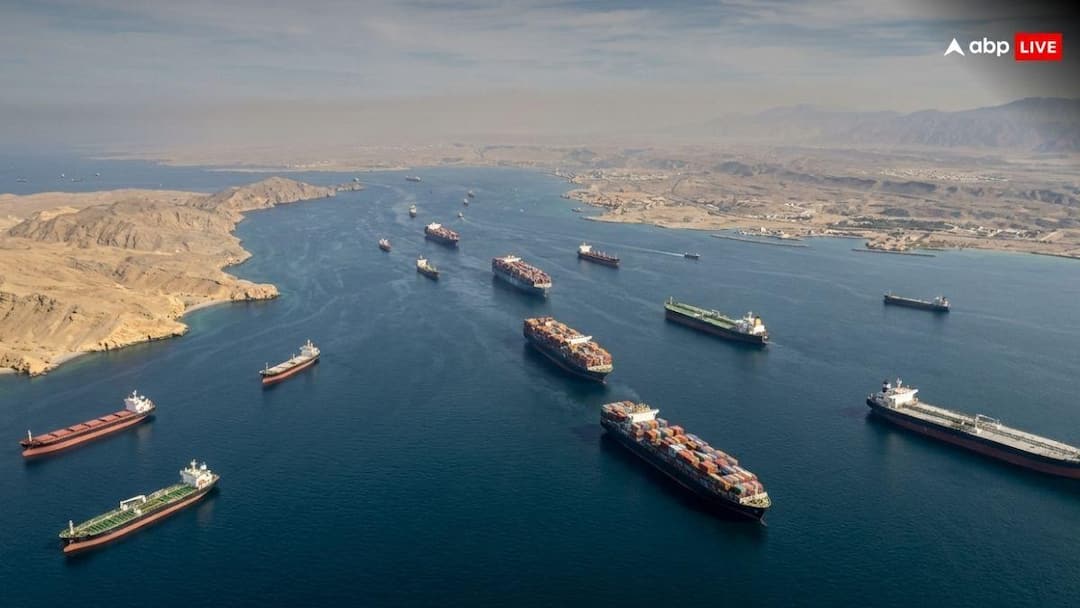
- Iran warns of Gulf trade disruption if U.S. blockade continues.
- U.S. prepares sweeping sanctions, citing financial blockade efforts.
- Diplomats seek ceasefire extension amidst ongoing regional talks.
- Iran threatens U.S. naval forces over Strait of Hormuz.
Iran Warns To Disrupt Gulf Trade: Tensions escalated sharply in the Gulf on Wednesday after Iran warned it could disrupt regional trade routes if the United States does not ease its naval blockade of Iranian ports. The warning comes even as U.S. President Donald Trump struck a cautiously optimistic note, saying in a televised interview that the war was “very close to over.”
The latest exchange underscores the fragile balance between military escalation and diplomatic engagement, with both sides signaling resolve while leaving room for negotiations.
Economic Pressure Mounts Alongside Military Posturing
Washington is preparing to escalate financial pressure on Tehran, with Treasury Secretary Scott Bessent warning of sweeping secondary sanctions targeting institutions that continue doing business with Iran.
He described the move as the “financial equivalent” of the bombing campaign, highlighting the administration’s strategy of combining economic isolation with military deterrence. The measures are expected to further strain Iran’s already restricted access to global markets.
Diplomacy Persists Despite Fragile Ceasefire
Behind the scenes, diplomatic efforts are continuing in an attempt to stabilise the situation. Regional mediators have reported incremental progress toward extending the current ceasefire, though uncertainty remains over its future.
A delegation from Pakistan has arrived in Tehran for fresh talks, indicating ongoing backchannel communication. However, a senior U.S. official clarified that Washington has not formally committed to prolonging the truce, keeping the situation fluid.
Meanwhile, Israel has continued its military operations against Hezbollah in Lebanon, despite recent direct talks between the two sides—the first such engagement in decades.
Iran Issues Stark Military Warning
The rhetoric intensified after senior Iranian figures issued direct threats against U.S. naval forces. Mohsen Rezaei, a military adviser linked to Mojtaba Khamenei, warned that Tehran would retaliate forcefully if Washington attempted to control shipping routes.
“Mr Trump wants to become the police of the Strait of Hormuz. Is this really your job? Is this the job of a powerful army like the U.S.?” Rezaei told state TV. Wearing his military uniform, the former Revolutionary Guards commander declared: “These ships of yours will be sunk by our first missiles… They can definitely be exposed to our missiles and we can destroy them.”
The threats centre on the strategic Strait of Hormuz, a critical artery for global oil shipments that has become a focal point in the ongoing conflict.
U.S. Asserts Full Control Over Maritime Trade
U.S. Central Command confirmed that the blockade is now fully operational. Admiral Brad Cooper stated that maritime trade linked to Iran has effectively been halted, with strict enforcement measures in place.
According to officials, multiple vessels have already complied with orders to turn back, underscoring the reach of the blockade. Authorities emphasized that enforcement applies universally, regardless of a ship’s origin, marking a significant escalation in the economic dimension of the conflict.
Related Video
Trans-Hormuz: 20 Ships Transit Hormuz as US Claims Blockade is Holding
Disclaimer : This story is auto aggregated by a computer programme and has not been created or edited by DOWNTHENEWS. Publisher: abplive.com