Our youngest to our longest-serving journalists reveal what it means to work at the Herald and some of their big, memorable moments.
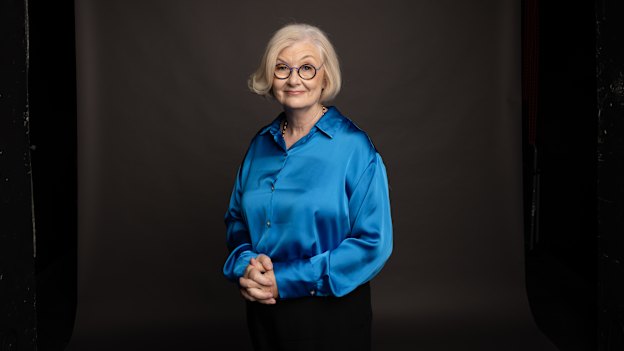
Kate McClymont is the Herald’s chief investigative reporter and has spent more than 30 years uncovering corruption in politics, sport, trade unions and organised crime. She started as a Herald cadet in 1985 and during her career has won 10 Walkley Awards, was inducted into the Media Hall of Fame and appointed a Member of the Order of Australia.
During my 40-odd years at the Herald, I have only cried in the newsroom once.
It was December 2016, and my colleagues and I were watching the live broadcast of Justice Robert Beech-Jones as he pronounced: “Edward Moses Obeid … you are now sentenced to a term of imprisonment of five years”.
My tears were a culmination of stress, anxiety and, above all, relief.
Over the previous 17 years, I had been chipping away at the NSW politician’s corrupt activities – a string of unusual fires and insurance payouts, dodgy land deals, fishy friendships, secret cafe leases and a $30 million coal deal.
During that time, I was sued, threatened, ridiculed and abused.
“If you look at the media reports on everything I have done in my life, it is one newspaper, The Sydney Morning Herald, that has been unrelenting in its attack on me about everything,” Obeid complained at the opening day of his defamation trial in 2006.
Obeid successfully sued the paper for alleging he was corrupt. He was awarded $150,000 in damages plus interest.
As the years passed, Obeid was furious that I was still pursuing him. Having called Obeid to put a question to him, he snapped: “I tell you what, you put one word out of place and I will take you on again. You are a lowlife. I will go for you, for the jugular”.
In parliament, Obeid said of me: “McClymont has been mixing with scum for so long that she no longer knows who is good and who is bad … She has become the journalistic equivalent of a gun moll”.
The Obeids also hired a private investigator hoping to find some blackmail material. One Obeid relative went to punch me in the face at the ICAC, but was restrained by other media. Another threatened me via social media: “You f–king ugly putrid smelly filthy red neck unprofessional pig – keep writing bullshit posts on Twitter and we’ll see how much longer u last u dog”.
But this newshound did last.
Journalism is, above all, a privilege. To hold the powerful to account, you have to be in it for the long haul and you have to be prepared to pay the price.
As Obeid’s counsel said at his defamation trial 20 years ago: “The worst thing you could say about a politician is to accuse him of being corrupt”. Obeid has now been jailed twice for his corrupt activities.
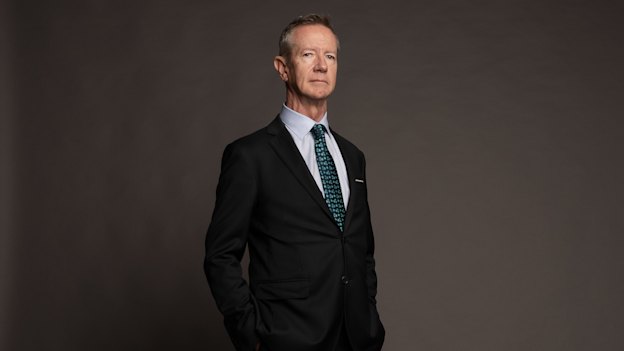
Award-winning journalist, commentator and author Peter Hartcher is the Herald’s political editor and international editor. He has written about power and politics for more than 40 years with twice-weekly columns and expert analysis via a weekly podcast.
When I told friends that I’d been accepted as a cadet journalist at The Sydney Morning Herald, most told me that I’d made a terrible mistake.
Newspapers are dying, they have no future, I was told. It took the edge off my excitement. That was 44 years ago. Of course, they were partly right. And profoundly wrong. They were partly right because the internet is a great winnower. Only the fittest news sources survive. Online, yes, some in hard copy as well. Like this one.
And the doomsayers were profoundly wrong. Because great newspapers are indispensable institutions in successful societies. The Herald, in my view, is more important and more potent than it was before the internet.
It’s more important because it is a truth teller in a time of lies, a community builder in an era of division, a benchmark of reality when reality itself is under challenge.
In the long life of the Herald there have always been lies, division and attempts to warp reality. The far-right and the fascists have risen before, for instance.
But today is different. Today, opportunistic hatemongers are ascendant in some of the very nations that have defended human liberty for as long as the Herald has been alive. Exhibit A is a US president who champions an illiberal world, aided and abetted by the biggest corporations on Earth, and threatening to deliver a new holocaust.
Today, the destroyers are not fringe or afar. They reach effortlessly into the most intimate spaces of lives. They seduce our senses and beguile our reality.
This is a world the Herald has not seen in its 195 years. Journalistic standards of truthfulness and balance are essential to the survival of liberty. Fearless investigative journalism is vital to societal health by purging sicknesses.
Other media outlets produce investigative work, too. But the Herald, together with its Melbourne sibling, The Age, is an unmatched juggernaut that has jailed corrupt politicians, reformed predatory industries, shattered a criminal trade union and, just this month, seen a celebrated soldier charged with multiple war crimes despite the efforts of billionaires to defend him.
When I walked into the foyer of the Herald’s head office 44 years ago, I saw a 1733 line from The First Satire of the Second Book of Horace Imitated by the English poet Alexander Pope painted on the wall: “In moderation placing all my glory, while Tories call me Whig, and Whigs a Tory.”
It remains the Herald’s credo to this day. Imperfectly executed sometimes, yes, but a pledge to non-partisan journalism that we strive for to this day. The Murdoch media, as Malcolm Turnbull described it, may be the “media arm of the Liberal party”. Other media companies are activists for the left.
The Herald declines to insult our readers with ideological cant or partisan prejudice. As our masthead motif says, the Herald is independent. Always.
Forty-four years on, and with a bare one-decade detour to The Australian Financial Review along the way, I’m pretty happy with my choice. We hope you are, too.
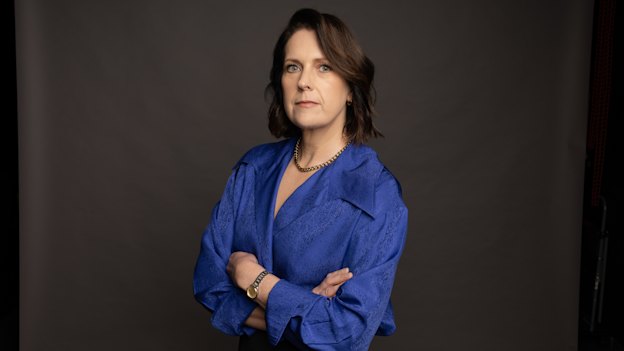
Jacqueline Maley, who started as a Herald cadet in 2003, is a Walkley and Kennedy award-winning reporter and columnist for the Herald, where she writes about politics, people and social affairs and hosts the Inside Politics podcast.
I remember being in Parliament House in 2018 when prime minister Scott Morrison gave the apology to the survivors of institutional child sex abuse.
I remember being at the Manly Leagues Club in 2019 when prime minister Tony Abbott gave his concession speech, having lost his seat to this new phenomenon, a “teal” candidate, Zali Steggall, after 25 years of incumbency.
I remember the happiness of the newsroom in 2017, when, gathered around the television, we watched an Australian Electoral Commission spokesperson announce the results of the same-sex marriage survey.
I remember the far more sombre newsroom atmosphere in 2023, when Australia voted against the Voice to Parliament.
I remember us all putting our heads down to file, the common feeling of knowing that we had to do this moment justice.
Being a journalist for the Herald has given me extraordinary access to history and to the people who make it.
By far the greatest privilege of the job is the small and everyday miracle of having ordinary people open up to you.
We journos get to ask people invasive, personal and often impertinent questions.
And if they trust you, and they trust the values of the masthead you work for, people will answer them.
I found this when I did my reporting, along with the legendary Kate McClymont, on sexual harassment allegations against former High Court judge Dyson Heydon, in 2020.
Following separate leads, Kate and I started to see that Heydon had engaged in a pattern of alleged behaviour that had probably spanned many years, and had occurred in different settings.
We knew there were plenty of allegations to be found. It was just up to us to find them, and report them.
That meant phone calls – hundreds of them. Note-taking about who knew what, and who might go on the record. Asking about witnesses and for independently verifiable accounts, or any contemporaneous records that may have been taken. Putting in freedom of information requests.
I felt the weight of responsibility – firstly, to get it right because there was no doubt we were destroying a man’s reputation and tainting his legacy.
But mostly, I felt a responsibility to the alleged victims of Heydon’s alleged predation – to assuage their anxiety about going public, and to tell their stories with sensitivity.
The best outcome would have been to hand them back some of their dignity, and I think we did that.
I know that the story made a positive difference to the culture of the legal profession, because I’ve had lawyers tell me so.
I know that other men in that profession who harassed women were put on notice, because I had women tell me so.
I know that young women in the legal field felt emboldened to insist on safety at work, because they told us.
The only reason we can do what we do is that people trust us enough to tell us things.
That is the magic and that is the privilege of being a Herald journo, which I am, to my bones.
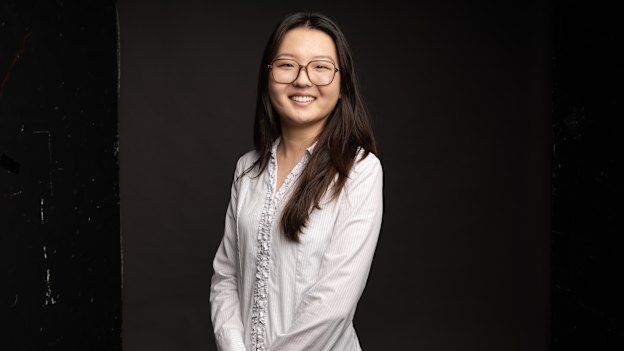
Cindy Yin was selected out of hundreds of applicants to take part in our traineeship program two years ago. She is the Herald’s youngest reporter and covers urban affairs.
It was a Thursday in June 2024 when I got the call that I had secured a traineeship at the Herald. My initial elation quickly morphed into trepidation – I didn’t grow up in a family that read the news, and I felt like an imposter, with a constant hunger to prove myself.
I was presented with the opportunity to do this when, fresh out of the year-long traineeship, my editor suggested I team up with the Herald’s transport and infrastructure editor Matt O’Sullivan to cover the ICAC inquiry into Transport for NSW from July to November 2025 [the marathon public inquiry ran for 54 days].
Hearing tales about Ibrahim Helmy, the mastermind behind the corruption scandal, and his cash exchanges in brown paper bags, yellow Mercedes cars, and scheming on bushwalking dates meant it was a frustrating but genuinely fascinating story to cover. Helmy was on the run for months before police and the ICAC investigators found him hiding in a cupboard in a Lakemba apartment.
When Helmy was sentenced, the adrenaline I felt as photographer Edwina Pickles and I frantically sprinted after him as he dashed out of the only exit at the Downing Centre will be hard to forget. I remember stubbornly thinking that I didn’t want to let him go, and beyond all else, that becoming a reporter was the most rewarding thing I have ever done.
I was 21 when I joined, and now, at 23, I am the newsroom’s youngest reporter as the Herald celebrates its 195th anniversary.
I am very conscious that I am part of an institution that has existed for 8½ of my lifetimes. While I still feel like an imposter sometimes, being able to tell the stories of our city and contribute to the masthead in ways I am proud of is what being at the Herald means to me. That’s the feeling that beats all else at the end of the day.
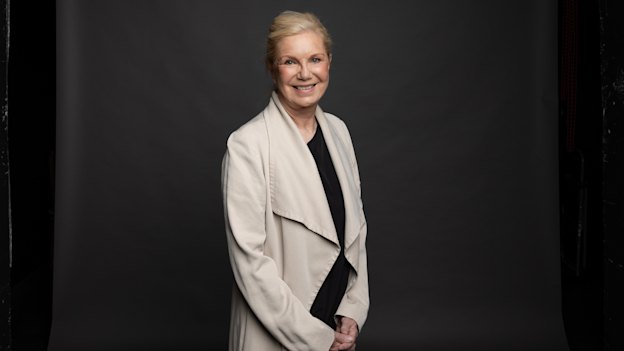
Elizabeth Knight is an award-winning business reporter who for decades has written a daily column for the Herald focusing on companies, markets and the economy.
The Sydney Morning Herald is more than a publishing brand, it’s an institution imbued in Sydney’s cultural DNA. Serving its readers with a daily column can be as relentless as it is rewarding. I started out as a cub reporter in what is now Nine Entertainment and after many years of writing a business column I am still motivated to deliver something informative and entertaining. You can’t please everyone all the time but hopefully I have inspired interest in sometimes dry topics and even generated a few laughs.
Over my near 40-years at the Herald, I’ve followed the nasty underbelly of the casino business complete with cash stashed in Eskis and the ethics-lite period of financial services when brown bags were the cash receptacle of choice at some branches. A royal commission exposed banks and insurance companies charging zombie customers and more recently Qantas was accused of selling tickets on ghost flights. Even the supermarkets are being pursued for a claim of fake discounting.
Sex scandals too litter the history of corporate Australia – most recently billionaire Wisetech founder Richard White’s “sex-for-financial assistance” exploits.
However, none compare with the page-turning tales of the Murdoch family dynasty and the lengths to which its patriarch, Rupert, was prepared to go to manage the financial and political legacy of his media kingdom.
The Murdoch story felt like an amalgamation of Family Feud, Survivor and the HBO hit Succession – which was inspired by the family’s Machiavellian intrigue.
The decades-long and brutal pitting of sibling against sibling was always destined to reach a gladiatorial climax – it didn’t disappoint.
Rupert Murdoch takes his duties as the promoter and custodian of his media companies conservative voice in the Western world.
The public interest in the means by which he handpicked the heir to that throne to enshrine his legacy has bled well beyond the traditional readers of the Herald’s business pages.
Murdoch’s ascension to the most powerful media player in the world has been one of ruthless aggression, risk-taking, luck and brilliance. In the early 1990s his heavily indebted empire was a whisker away from financial ruin and the patriarch was obsessed with the empire remaining in the Murdoch family.
But the succession feud had all the elements of a thriller: money, power, lies, backstabbing, wives, ex-wives, wives-in-waiting and four control-thirsty siblings that had learnt the strategic corporate dark arts at the knee of their father.
The mechanism through which control of the empire was held was a family trust. Perversely the means by which control passed contained little actual family trust.
By December 2023, Rupert and his chosen successor and firstborn son, Lachlan, had been working on a secret plan to amend the family’s trust to strip three of Rupert’s other children – Prue, Lis and James – of their power to influence the direction of the family business. Ironically the plan’s code name was Project Family Harmony.
When he summoned them to London to outline his plans, he was met with bewilderment and ultimately hostility.
“You are completely disenfranchising me and my siblings,” Lis reportedly told him. “You’ve blown a hole in the family.”
Rupert and Lachlan’s fight to alter the inviolable family trust that bestowed voting rights to his four elder children, was fought and ultimately lost in a less-than-salubrious courtroom in Reno, Nevada.
For the ageing mogul who had already experienced a range of health issues, time placed an additional layer of urgency to find a settlement.
After the court loss, it was clear that taking control of his media empire required him to fire the money gun.
The walk-away price paid to the three dissenting Murdoch heirs is a cool $US1.1 billion ($1.7 billion) each. But at what cost to family unity?
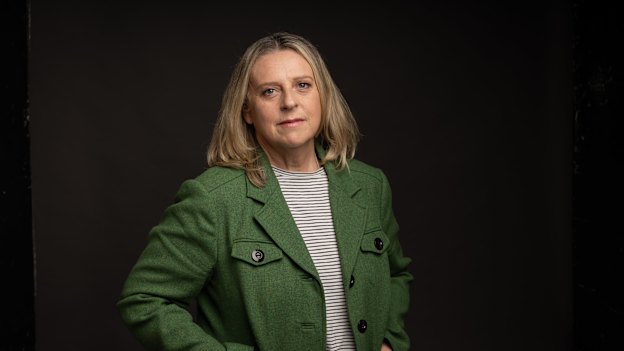
Kate Geraghty is the Herald’s award-winning chief photographer and for more than 24 years has travelled the world covering every war, and major global events such as the Bali bombing, the Boxing Day tsunami and Thai cave rescue to the Christchurch earthquake.
The Sydney Morning Herald has covered all wars where Australia has deployed troops since WWI, so it was an honour to be chosen by the editors to continue this tradition when I was sent to document the Iraq war in 2003. As the first female photographer the Herald would send into combat zones, I joined reporter Paul McGeough in Baghdad for three months to document the Australian Defence Force’s role in the war and the impact on civilians.
Although we had hostile-environment training prior to deployment, nothing could prepare you for what war is like. Hospitals full of injured civilians and their car park gardens turned into temporary makeshift graves. The detritus of war filled every waking moment: bombed towns and bridges, roads littered with burnt tanks, military convoys, airstrikes and gun battles. The smell of burning oil wells, no electricity or running water, wearing body armour and chem-suits. It was all foreign to me.
We came face-to-face with a fearful population. We listened to families talk about not knowing if they would survive the day, if their homes would be bombed, if they would have to flee or how they would protect their children. They were fearful of the future but did so with dignity and resolve. Spending time with Iraqi civilians enduring the unimaginable profoundly changed my life and I would dedicate my career to trying to show the impact of war on civilians.
The Iraq war was also where I truly understood the important role of journalists documenting exactly what was happening without bias. It was paramount that readers back home could envisage the reality for civilians impacted by this war that our nation was involved in through the Coalition of the Willing.
There are many unforgettable memories from this first of many assignments to Iraq.
While photographing the aftermath of an airstrike, two young men approached me from a partially destroyed home. They stated they were British Iraqis staying with their grandparents to ensure their safety. They asked if I would call their parents in London, if I had time, to tell them that they and their grandparents were still alive. Phone and power lines were down so satellite phones were the only means of communication. Later that night after filing the days’ photos from the rooftop of the hotel, I called the number and passed on the message to a grateful family. A small act for me that meant the world to others was also something that would shape how I would continue to work.
Then there was meeting Australia’s Baghdad embassy gardener Kareem Challur and his 13-year-old son Tha’aer, who lived in the walled compound. As US forces entered Baghdad and the lawlessness and looting began, Challur bought a couple of battered Kalashnikov rifles, removed the polished brass plaque and police sentry box from the front of the embassy and barricaded the end of the street with old oil drums and scrap metal.
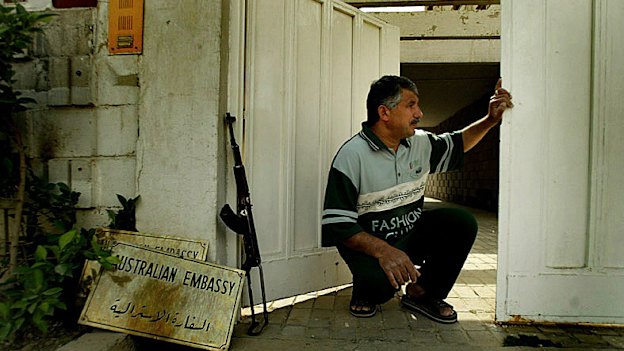
Every night, Challur and Tha’aer, stood guard with their AK-47s over Australia’s little patch of Baghdad, fighting off the looters who had robbed and trashed every other embassy in the district. Several times the father and son had to fire into the air to drive back armed gangs trying to scale the compound walls. As he raised the Australian flag above the embassy for the first time in years, he said: “I have nothing because of Saddam and all his wars but, thank God, I have survived. The Australians have been good to me and it is my duty to protect this place until they come back to Iraq”.
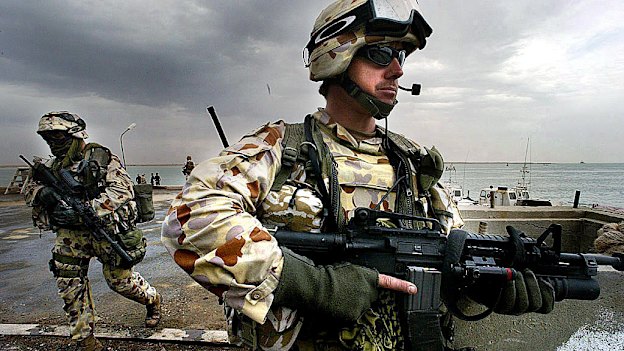
Every Anzac Day since, the Iraq war holds a new meaning for me. In the early weeks of the war, I had the privilege of documenting the Australian navy clearance divers in southern Iraq. On Anzac Day, I gathered with them and some British soldiers on the Umm Qasr wharf, where I watched the Australian flag being raised during the dawn service. Like the memories and lessons learnt in Iraq, I also have the lifelong friendships made with some of those navy divers.
Although it is only a few of us who cover war for the Herald, it is our newsroom’s continued commitment to telling these stories that should also be recognised.
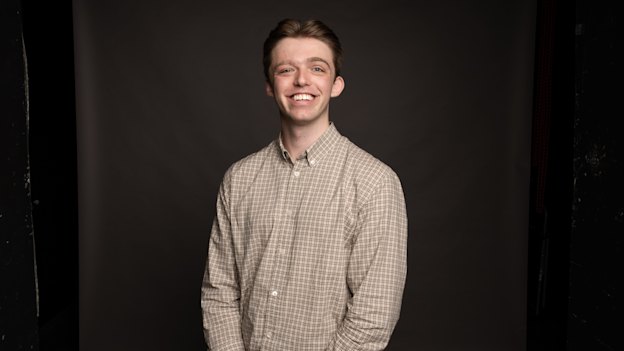
Anthony Segaert is the Herald’s Parramatta bureau chief. He was previously an urban affairs reporter and started at the Herald as a trainee in 2022.
We’re a newspaper that is invested in Sydney – not just Sydney as a generic concept or an idea, but the lives of the 5.2 million people who call it home, and the countless communities that have stories to tell within its boundaries.
All news is important. World news opens our eyes, national news tells us what’s happening in Canberra, but it’s only local news that can bring us into the homes of our neighbours and tell each other what’s happening on the other side of our city.
That’s been our guiding focus in our first year of telling stories from the Herald’s new Parramatta bureau. We established it with the conviction that people here in Sydney’s west deserve the dignity of having rigorous and interesting news about their communities in the city’s paper. In our first year here, we’ve broken stories about mismanagement in local government, published niche stories about life in communities you’d never think of, and revealed data that shows how the west is changing – all stories that Sydney would not have known about otherwise.
One thing I really appreciate about the Herald is that we have a history. Sydney didn’t come up out of nowhere, and neither did our masthead.
The issues facing the city today – population growth, lagging infrastructure, our newest and strongest housing density push, social cohesion, and a whole manner of other issues – are not new. We’ve dealt with these before. And the Herald has 195 years of archives to put things in context, and help our readers understand the story behind the story.
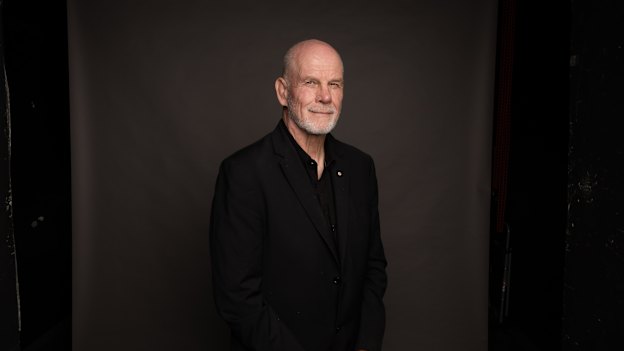
Peter FitzSimons has been a journalist and columnist with the Herald for nearly 40 years, having interviewed everyone from Edmund Hillary and Mother Teresa to every Australian prime minister since Gough Whitlam.
I am not, I assure you, known for my humility – let alone my attempts at false humility.
So believe me when I say that my primary emotion when looking back upon working at the mighty Herald for just a month short of 40 of the Herald’s first 195 years is one of being completely humbled by the privilege of it all.
The things I’ve seen and experienced! The opportunities I have been given. The people I’ve worked with, the sheer latitude I’ve been allowed to express my opinions without any interference from those who pay my wages!
(The fights I’ve had with subs, over using too many exclamation marks!)
There must be, I suppose, other Sydney jobs I could have done in this life that might have given me more satisfaction, and more joy as this one. But the only thing I can think of right now – again, quite sincerely – is to have been a singer-songwriter belting out a tune of my own creation that 50,000 would sing along to at the SCG.
But as Paul Kelly has already taken that gig, while I can neither sing, nor write songs, and the only thing I can play is the fool . . . writing for the Herald has genuinely been the privilege of a lifetime.
As an individual, could I have ever chatted to the President of the United States George W. Bush Sr as I did on January 1, 1992, back in the days when American presidents were sane, and not a danger to shipping?
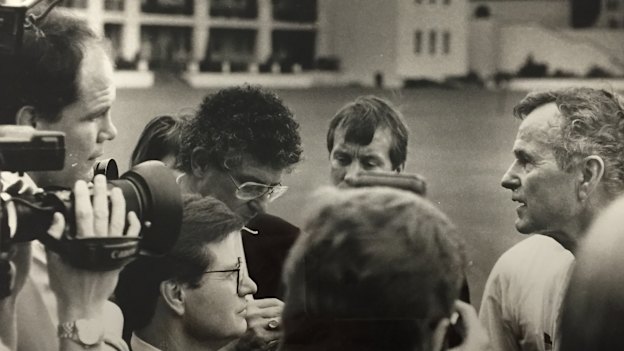
Never. But you’re FitzSimons of the Herald? Come this way.
Could I, as just me, have spent five days with Gough Whitlam as he toured WA in 1993? But then the phone rang: “Delighted to have you with me, comrade”.
Cover four Olympic Games? No problems, and here’s your air-ticket, accommodation details and accreditation – see you in three weeks.
Nor could I have had any platform better to rant about the horrors of profligate spending on stadiums and the pomposity of rugby league, even though that might be inimical to the interests of whatever corporate interests have controlled the Herald at the time. Go right ahead, and none of my masters or mistresses would ever have dared to say otherwise.
All of the above have come from working at the Herald for a very clear reason.
That is, for 195 years, this paper has boasted the best of the best journalists and editors, who have established, grown and preserved the paper’s reputation for integrity, for being on the right side of history, for publishing the truth come hell or high water. They have made the Herald’s name so shine that doors open, calls are returned, and the assumption of the readers is that if this paper is going to publish your work, it is more than likely worth reading!
And the story I want chiselled on my tombstone after all this time? I thought you’d never ask. It was writing the story of the Myall Creek Massacre in the lead-up to the Voice referendum. Visiting the site of the massacre, talking with the elders and the descendants of the survivors, was the experience of a lifetime. Being given the time and space to try and evoke the horror, and revoke the Herald’s previous editorial stance was precious.
For the journalists, the lesson is clear. It’s not us, it’s the mighty paper we write for and the legacy of so many journalists of the past and present who’ve graced these pages.
And hovering over the lot of us as we work, are the shimmering sacred principles of a free press . I honestly think the Herald represents the best of those traditions. In my work life, it has included on several occasions, seeing a junior burger pull rank on a quarter-pounder with cheese, even though the good burgher in question is nominally be higher on the rung than the lower one. For if the junior burger represents the principles of good journalism, she wins!
It’s been an honour and privilege.
Long may the Herald continue to sail these waters with the same elan and undeviating commitment to the truth, the North Star we steer by, as the last 195 years.
Start the day with a summary of the day’s most important and interesting stories, analysis and insights. Sign up for our Morning Edition newsletter.
Disclaimer : This story is auto aggregated by a computer programme and has not been created or edited by DOWNTHENEWS. Publisher: www.smh.com.au