
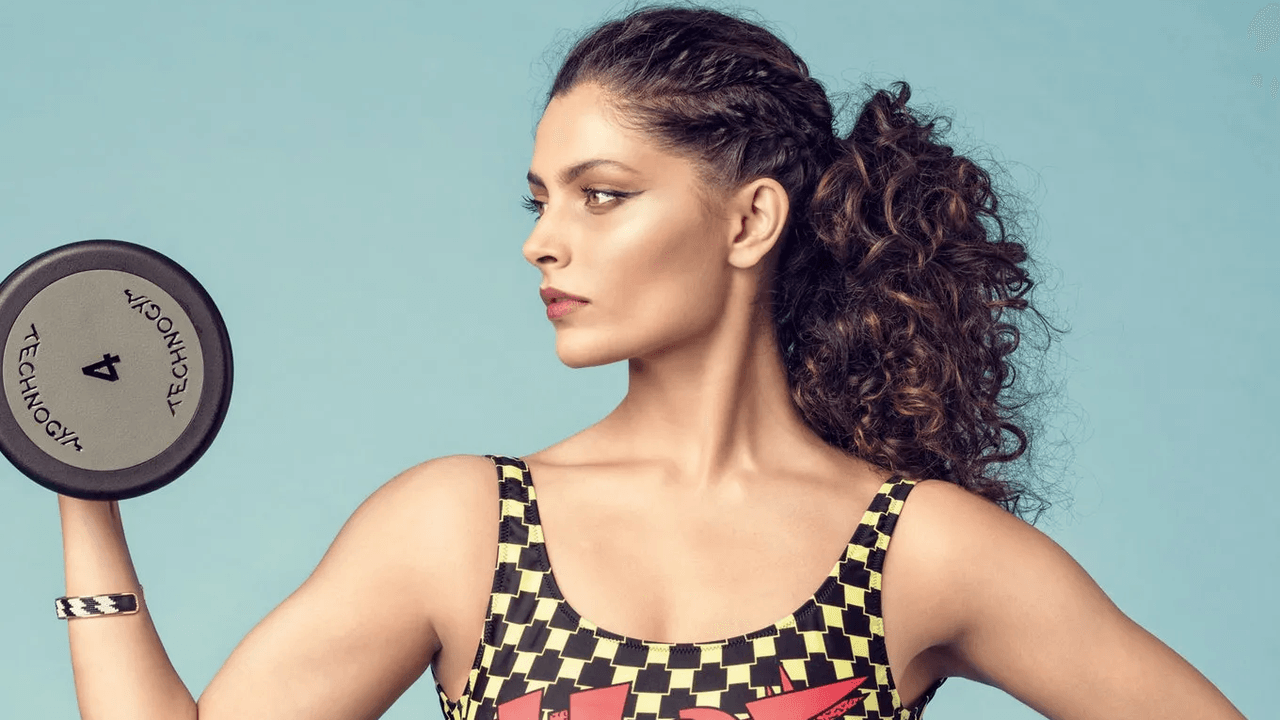
You’re short on time but high on motivation, keen to check off another week’s workout. The only catch, once you’ve laced up and made it to the gym (or, like me, to the spare room), is how to make the most of the limited time you have. The trick, celebrity personal trainer Aimee Victoria Long tells me, is to concentrate on compound exercises. A brilliant one to prioritise: deadlifts.
What is a deadlift?
A hingeing movement that uses the glutes, hamstrings, quads, core, shoulders, back and arms, a deadlift is a popular compound exercise. A compound exercise is any that engages multiple large muscle groups and joints at the same time. A squat is another example of a compound exercise.
What are the benefits of a deadlift?
The main benefit of deadlifts is how many muscles they target in one movement. “Compound exercises give you the most impact in the shortest amount of time,” explains Long. “They help build strength across multiple muscle groups, improve coordination and posture and burn more energy because the body is working as one system.” To her, the deadlift pays dividends because of how much it mimics movements you make in daily life, like picking up the shopping, for example.
What muscles does a deadlift work?
- Glutes
- Hamstrings
- Quads
- Back
- Core
- Calves
- Shoulders
- Mid-back
“This exercise really works from the ground up,” Long describes. “The glutes, hamstrings and quads power the movement while the core stabilises and protects the spine. At the same time, the upper body, including the back, shoulders and arms, works to keep the weight controlled and the posture strong.” Even your grip and feet actively engage during the movement.
How to do a deadlift
A deadlift looks like bending in half at the waist, pushing your buttocks back and keeping a flat back. You can perform it with a barbell, dumbbells, kettlebells or with your own body weight. There are multiple variations of a deadlift that slightly tweak which muscle group is bearing the brunt of the load, like a single-leg deadlift versus a sumo deadlift. These tweaks are based around where you place your feet, how much you bend your knees and if you drop the weight to the floor each time or not.
For a traditional deadlift, follow these steps:
- Stand with your feet hip-width apart
- Hinge at the hips while maintaining a flat back
- If you’re using a barbell, place your hands on the bar, just outside of your knees
- Allow your knees to bend ever so slightly
- Engage your core
- Maintaining a flat back, drive through your heels and pull the bar up towards your hips, trying to keep it in constant contact with your legs as you do so
- Stand up fully by pressing your hips forward and squeezing your glutes. Avoid leaning back or overextending your lower back
- To lower the bar back down, reverse the movement by hingeing at the hips and sliding the bar down your thighs
- When the bar reaches your knees, bend them to lower the bar to the floor
For a visual demonstration, follow this set up guide:
Disclaimer : This story is auto aggregated by a computer programme and has not been created or edited by DOWNTHENEWS. Publisher: vogue.in



