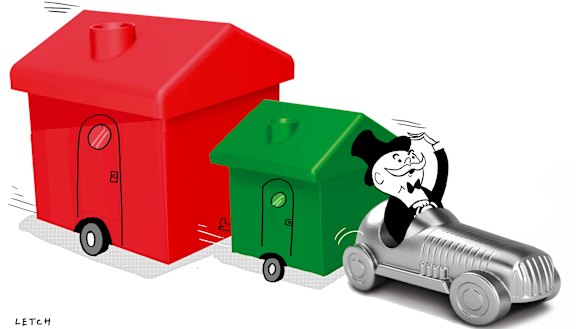
We own a block of land in a coastal town, plus our home in the inner city. We have no debt. We could build a home on the land in the coastal town which would cost $550,000. We currently have $250,000 in savings and will work for several more years. Should we build on the land and then live between the coast and the city, or sell the land and rent a holiday house in the coastal town each year?
Bouncing between a coastal/rural property, and a home in the inner city is one of my goals, so I come at this with some bias.
On a purely financial basis you are probably better off just renting a holiday house when you need it, although this very much depends on the growth rate of the coastal property in the future, which is uncertain. Renting as needed rather than owning means no maintenance costs or headaches, and no land tax.
But from a life satisfaction point of view, there is significant upside to owning your coastal retreat. It means you put down roots, get to know your neighbours and become a part of the community.
You can visit whenever you like, even just for a single night. You can have a vegie garden, or renovate the kitchen to your taste. And you can invite family and friends down, or let them use it when you don’t need it.
Later in life the commute might become unpalatable, but at that point you can choose between two home options, with the surplus home sold to fund your final phase of retirement.
We recently sold our family home of 25 years and moved into a former investment property that we bought 12 years ago. After repaying all debts, we have about $685,000 in cash. We have an SMSF [self-managed super fund] with $725,000 in it, and a debt-free investment property which we will eventually sell to undertake a renovation on our current home. I am 64, my wife 62, and we will retire in the next year or so.
Superannuation should be your focus here. If you still have time, you may be able to use the downsizer provisions to get $300,000 each into super, however these need to occur within 90 days of you receiving the sale proceeds.
If that window has closed, you could still get these funds into super via bring-forward non-concessional contributions, assuming you haven’t already used this recently.
Now might also be a good time to consider whether you stick with the SMSF. There is no clear off-ramp for these funds, but ideally, you don’t want to be trying to manage your own super in your 80s.
I am a 41-year-old single home owner earning $150,000 with a $400,000 mortgage, $50,000 in an offset account and $230,000 in a defined benefit super fund. Should I prioritise adding to my offset, increasing super contributions or investing outside super to best improve my long-term financial security?
My inclination would be to favour the offset account. This gives you accessible funds if you lost your job or had some other misfortune and produces a guaranteed tax-free return in the interest saved on your mortgage. You could always shift the funds into super later in life via an after-tax contribution, when the draw-back of preservation is diminished.
You could explore a debt-recycling strategy given your level of income, but I’d leave that until your offset is at least double what it is now.
Paul Benson is a Certified Financial Planner at Guidance Financial Services. He hosts the Financial Autonomy podcast. Questions to: paul@financialautonomy.com.au
- Advice given in this article is general in nature and is not intended to influence readers’ decisions about investing or financial products. They should always seek their own professional advice that takes into account their own personal circumstances before making any financial decisions.
Expert tips on how to save, invest and make the most of your money delivered to your inbox every Sunday. Sign up for our Real Money newsletter.
 Paul Benson is a Certified Financial Planner, and host of the Financial Autonomy podcast.
From our partners
Disclaimer : This story is auto aggregated by a computer programme and has not been created or edited by DOWNTHENEWS. Publisher: www.smh.com.au