ISLAMABAD — While President Trump said the US has “defeated the Iranian navy,” pointing to waves of strikes that wiped out warships, submarines and key military sites since late February, Tehran was still able to force closed the Strait of Hormuz.
That’s because in the narrow, oil-choked waters of the Strait of Hormuz, the war was never really about big ships.
It’s about the swarm, experts tell The Post.
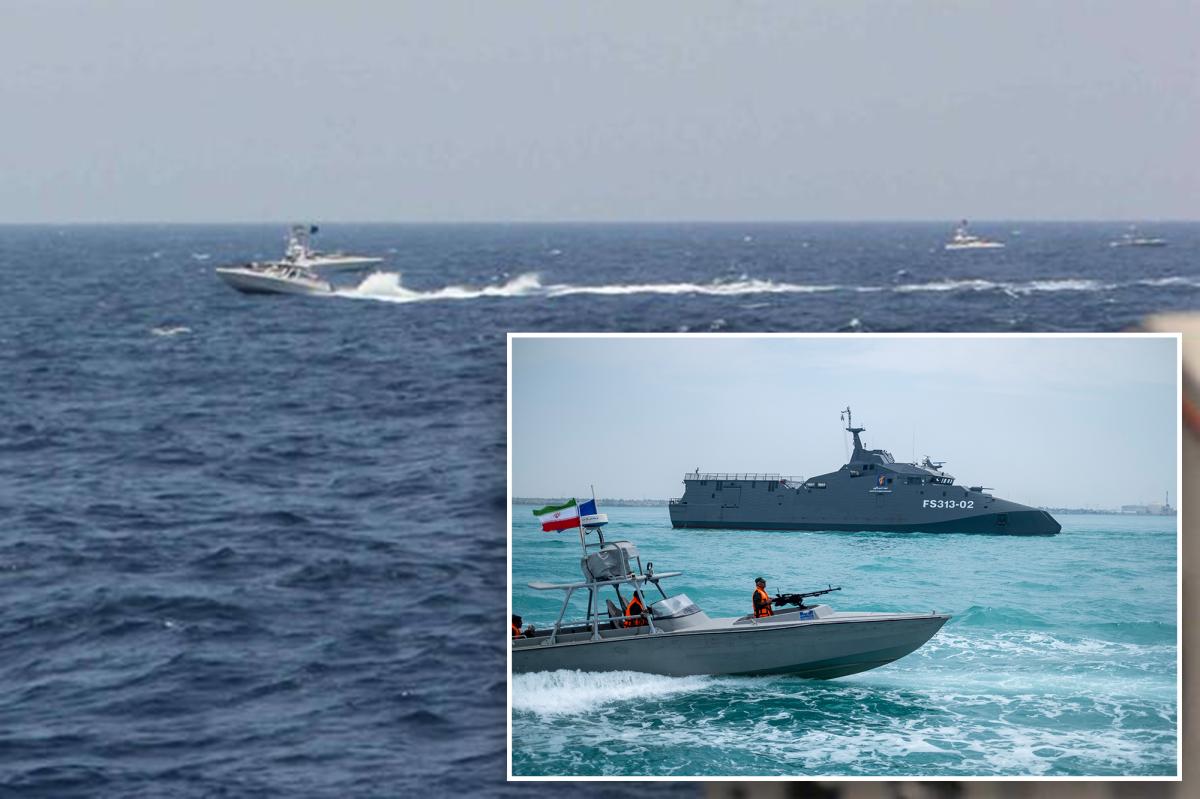
Iran’s so-called “mosquito fleet” — thousands of small, fast-attack boats paired with drones and coastal missiles — is proving it can still rattle global oil markets even after US strikes hammered much of Tehran’s military infrastructure, according to defense analysts and US officials.
“They call them ‘mosquito fleets’ because they’re small and annoying — and they hit,” said former Pentagon official and Atlantic Council fellow Alex Plitsas. “But they’re enough to bite and be obnoxious.”
And with “thousands of them” operating in one of the world’s most critical shipping lanes, he warned, “obnoxious” may be all it takes.
President Trump acknowledged on Monday that while US forces devastated Iran’s conventional fleet, the smaller boats were largely left alone — brushing them off as a minimal threat.
“Iran’s Navy is laying at the bottom of the sea, completely obliterated – 158 ships,” Trump posted on Truth Social. “What we have not hit are their small number of, what they call, “fast attack ships,” because we did not consider them much of a threat.”
But days later, those “small” boats are driving a big problem.
For years, Iran has built two navies: a traditional fleet of frigates and submarines — many now damaged or destroyed — and a shadow force run by the Islamic Revolutionary Guard Corps, designed specifically for the tight confines of the Persian Gulf, according to US Navy and Pentagon assessments.
That second force is now front and center, and they’re cheap, replaceable and built to overwhelm.
The fleet includes thousands of small, high-speed boats capable of racing at 40 to 60 knots, armed with machine guns, rockets and, in some cases, anti-ship missiles or mine-laying gear, according to defense analysts and Congressional Research Service reports.
Since Feb. 28, US officials — including statements from US Central Command — say American forces have destroyed or degraded a significant portion of Iran’s conventional military, including large naval vessels, missile infrastructure and drone production sites.
But the smaller, more elusive systems — drones and fast-attack boats — are harder to eliminate because of their size, mobility and sheer numbers.
Plitsas put it even more starkly: “We have literally bombed the living sh-t out of them… 80 or 90% of their missiles, the industrials, the drones, everything else.”
“Today, they were still able to tell the US to go f-ck themselves, attack three ships and keep any ship owners from being willing to transit the Strait,” Plitsas said.
In modern naval warfare, Plitsas said — especially in narrow chokepoints — you don’t need to control the sea, you just need to make it too dangerous to use.
The Strait of Hormuz carries roughly one-fifth of the world’s oil supply, according to the US Energy Information Administration, making even temporary disruptions a global economic threat. That’s a significant form of leverage that Tehran is now trying to lean on.
Shutting it down completely would require a massive military effort, but Iran isn’t trying to do that, Plitsas said. Instead, it’s executing a lower-cost, high-impact strategy that’s proving harder to stop.
“They’ve realized they don’t have to actually mine the straits,” Plitsas said. “A couple of drones and a couple of small boats… have been able to choke the world’s largest strategic waterway at risk without actually permanently closing it — and wreaking havoc on the markets.”
Unlike traditional warships, these boats are difficult to track on radar, easy to hide along Iran’s coastline and cheap enough to lose without strategic consequences.
For US planners, the bigger concern may not be what Iran has left — but what it’s willing to endure.
“The Iranians are not deterred,” Plitsas warned. “Because they see this as an existential threat, they’re willing to be broke and poor and have 50, 60, 70% of their military blown up — as long as they get to survive.”
That mindset complicates any path to victory — because battlefield losses don’t necessarily translate into strategic surrender.
“So what the US needs to figure out is, where is the break point?” he said. “And so far, we haven’t found it.”
Disclaimer : This story is auto aggregated by a computer programme and has not been created or edited by DOWNTHENEWS. Publisher: nypost.com