
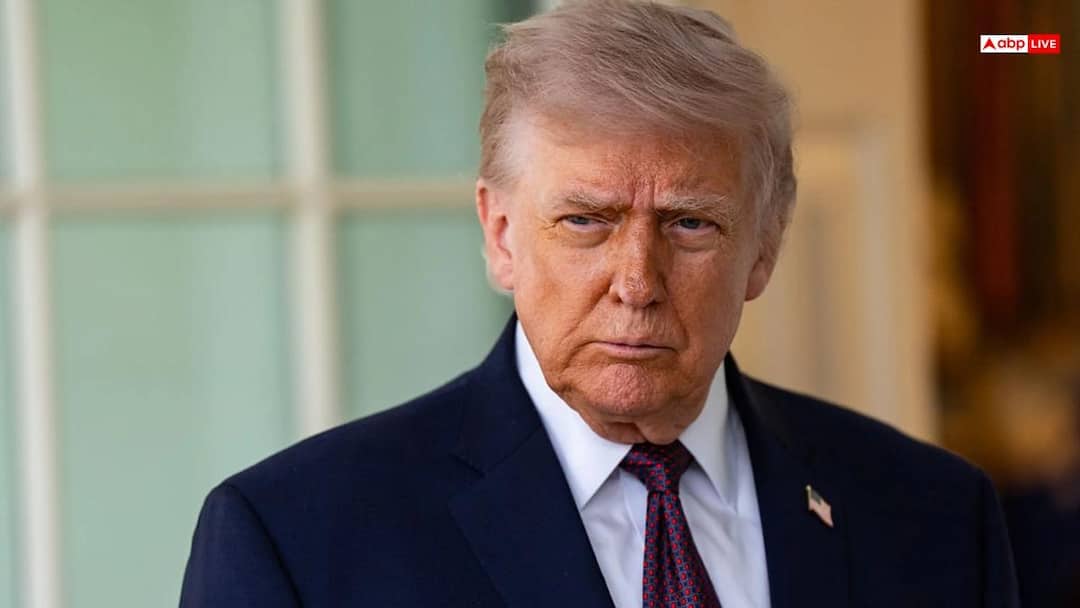
- US President Trump met officials amid Iran’s Strait of Hormuz access restriction.
- Officials warned of potential conflict if progress isn’t achieved.
- Trump rejected Iran’s attempt to use waterway for leverage.
- Tensions escalated after Iran briefly reopened, then blocked Strait.
US President Donald Trump convened a high-level meeting in the White House Situation Room on Saturday following Iran’s renewed move to restrict access to the Strait of Hormuz, according to Axios.
The meeting comes at a critical juncture, with a ceasefire nearing expiry and no clarity on the next round of US-Iran talks. Senior officials, including Vice President JD Vance, Secretary of State Marco Rubio and Defence Secretary Pete Hegseth, were present during the discussions.
Officials described the moment as key point, warning that failure to secure progress could trigger a return to active conflict.
‘They Can’t Blackmail Us’: Trump’s Warning
Reacting to Tehran’s actions, Trump issued a sharp warning, rejecting any attempt to use the strategic waterway as leverage. He remarked that Iran “got a little cute,” but is not in a position to “blackmail” the US.
“Iran got a little cute… they wanted to close up the Strait again,” he said, as quoted by Axios.
“They (Iran) have no navy, no air force. They have no leaders; they have nothing. But we are talking to them. They wanted to close the Strait again, as they have been doing for years. They can’t blackmail us. They have killed a lot of people. A lot of your fellow soldiers have been killed over the years by Iran. They have gotten away with murder for 47 years. They are not getting away with it anymore,” Trump said.
His remarks came as Iran moved to reassert control over the Strait, citing the continued US naval blockade of its ports as justification.
From Breakthrough To Breakdown In 24 Hours
The escalation follows a dramatic reversal after Iran had briefly declared the Strait open, triggering optimism in global energy markets and hopes of de-escalation.
The Strait had reopened briefly on Friday, allowing more than a dozen vessels, including sanctioned tankers, to pass through after nearly two months of disruption. However, the window proved short-lived.
As the blockade returned on Saturday, tensions escalated sharply. Two IRGC gunboats reportedly opened fire on a commercial tanker roughly 23 miles northeast of Oman. While the vessel and crew were reported safe, the incident marked a decisive end to the fleeting de-escalation.
According to maritime intelligence firm TankerTrackers.com, the situation worsened when two Indian vessels were forced to retreat under direct fire from IRGC naval units.
“According to two Channel 16 audio recordings captured today, two Indian vessels were forced back west out of the Strait of Hormuz by Iran’s Sepah (IRGC) Navy. Firing was involved. One of the vessels is an Indian-flagged VLCC supertanker carrying 2 million barrels of Iraqi oil,” the platform said.
Despite some signs of progress in negotiations over Iran’s nuclear programme and broader security concerns, no fresh dialogue schedule has been announced. Mediation efforts, reportedly involving regional actors, have yet to yield a breakthrough.
With nearly one-fifth of global oil supply passing through the Strait of Hormuz, the renewed disruption has raised alarms over energy security and global markets.
Related Video
Breaking News: Opposition Pushes for Immediate Implementation, Government Disagrees
Disclaimer : This story is auto aggregated by a computer programme and has not been created or edited by DOWNTHENEWS. Publisher: abplive.com



