I am constantly searching for the best tools at the top-end of the bag. I’m not a great fairway-wood player, so I’m always on the search for the perfect fairway wood, and my love of hybrids has me testing tons of great options on the market.
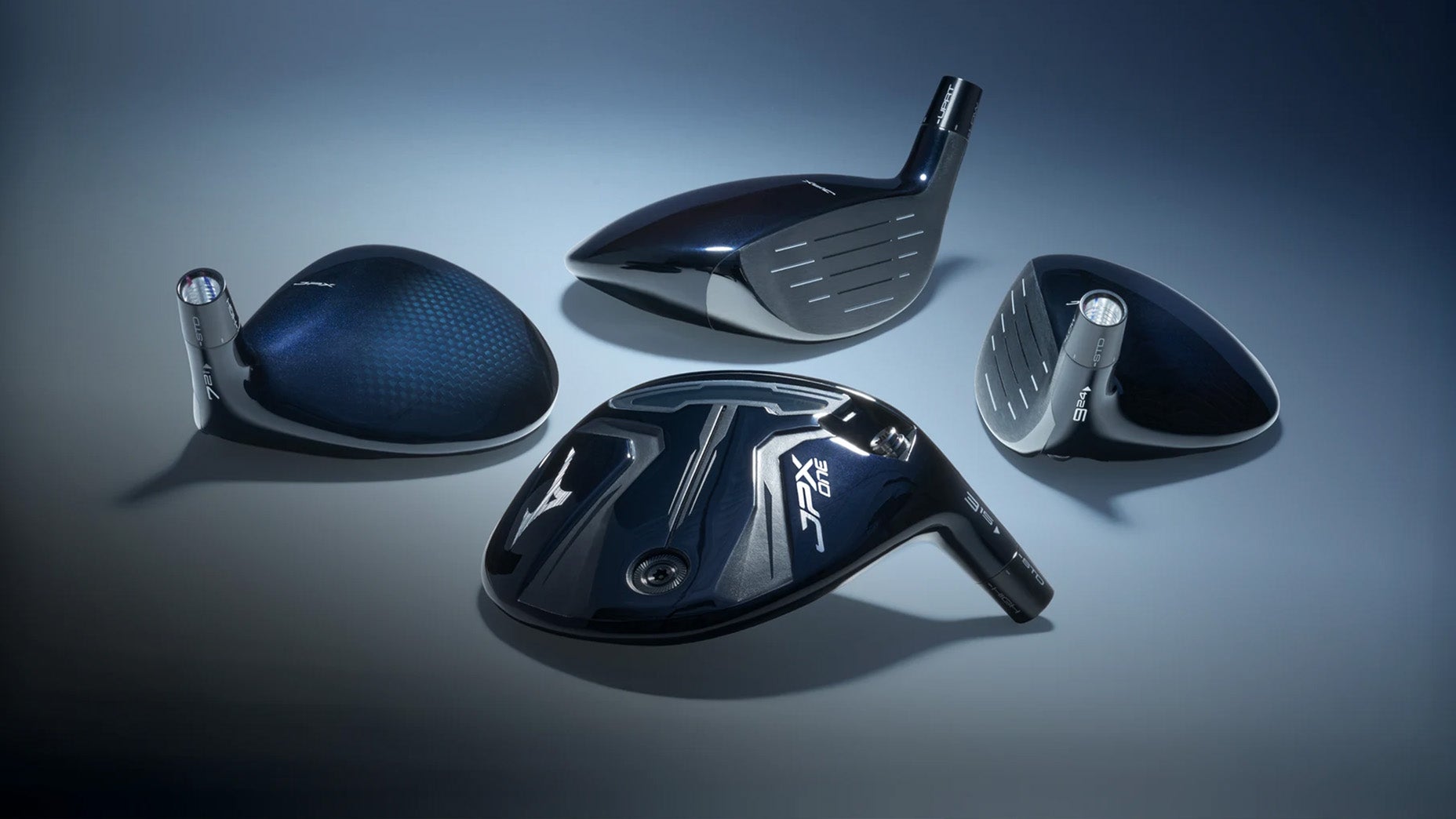
I started looking around at home for what I may have overlooked to start the 2026 season, and some Mizuno JPX One metalwoods were staring me right in the face. Almost with a look of disappointment. So I brought them out to test. Let’s revisit the JPX One 22-degree hybrid and the JPX One 24-degree 9-wood.
Mizuno Golf
Initial Impressions
It’s probably a surprise to most people that Mizuno makes a really good fairway metals and a great hybrid. It’s just not what the company is known for. Mizuno is all about irons. But that’s changed over the last five years. I actually played a ST-MAX 3-wood for a brief moment last year when I needed something I could easily hit off the deck without struggle. I also built up a ST-MAX 7-wood that I adored, until I went back to playing hybrids over high-lofted fairway woods.

Mizuno JPX ONE Custom Fairway Wood
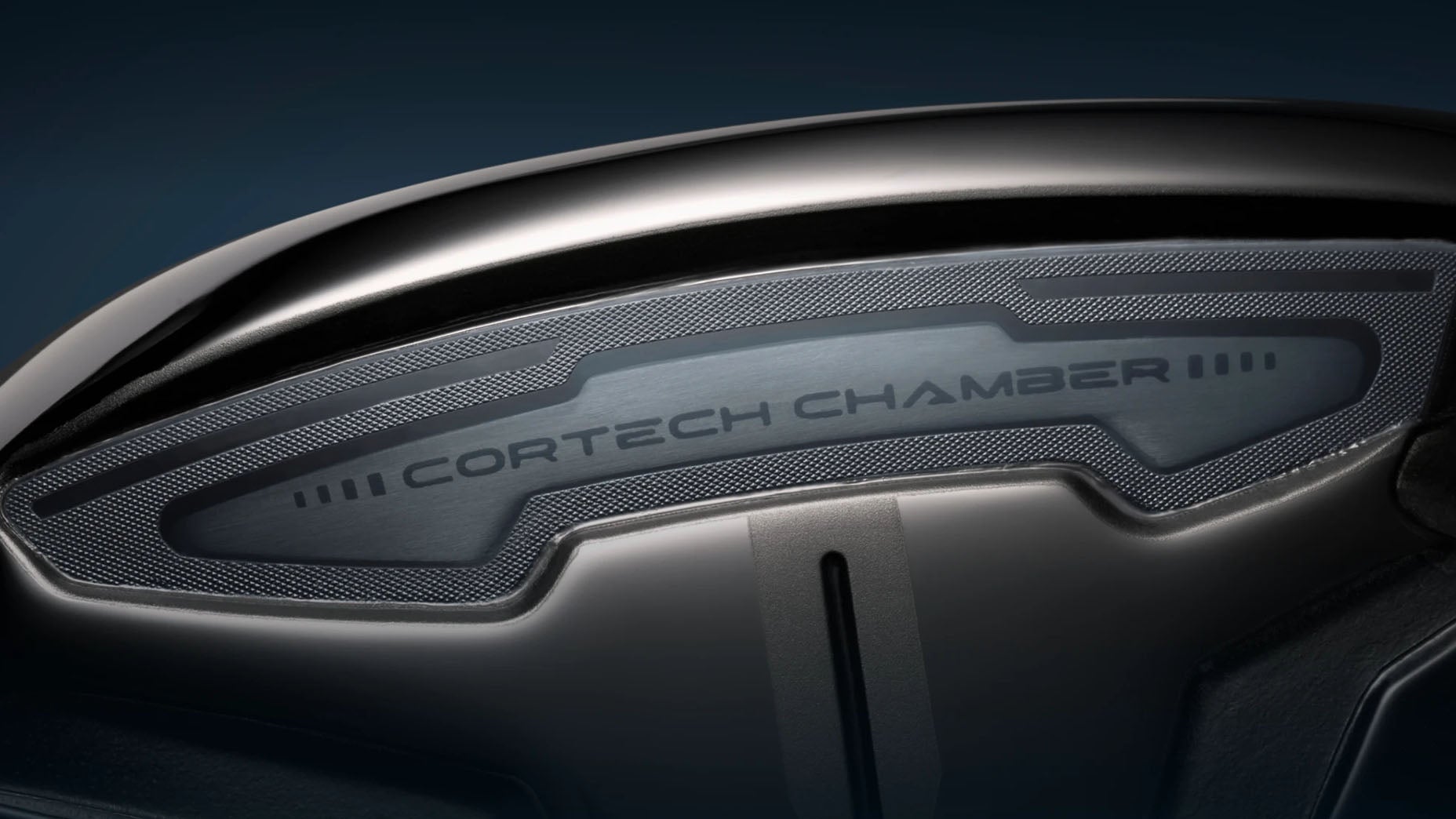
The JPX ONE Fairways introduce a re-engineered CORTECH Chamber that strategically varies the internal gap between the sole and chamber wall. This geometry increases face flexion towards the toe and heel, amplifying energy transfer across the hitting surface without compromising central performance.
Available in lofts from 15° to 24°, the JPX ONE Fairways deliver the ultimate blend of ballspeed, forgiveness, and playable trajectory for golfers seeking effortless distance with the signature Mizuno feel.
View Product
The Mizuno stuff has always been really fast and very easy to hit. The Coretech Chamber up front, which lives on with improvements in the new JPX One lineup, does exactly what it’s marketed to do: provide ball speed across the face and consistent launch conditions on off-center hits. It also sounds fantastic. That Coretech Chamber kills the sound just enough that you get a nice hot crack off the face without it getting too offensive to the ears.
Mizuno Golf
The new JPX One is also a beautiful new offering with a deep blue color that reflects nicely in the sunlight without getting distracting. It’s a nice nod to the Mizuno blue we’re all used to, but done in a different way to highlight the carbon in the crowns as well. It’s a great transition from the solid black top line as it fades into the dark blue carbon fiber.
Testing
I chose to test the 9-wood and the 22º hybrid against each other, not only to test the models again, but also to see what the differences would be between them. I lofted up the hybrid and lofted down the fairway wood to compare them both at 23º of loft. Nothing I saw was surprising, but it did offer reassurance about who these different clubs are built for.
The Mizuno JPX One 24-degree 9-wood launched significantly higher with more speed. It was living around 141 mph ball speed off the face at almost 20º of launch. With spin values in the high 4000s, I was getting about 215 yards out of the 9-wood, but with an average peak height of 142 feet. The good news? It was so easy. The JPX One options have been among the easiest fairway woods I have tested this year. Very similar to the reason I played the older ST-Max for a little bit, the forgiveness and consistency off the face were fantastic to see. For this slot in the bag, 141 mph of ball speed is plenty.
If you’re reading this thinking that sounds a bit too hot for your game, rest assured that the point I am trying to make here isn’t about my speed, but that the JPX One helps generate plenty of speed and launch. A peak height of 142 feet with the 9-wood is unfortunately not something usable for my bag, but it will absolutely be on my list of recommendations for players who want something easy to hit hard and hit high.

Mizuno JPX ONE Custom Hybrid
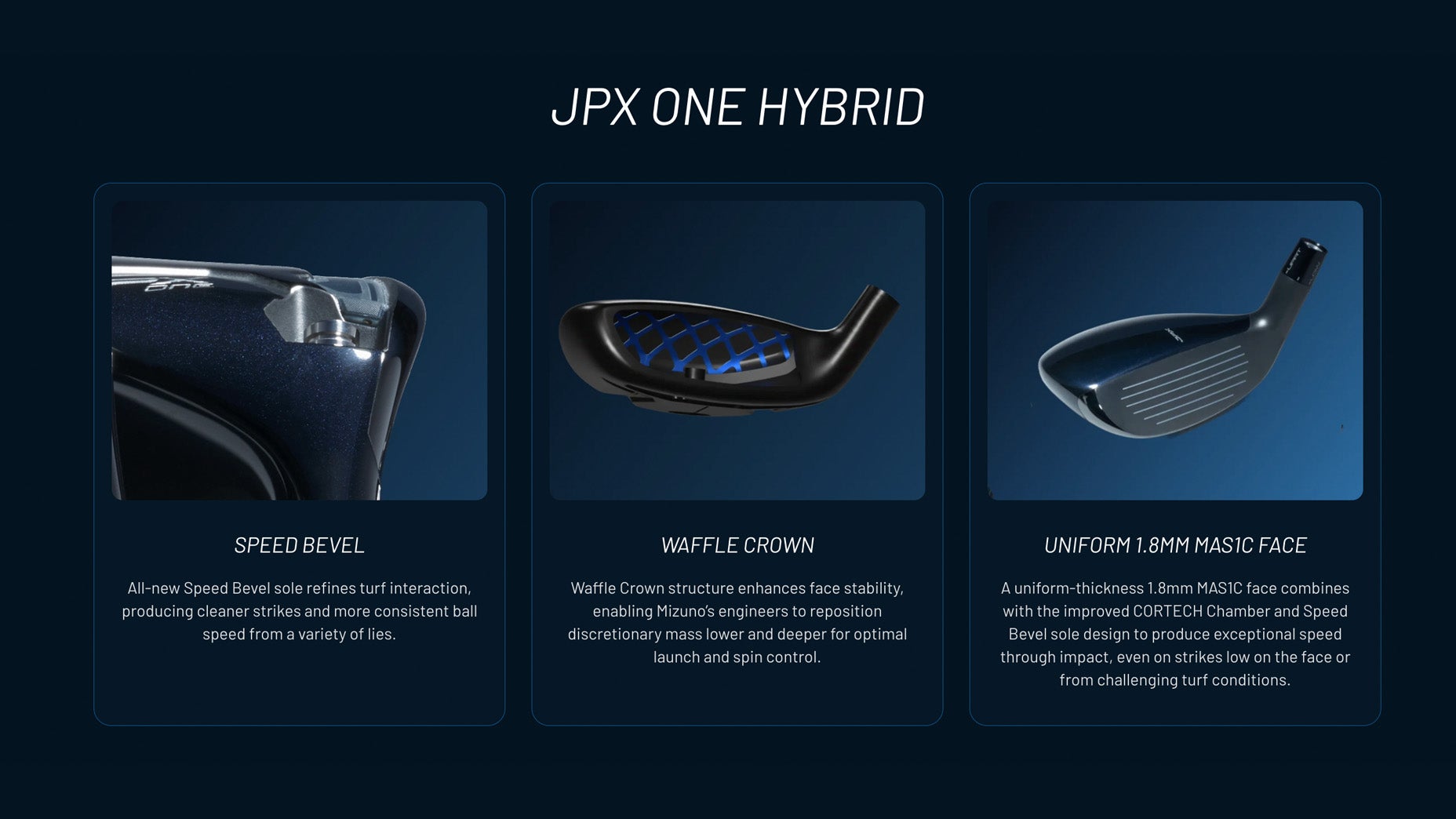
The JPX ONE Hybrids take the same design philosophy and apply it to a more compact, iron-replacement shape. Their Waffle Crown structure enhances face stability, enabling Mizuno’s engineers to reposition discretionary mass lower and deeper for optimal launch and spin control.
A uniform-thickness 1.8mm MAS1C face combines with the improved CORTECH Chamber and Speed Bevel sole design to produce exceptional speed through impact, even on strikes low on the face or from challenging turf conditions.
Available in 19°, 22°, 25°, and 28° lofts, the JPX ONE Hybrids offer a seamless transition from long iron to fairway wood, maintaining the visual confidence and feel Mizuno players expect. HYBRID
View Product
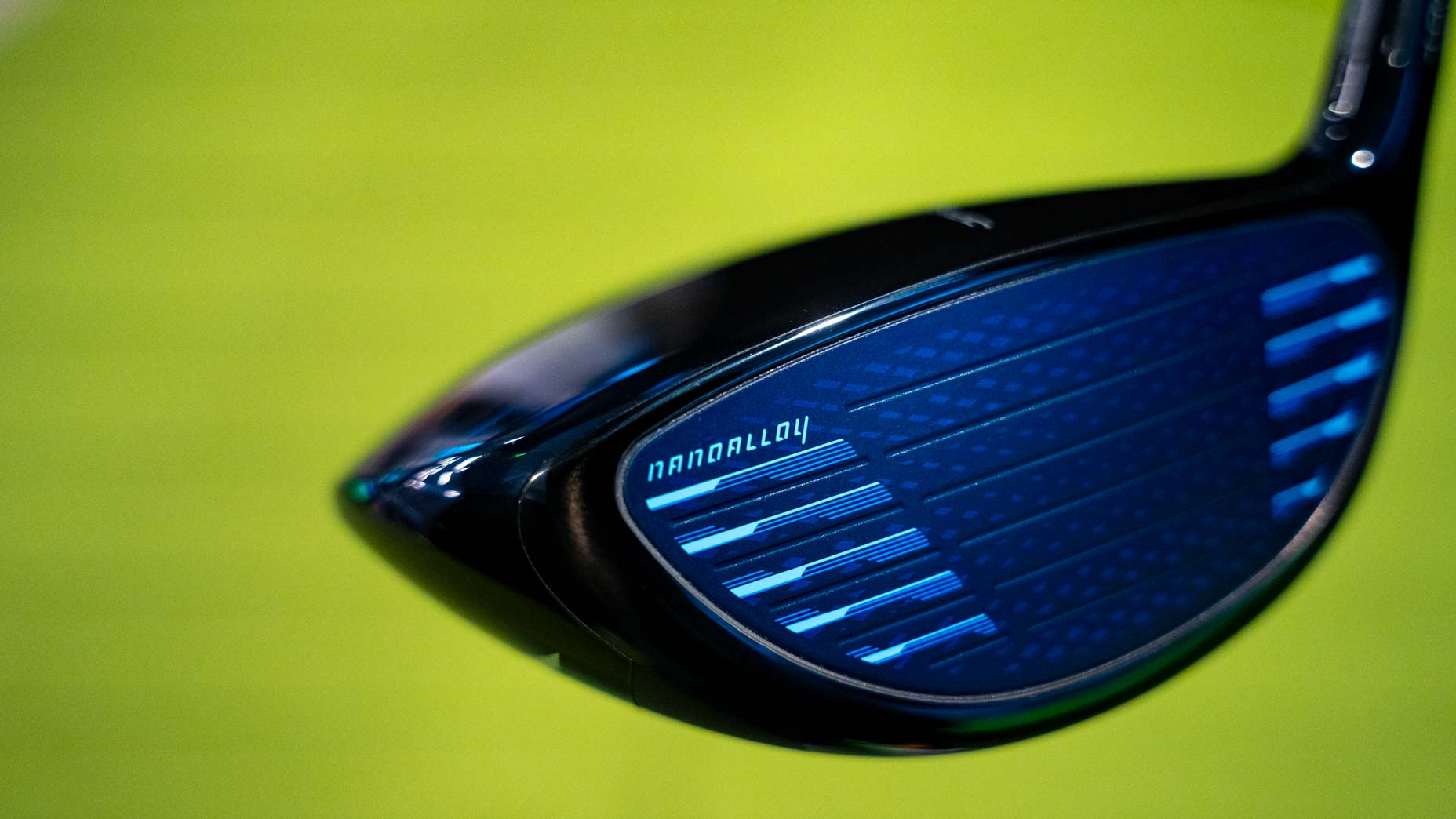
Mizuno launches JPX One woods with world’s first ‘Nanoalloy’ driver face
With the 22-degree Mizuno JPX One hybrid, I found a nice sweet spot and something much more manageable for my game.
I’m already a big fan of hybrids and have played them for pretty much my entire golf career, so this was more of a direct test for me. I was getting the same 215 yards of carry out of the hybrid, but at a much different window. The launch was a bit lower, closer to 16º, and the spin was at about 4000 rpm, a fantastic window for something I would consider a 4-hybrid. While the hybrid produced more speed for me than an iron would at this loft, it wasn’t quite as fast as the 9-wood, reaching only about 138 mph at its peak, with an average closer to 137, factoring in all the swings. Keep in mind, part of this is the difference in club length as well. What got me with the JPX One hybrid, though, was the creativity. I would classify this hybrid as more of a player’s hybrid, rather than a game-improvement one. Because it’s got such a consistent launch and spin window, it’s a very helpful tool for players that are looking for some versatility in this part of the bag. I was able to launch it just as easily as I could with the fairway wood, but it was much easier to hit different windows and flights with the hybrid, which is the reason I chose a hybrid for my bag.
Final Thoughts
Could the JPX One end up in my bag? Sure. I have nothing bad to say about the product. For me, the difference would be in the build. Based on the visual, sound, feel and ease of the 9-wood I tested out, I definitely want to do some follow-up with a 3-wood and see if there is a build there that could end up being useful for the bag. The next step for me is to go past the stock shaft I was testing and see if dialing in a better shaft for my game could be why I put these in the bag.
Mizuno Golf
The fairway was impressive. It generates speed easily and launches the ball up in the air with little effort. This would be a great option for players looking for something a little more compact, with a slightly deeper face than some other offerings, while still getting the launch assistance needed to gap properly at the top of the bag. The hybrid was a great player’s hybrid offering lots of forgiveness, while maintaining speed and consistency across the face, which helps to be a bit more creative with flight choice. Both are great options for their respective customer.
<figure class="youtube-facade" data-content="
“>
Disclaimer : This story is auto aggregated by a computer programme and has not been created or edited by DOWNTHENEWS. Publisher: golf.com