Formula 1’s teams and fans were forced into a five-week break after the cancellation of the Bahrain and Saudia Arabian grands prix due to the conflict in the Middle East. But while fans were left twiddling their thumbs and wondering what to fill their weekends with, the teams never stopped.
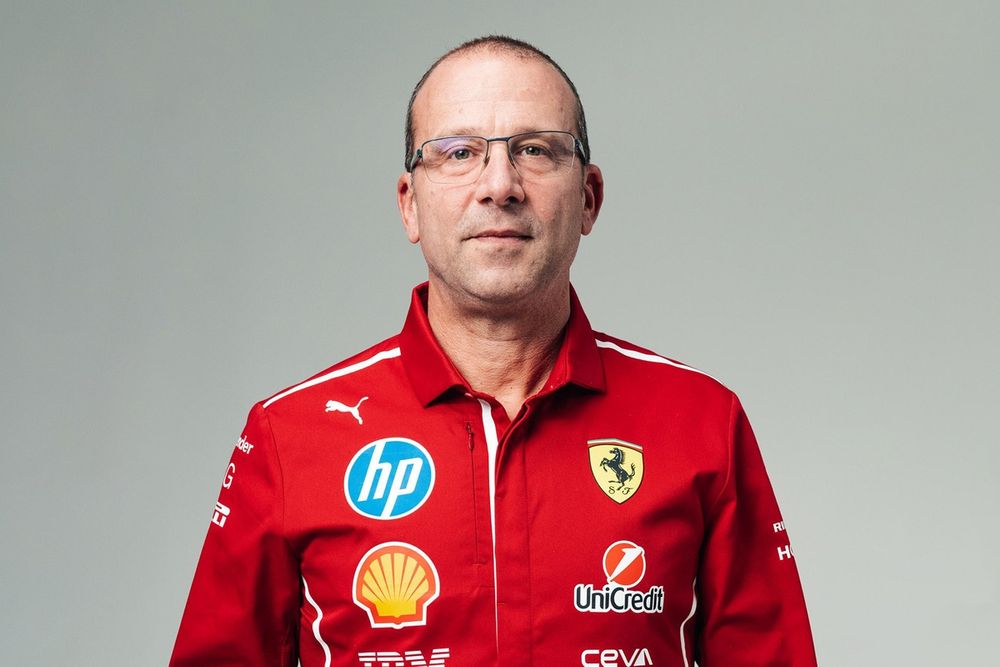
As teams rush to bring upgrades to their cars ahead of the next race in Miami, and prepare to adapt to changes to the 2026 regulations implemented by the FIA, Motorsport.com sat down with Ferrari’s chassis technical director Loic Serra to find out more about the impact the enforced break is having on the Scuderia.
Motorsport.com: It looks like a break, but we know that it’s not a break. For those who are working inside the company, how is the work going now and what is different compared to the usual?
Loic Serra: I would say not much, because your development plan is not happening in one week or one month, it’s something you have for quite a long time. We planned a long time ago, so basically you stick to your development plan. So, you’re not really affected by the fact that we are missing a race or two”
MS: Would it have been better to go to Bahrain with a part of the upgrade package, or is it better to have more time to refine and then try everything at Miami?
LS: One way to answer this is, when you think about the SF-26, we started the development of the car [at the] beginning of 2025, and then you spend a year and more to develop it without testing anything with it, testing the car.
Then what you learned is the results of winter time, virtual development, so you bring a car that you haven’t run [to winter testing]. So, if you think about this and put in context the fact that you’re missing two races, it’s small B I would say.
So, effectively, the more you run, the more you learn, and that’s true for everybody. But then telling that this is compromising, or this would compromise the way you approach your development, or you put the development more or less at risk, I don’t think so.
MS: Other teams had an update ready for Bahrain, so they are using that one in Miami, and at the same time another one is ready for Montreal. So, they are using one update just for one weekend. In the case of Ferrari, you will not have this kind of problem?
LS: If you think about development being non-linear… I am not sure I understand that logic, because effectively the consequences on the cost side are quite important.
Loic Serra, Ferrari technical director
Photo by: Ferrari
So, if you bring parts in Miami and bring another step in Canada, depends on how big the developments are. If they are small development, incremental development I understand, but maybe people do. Not necessarily the notion of packages, but the notion of more incremental development, and that would make a complete sense.
MS: Does data correlation between the track and simulator suffer from the absence of races, or does it become harder to update?
LS: As I was saying earlier, the more you run on track, the more you learn about your car, the more you learn about the tyres, the more you learn about the whole thing. So effectively, when you have less running, this learning is not happening. It sort of freezes your correlation for some time, for an additional two weeks, three weeks, but it only freezes. And it doesn’t stop you from developing based on what you have learned so far. It’s just more of a small interruption in your learning rates on the correlation side.
MS: Does this period change the type of updates you choose to bring, more aggressive maybe, or more experimental?
LS: Not really. Effectively you have a development plan, so you stick to your development plan. So, there is no real notion of more aggressive, more experimental, it’s not that.
It’s more like you plan for development, but then there is the planning and there is what you find. But in no way this modifies what you are finding, because effectively not racing doesn’t really modify what you are finding or not at the factory. So, it doesn’t really change your approach.
MS: In terms of the opportunity this month, if some opportunity is offered, which area is interested more?
LS: Performance opportunities in general, I think all of them. When you look at the development, you don’t really say, okay, it’s this area, just that area. When you think about development, it’s all around, it’s the full compromise that you keep developing.
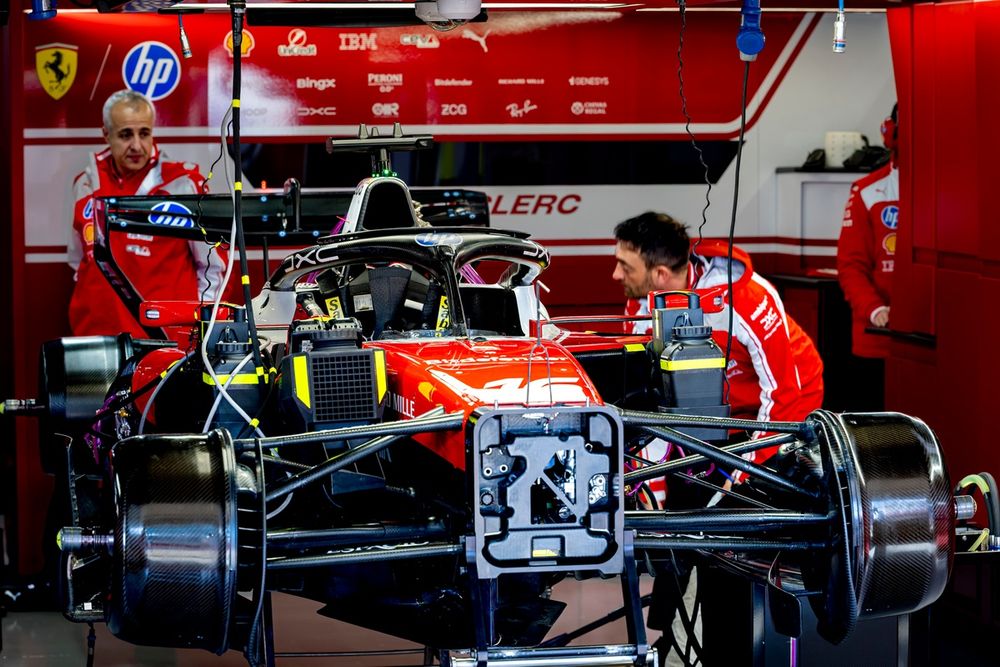
Development opportunities are “all around” at Ferrari
Photo by: Marcel van Dorst / EYE4images / NurPhoto via Getty Images
Actually, when you think about the different elements that contribute to the performance, it’s not like you can do things in isolation. Because when you change one thing, you actually have repercussions on all the rest of the car.
So, you never consider them as, you need siloed development. They are always part of a big compromise which takes everything into account”.
MS: How will any decision from the Formula 1 Commission about possible changes to the 2026 regulations impact a team’s job plan, or it’s not the case?
LS: You see it from a regulation point of view, but you can also see it from a competitor point of view. What you say is the same thing when you see something on another car, that you say, ‘oh, well, that’s interesting’, or that direction maybe… It’s the same.
So, what we have to do is to make sure we can react to whatever comes our way in the most appropriate way. And that’s the difficulty. Because, first of all, you don’t want to rush any decision. You need to make sure that what you’re doing makes sense for the future months. That you don’t corner yourself because you haven’t considered the full spectrum.
And you know, when one thing changes, often there is another one changing after that. So, you need to make sure that when you move, you move carefully. So, there is no real expectations there. It’s more the fact that in the business, we need to stay both feet on the ground. And make sure we understand where we are going and why we are going there.
MS: So, it’s like the magic people that stay on the block, nothing can happen?
LS: It can happen, nothing. Also, sometimes you just act because yourself, compared to the rest of the grid, you can see there’s an area where you can make good progress. But it’s not decided by a change of regulation, but a change of direction. A generic change of direction.

Lewis Hamilton, Ferrari
Photo by: Andy Hone/ LAT Images via Getty Images
MS: Talking before with [Matteo] Togninalli, head of track engineering, he said that this is a period when normally teams start to work also on the next year’s project. From this particular asset, does it work better to have some weeks a little bit more free in terms of timing?
LS: I know from the outside, it feels a bit like if it’s free, it’s not. The programme is exactly the same. If you were to look at the agenda of the people, you would see that what we’re doing on next year’s car was planned. On this year’s car was planned. And as I said, we’re planning the direction where we’re going. We don’t know the future. So, it’s more we adhere to our plan and then we make the most of it. But it’s not like all of a sudden, you have free some more time. Factory side, you haven’t.
MS: You were saying that not having additional running, you have to make the most of what you have in terms of data. Can you use this time to go more in depth compared to what you would do if there was a race and another race and another race?
LS: You have more time. When you do correlation, when I say you freeze, you freeze because you input freeze. But effectively, you still run on the previous set of data and you explore it more. So effectively, in that regard, you have more time to dedicate to a set of data. Because it’s actually the one that presents to you for the next two weeks. More than, OK, I move to the next one because I’ve got a new sample, because I’ve had a new race.
MS: And of your department, how much, if you have to do percentage, how many of them are strictly working on the analysis of race-by-race? And how much are sticking to a plan that is already there?
LS: I won’t give you a number
MS: OK, but there are different roles?
LS: Not only there are different roles, but on top of that, it’s essential to segregate the two.
Charles Leclerc, Ferrari
Photo by: Andy Hone/ LAT Images via Getty Images
Because if you don’t, the tendency is for the short term to swallow the long term, because it always happens that way. Urgency, which is not emergency, it’s urgency, always take the lead or consumes resources. So, the only way for this to be kept under control is by effectively separating, segregating these type of activities.
Not that people can’t talk together, of course, they talk together daily. But making sure that someone who is dedicated to the medium term is not jumping in the short term. Because then, the medium term vanishes.
The thing is, as we were saying earlier, it’s all about what you plan for. It’s all about what you’re going to bring in three months, etc. And it only happens if you’ve done your homework from the beginning without disruption, or with as little as possible disruption, still taking the learning from what’s happening day by day on track or testing.
MS: We know how important every single lap in Formula 1 is. To miss two race weekends has an effect on your work? I mean, you have no data from Bahrain and Jeddah that probably you planned to have it at the start of the season.
LS: Bahrain, we tested in Bahrain. So, we have a good read of what’s happening. Jeddah is true. So, you will miss some data points where these tyres in these conditions. On a circuit like this. On this layout with, I don’t know, a different content. Effectively, it’s a big puzzle. And that bit of the puzzle you are missing. You will find more of it in the next race or by combination of the next, but that bit you will be missing for sure.
We want your opinion!
What would you like to see on Motorsport.com?
– The Motorsport.com Team
Disclaimer : This story is auto aggregated by a computer programme and has not been created or edited by DOWNTHENEWS. Publisher: motorsport.com