In 2009, Michael Cruz Kayne and his wife, Carrie, were ecstatic when she gave birth to twins, Truman and Fisher. But 34 days later Fisher died, leaving them weighed down by a universe of grief.
Parenting Truman and later their daughter Willa kept them moving forward, but the sense of loss remained visceral, even if it was not something they felt comfortable talking about with others. Ten years later, Kayne decided to write about his grief on Twitter and the posts went viral.
The response inspired Kayne to write a one-man show, “Sorry For Your Loss,” about his family and his experience but also about grief in society. After performing it for several years, Kayne has now released it on Dropout. The show opens with material about Kayne, Carrie and their two children, but 20 minutes in, he stops and explains that there’s someone missing from their family portrait.
Kayne still finds laughs throughout the rest of the show — he shows on a screen the receipt from the funeral home that says, “Thank you, please come again.” But Kayne, who has been writing for “The Late Show with Stephen Colbert” since 2020, tries to make us understand to whatever extent we can what he and Carrie went through, saying things like “I cry all the time,” “We felt utterly alone,” and “You can’t believe how far you are from what you thought your life was going to be.”
Kayne recently spoke by video from his Brooklyn apartment about what he hopes the show can mean to audiences and to his family.
This interview has been edited for length and clarity.
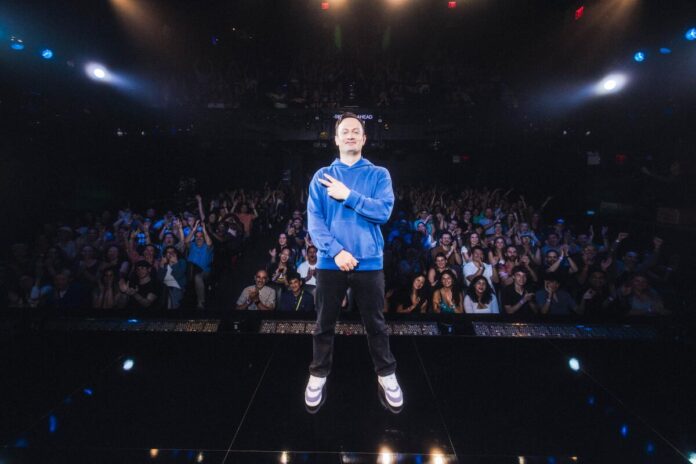
Michael Cruz Kayne performed the show for several years before its release on Dropout.
(Andrew Max Levy)
How did the show evolve into what we now see?
I couldn’t go to a comedy club and wax poetic about sadness — some kinds of sadness you can do that with but the death of a child is such a specific and profound taboo. So I had to find spaces that would let me try something a little weird. My first show was basically an hour of extemporaneous grief talk. And it was terrible. If anyone reading this article was at that show, I personally owe you $12.
But I had 10 good minutes in there that worked, and my manager and agents and wife said, “You don’t really have any choice but to do this. There could be something people would feel moved by and also laugh with you.”
I watched a ton of one-person shows, which I would be generally disinclined to watch: Mike Birbiglia, Hannah Gadsby’s “Nanette” and especially Jacqueline Novak’s “Get On Your Knees.” Obviously, my show could not be more different from hers [about performing oral sex]. But I realized that there was no one else alive who could do her show, it was specific to her. So I learned to bring my full self to the thing I was doing; I’m not trying to perform some version of grief that somebody else expects you to do.
You warn people in the opening of the special that they may cry and in the live show, after telling them about the death of your newborn son, you give people time to sit with their feelings and even to leave. Was that necessary?
When an infant dies — there’s not a catalog of funny stories that I can tell you about Fisher, so it’s not that it’s more sad than another death, but it’s a different kind of sadness.
With a subject that can be as dark as this, I know some people aren’t ready to hear it or have a preconception of what the show will be. At the end of the show each time I felt awesome — I went through a lot of emotion throughout that is real to me, not performed, but I think the show uplifts. Still, people may think, “I didn’t come out tonight to think about mortality.”
To dip my toe into self-aggrandizement, this is the only show I’ve done where I feel people may leave feeling entertained but also having found a community to be in sadness with and feeling like the show helped them a tiny bit.
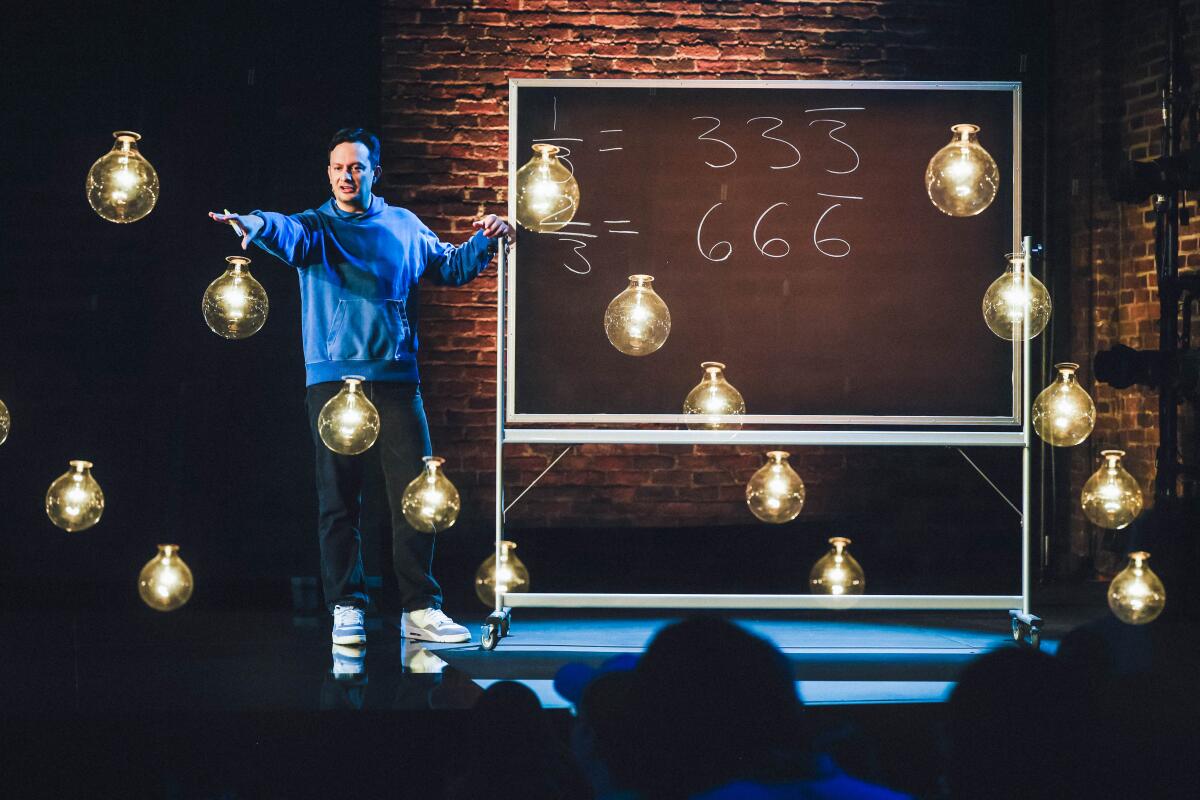
Michael Cruz Kayne, in addition to his live shows, has written for “The Late Show with Stephen Colbert” since 2020.
(Andrew Max Levy)
That first moment when you talk about Fisher dying after 34 days, the audience’s silence is profound. While it’s meant to be a solemn moment, was that uncomfortable for you as a comedian?
It’s not someplace that I want to make jokes. So I just didn’t. There were people who I respect, people from companies we tried to sell the special to, who said, “I wish there were more jokes per minute in those parts.”
But that’s not what I want to do. I want you to experience this the way that I do and not the way that you wish, that would make you feel more comfortable. That would feel gross.
When I started doing the show I was on podcasts and did other interviews where I’d think I had to be funny and I would give answers that, in retrospect, I hated and wish I hadn’t said. It wasn’t how I felt so I don’t know why I made jokes about that part.
There are jokes in the show and there are tons of things in the experience that are actually very funny to me. But as a writer and performer I’m trying to get away from the temptation to just please the audience.
You say, “I don’t talk about it much, not because I don’t want to, but because you don’t want me to.” But has society become more open to talking about grief and the toll of loss in the last 15 years?
I do think COVID changed us. Grief was unleashed on us in a way it never had been before so people are more aware of the idea of someone suddenly dying out of no place. That’s much more on the table now even among people who aren’t necessarily inclined to talk about their interior life or the interior life of other people.
You’ve lived with this show for years. Were you wary of what it meant for your son and daughter to be in the shadow of this for so long or was it important for them to understand what you and your wife had been through?
I think all the time about whether this is good or bad for them. They were incredibly supportive of the show and would come and watch it all the time, without me ever saying, “You’ve got to come.”
I might feel different tomorrow but today I feel I didn’t want to hide how I felt about their brother. And the show is a love letter to them and my wife, so I want them to see how much I love Fisher, but also how much I love them.
They’re kids so they can’t fully grant permission. And it’s totally possible that when they’re 30, they’ll be in a therapist’s office saying, “I cannot believe my dad did this.” But my hope is that they’ll be able to say, “He thought it was good. He didn’t think that it would hurt us.”
You say onstage that you do the show because it keeps Fisher alive for you. But once comedians do a special, they move on to new material. Will it be harder to do this or maybe create a new sense of grief about having to let the show go?
I guess we’ll see. I’m still doing interviews so there’s more time for it to be tethered to me. I haven’t completely let it go. If someone said to do it again tomorrow, I would, but if I never get to do it again then that’s what it is. I feel at peace with it now.
More to Read
Disclaimer : This story is auto aggregated by a computer programme and has not been created or edited by DOWNTHENEWS. Publisher: latimes.com