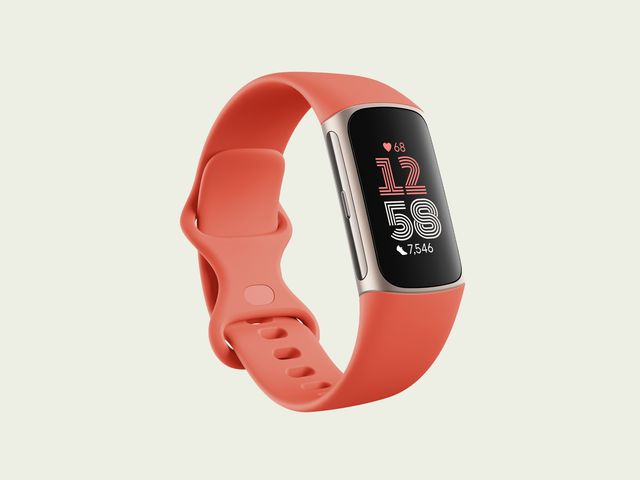
It’s been five years since Google officially acquired Fitbit for a reported $2.1 billion, grabbing hardware and software teams that also absorbed assets from Pebble, which Fitbit itself acquired in 2016. So, how have things changed? Well, for starters, Fitbit is now Google Fitbit. It’s not the most imaginative of name changes, and it hasn’t stuck in consumers’ minds, but the good news is that Fitbit devices remain some of the most user-friendly and welcoming fitness trackers available. This is especially true if you’re just starting, or reigniting, your fitness journey.
Fitbit’s dominance has waned slightly in the face of countless alternatives, but its affordable approach, user-friendly interface, and great styling make it one of the best wearable fitness brands. If you’re looking for a reliable step-counting, sleep-tracking monitor, you’re in for a treat—and thanks to Google’s stewardship, you can now even find a smartwatch with features to rival the competition. Here are my picks of the best Fitbit trackers, whatever your wearable needs are.
For more wearable recommendations, check out our guides to the Best Fitness Trackers, Best Smart Rings, and Best Garmin Watches.
Featured In This Guide

.jpg)

Best Fitbit Overall

Launched in 2023, the Charge 6 remains the best fitness tracker for most people. It’s the same slim build as its predecessor (the Charge 5), maintaining the bright AMOLED touchscreen, with an optional always-on display, and fortunately bringing back the physical side button. It monitors your heart rate, blood oxygen, and skin temperature, and it offers ECG and electrodermal activity scans to measure irregular heart rhythms and stress level insights. The largest upgrade on the functionality front is the new ability to connect Fitbit’s heart rate sensor to particular gym equipment like the NordicTrack treadmill or Peloton bike. In testing, its heart rate sensors held up well against the Oura ring. Battery life is also fantastic, with up to a week per charge.
The built-in GPS support doesn’t rival dedicated sports watches for accuracy, but it’s useful enough for outdoor activities. Plus, unlike those wearables, Fitbit dishes out detailed sleep data that is both insightful and actionable. Google’s presence has increased on the Charge with the useful additions of Google Maps and Google Wallet. You get all of this and more for less than the cost of Fitbit’s smartwatches.
| Specs | |
|---|---|
| Case Size | 36.73 x 23.09 x 11.20 mm |
| Case Material | Aluminum |
| Battery Life | Up to 7 days |
| Colors | Coral/Champagne Gold Aluminum, Porcelain/Silver Aluminum, Obsidian/Black Aluminum |
Most Affordable Fitbit
Along with its budget price, the Inspire 3 also offers the longest battery life of the Fitbit lineup. A full charge will last you up to 10 days, depending on how much you use it. It is pretty similar to the Charge 6, except that it lacks a built-in GPS, and it only features 20 exercise modes (as opposed to Charge 6’s 40 modes, which I found to be excessive anyway). You also miss out on some of the other premium features, such as Bluetooth compatibility with certain gym equipment, the EDA Scan app for stress management, and NFC technology. If none of those qualities matter to you, I would opt for the Inspire 3, which is just as accurate as the Charge 6.
| Specs | |
|---|---|
| Case Size | 39.32 x 18.6 x 11.75 mm |
| Case Material | Plastic |
| Battery Life | Up to 10 days |
| Colors | Midnight Zen/Black, Lilac Bliss/Black, Morning Glow/Black (yellow) |
Best Fitbit for Kids
The first Fitbit Ace landed in 2018, offering kids ages 8 and above the ability to track their steps and sleep and to be in constant pursuit of virtual badges. The Fitbit Ace LTE ditches the fitness band form for a smartwatch one, instantly giving it more grown-up kids appeal. The Ace LTE is built for ages 7 to 14 and comes with a design perhaps best described as a more child-friendly Versa. There’s a sizable OLED screen with Gorilla Glass 3 to fend off scratches, and unlike the first Ace, it can be submerged in water up to 50 meters deep.
There are some familiar fitness tracker sensors in place, including an optical heart rate monitor and motion sensors to track movement, though Fitbit has ditched the sleep-tracking support that was available on the original Ace. It has LTE connectivity so parents and children can make calls to each other, and it also taps into Google Maps to give it location-tracking smarts. Payments are on the way for the watch, too.
There are also games to play, including a very Fitbit take on a Tamagotchi that’s sure to appeal. There is the matter of a $10 per month subscription fee to get the complete Ace experience; it isn’t a cheap kids’ smartwatch either. But it’s easy to use, and it gets the balance of fun and fitness just right to make it a good fit for kids. —Michael Sawh
| Specs | |
|---|---|
| Case Size | 41.04 x 44.89 x 13.35 mm |
| Case Material | Plastic, stainless steel, glass, and recycled materials |
| Battery Life | Up to 16 hours |
| Colors | Spicy Pebble/Moovin’ Band, Mild Pebble/Strange Arcade Band |
Best Fitbit Smartwatch
Now that the Google Pixel Watch actually exists, the fate of Fitbit’s own smartwatches feels up in the air. But if the idea of owning a Pixel Watch doesn’t appeal and you’re interested in a more Fitbit-centric experience with better battery life, the Versa 4 is the one to go for. You get a smartwatch with a gently curved design; it’s almost identical to the original Versa, but with the welcome return of a physical button. There’s a large, vibrant, 1.5-inch AMOLED display touchscreen and a battery performance that can really stretch over the promised six days if you don’t leave the screen on 24/7.
As for sports, the Versa 4 is designed with a built-in GPS to track outdoor runs and rides and motion sensors to track indoor swims, though not with sports-watch-rivaling accuracy. Fitbit’s PurePulse heart rate sensor is a better fit for day-to-day heart rate stats than it is for a CrossFit class. And third-party app support has been replaced by native Google apps, like Maps, with Google Assistant joining Amazon’s Alexa. As a device that lets you check your phone notifications, keep an eye on step counts and sleep, and forget about constantly charging it, the Versa 4 has plenty to like. —Michael Sawh
| Specs | |
|---|---|
| Case Size | 40.5 x 40.5 x 11.2 mm |
| Case Material | Aluminum |
| Battery Life | Up to 6 days |
| Colors | Black/Graphite Aluminum, Waterfall Blue/Platinum Aluminum, Pink Sand/Copper Rose Aluminum, Beet Juice/Copper Rose Aluminum |
Best Fitbit for Health Tracking

The Fitbit Sense 2 was meant to attract the kind of people who were looking at the Apple Watch. It’s designed with an electrocardiogram (ECG) sensor that’s been approved in the US to help wearers detect potential signs of atrial fibrillation. A skin temperature sensor can monitor temperature changes during the night to spot any trends, and a SpO2 sensor goes to work when you’re sleeping to detect breathing disturbances. While it’s not a regulatory-approved feature, it can detect potential warning signs of a sleep disorder, like sleep apnea.
An electrical cEDA sensor captures on-the-spot and continuous measurements of galvanic skin response that Fitbit uses as a marker of stress. Fitbit needs to work on delivering information on potential stressors in a useful way, but it’s a start. The Sense 2 also grabs all of the cheaper Versa’s fitness-tracking and sports-tracking features, including built-in GPS, and uses a PurePulse heart rate sensor to keep track of your Active ZoneMinutes when you’re upping the intensity. You do need Fitbit Premium ($10 per month) to unlock the most valuable health insights.
| Specs | |
|---|---|
| Case Size | 40.5 x 40.5 x 11.2 mm |
| Case Material | Aluminum |
| Battery Life | Up to 6 days |
| Colors | Shadow Grey/Graphite Aluminum, Lunar White/Platinum Aluminum, Blue Mist/Soft Gold Aluminum |
Compare Top 5 Fitbits
| Product | WIRED | TIRED | Water and Dust Resistance | Battery Life | Price |
|---|---|---|---|---|---|
| Fitbit Charge 6 | Long battery life. Full suite of health features. ECG app. Built-in GPS. Google integrations. YouTube Music controls. | No fall detection. Bluetooth connection frequently glitched. Doesn’t always automatically recognize exercise activities. | 5 ATM | Up to 7 days | $160 |
| Fitbit Inspire 3 | Longest battery life. Lightweight. Most affordable. | No Google integrations or YouTube Music controls. No ECG app. | 5 ATM | Up to 10 days | $100 |
| Fitbit Ace LTE | Entertaining for children. Don’t have to add a line to your phone plan. Games are time- and step-limited. App is easy to use. Most secure kid smartwatch yet. | Might not appeal to older kids. Short battery life. | 5 ATM | Up to 16 hours | $180 |
| Fitbit Versa 4 | Best Fitbit smartwatch. Built-in GPS. Google integrations. | No YouTube Music controls. No ECG app. | 5 ATM | Up to 6 days | $200 |
| Fitbit Sense 2 | Most advanced health and fitness insights. ECG app. Built-in GPS. Google integrations. | No YouTube Music controls. Priciest. | 5 ATM | Up to 6 days | $250 |
Power up with unlimited access to WIRED. Get best-in-class reporting and exclusive subscriber content that’s too important to ignore. Subscribe Today.
Disclaimer : This story is auto aggregated by a computer programme and has not been created or edited by DOWNTHENEWS. Publisher: wired.com